
- Hybrid Material Design: Combines porous PEEK (polyetheretherketone) with nano-textured titanium for optimal spinal fusion.
- NanoPrime® Technology: Uses ion beam bombardment to create a strong titanium-PEEK bond, minimizing coating delamination.
- Market Growth: Cervical fusion market projected to reach over $10 billion by 2035.
Experts view this hybrid implant as a significant advancement in spinal fusion technology, offering the best of both PEEK and titanium materials for improved bone integration and imaging clarity.
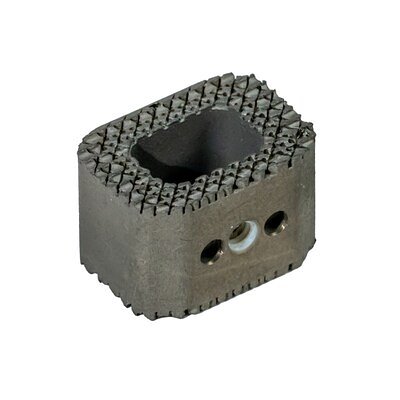
Zavation Fuses PEEK and Titanium in New Spinal Implant Breakthrough
FLOWOOD, MS – February 11, 2026 – Zavation Medical Products today announced the launch of a next-generation spinal implant that aims to solve a long-standing surgical dilemma by merging the distinct advantages of two different materials into a single, cohesive device. The new NanoPrime® Labyrinth® Cervical Interbody implant integrates a porous polymer structure with a nano-textured titanium surface, a combination engineered to promote faster, more reliable spinal fusion while giving surgeons a clearer view of patient recovery.
For decades, surgeons performing anterior cervical discectomy and fusion (ACDF)—a common procedure to treat neck pain and nerve compression—have faced a choice between two primary implant materials: PEEK (polyetheretherketone) and titanium. Each comes with a set of trade-offs. PEEK, a high-performance thermoplastic, has an elastic modulus similar to human bone, which reduces the risk of "stress shielding," a phenomenon where a rigid implant carries too much load, preventing the surrounding bone from experiencing the stress needed to grow and fuse properly. PEEK is also radiolucent, meaning it is transparent on X-rays, allowing surgeons to clearly assess bone growth post-surgery. However, it is biologically inert, offering no active encouragement for bone to attach.
Titanium, on the other hand, is celebrated for its biocompatibility and osteoconductive properties, meaning it provides a scaffold that actively encourages bone cells to attach and grow. But its rigidity can contribute to stress shielding, and its metallic nature creates artifacts on CT and MRI scans, potentially obscuring the view of the fusion site. Zavation's new implant seeks to eliminate this compromise.
The Engineering Challenge: Marrying Two Materials
At the heart of the new device are two proprietary Zavation technologies: Labyrinth® and NanoPrime®. The implant's foundation is the Labyrinth® porous PEEK architecture, a patented structure designed to mimic the interconnected network of cancellous, or spongy, bone. This porosity provides a macroscopic and microscopic scaffold intended to encourage bony ingrowth throughout the entire implant, not just at its surfaces.
Layered onto this porous PEEK foundation is NanoPrime®, a nano-textured titanium surface. Unlike traditional coatings that are simply sprayed on and can risk flaking or delamination, NanoPrime® is applied using a sophisticated nano-engineering process. In a high-vacuum chamber, titanium is evaporated and then bonded to the PEEK structure using ion beam bombardment. This technique intermixes the titanium and PEEK atoms at the interface, creating an exceptionally strong bond that significantly minimizes the risk of the coating peeling away.
This process results in a nano-textured surface—a landscape of microscopic peaks and valleys that increases the implant's surface area and creates an environment shown in pre-clinical studies to support the cellular activity associated with bone formation. By combining these technologies, Zavation has created an implant that offers the bone-like mechanics and imaging clarity of PEEK with the bone-growing potential of titanium.
A New Standard for Biological Integration
The ultimate goal of a fusion implant is to become one with the patient's spine, creating a solid, stable bone mass. The dual-action design of the NanoPrime® Labyrinth® implant is engineered to facilitate this from the nano-level up. The nano-textured titanium surface is designed to be hydrophilic, attracting bodily fluids and proteins that kickstart the healing cascade. This surface is intended to promote early cell attachment and trigger the osteogenic cellular behavior that leads to accelerated fusion.
This approach has garnered praise from surgeons who specialize in complex spinal procedures. Dr. Freeland Ackley, a fellowship-trained spine surgeon, noted the implant's sophisticated design in the company's announcement. "The NanoPrime® Labyrinth® Cervical Interbody reflects the kind of design philosophy I look for in an implant—thoughtful engineering that supports early bone integration and long-term stability," Dr. Ackley stated. "The combination of porous architecture with a nano-textured titanium interface gives me confidence in the construct I'm using in my practice."
This confidence is crucial in a market where patient outcomes are paramount. By creating what Zavation calls a "cohesive biological environment—inside and out," the implant aims to provide a more predictable and robust foundation for spinal fusion.
Navigating a Competitive Spinal Device Market
Zavation's launch enters a highly competitive and innovative spinal device market. Major medical technology companies like Medtronic, Stryker, and Globus Medical have their own advanced implant offerings. Stryker's Tritanium Cages, for example, are fully 3D-printed from a porous titanium material, while Medtronic offers PEEK implants with a pure titanium coating. Other companies are exploring fully porous PEEK and other bioactive surface treatments.
Against this backdrop, Zavation is positioning its product as a unique advancement. Derek Kuyper, Chief Executive Officer of Zavation, described the implant as a "world-first interbody cage with the macro, micro, and nano level features of 3D Titanium with the imaging characteristics and device stiffness of PEEK, the best of both in one device."
This strategic positioning highlights the implant's multi-level approach—from the macro-porous PEEK structure to the nano-textured titanium surface—as a key differentiator. For a growing company like Zavation, which has commercialized over 25 product families since its founding in 2012, such innovation is critical to capturing market share. The need is certainly present; with an aging global population and rising rates of degenerative disc disease, the cervical fusion market is projected to grow steadily, reaching over $10 billion by 2035.
For surgeons and the patients they treat, this intense competition and rapid innovation translate into better tools and potentially better outcomes. The development of hybrid materials that promote bone growth while allowing for clear radiographic assessment represents a significant step forward in achieving the primary goal of spinal fusion: a stable, pain-free spine.