
- Tax Deferred Growth Risk: Decades of tax-deferred growth in IRAs can lead to massive tax bills upon withdrawal, pushing retirees into higher tax brackets.
- SECURE Act Impact: Non-spouse beneficiaries must now withdraw inherited IRA balances within 10 years, potentially increasing tax liabilities.
- Roth Conversion Strategy: Converting traditional IRAs to Roth IRAs can save significant taxes for those expecting higher future tax rates.
Experts agree that proactive tax planning for IRAs is essential to mitigate potential tax burdens, especially given recent legislative changes and economic uncertainties.
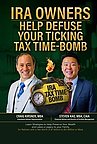
Your IRA's Ticking Tax Bomb: A New Guide Urges Retirees to Act Now
BOCA RATON, Fla. – June 08, 2026 – For decades, the Individual Retirement Account (IRA) has been the cornerstone of American retirement savings, a trusted vessel for building a nest egg. Yet, for millions, this symbol of security harbors a hidden threat—what two Florida financial professionals call a “ticking tax time-bomb.” In their new book, “IRA Owners: Help Defuse Your Ticking Tax Time-Bomb,” Craig Kirsner and Steven Kao of Kirsner Wealth Management argue that without proactive planning, the very accounts designed to fund our golden years could trigger devastating tax bills for retirees and their families.
The book, released today, aims to arm savers with the knowledge to navigate an increasingly treacherous financial landscape. It enters a world where legislative shifts and economic uncertainty have rewritten the rules of retirement, leaving many savers vulnerable. The central premise is stark but simple: the taxman will come calling for his share of your tax-deferred savings. The only question is when, and how much you’ll pay.
The New Rules of Retirement Risk
The “ticking time-bomb” metaphor isn’t mere hyperbole; it reflects a genuine anxiety felt by financial experts and retirees alike. Decades of tax-deferred growth in traditional IRAs and 401(k)s can create massive balances that, upon withdrawal, are taxed as ordinary income. This can push retirees into higher tax brackets precisely when they are living on a fixed income. “Remember, when it comes to your IRA, it's either pay Uncle Sam now or pay him later, but somebody's got to pay, and many Americans want to pay the least taxes possible,” Kirsner states in the press release announcing the book. “This book was written to help you understand that reality and deal with it proactively.”
Compounding this issue are recent legislative changes. The SECURE Act of 2019 and its successor, SECURE Act 2.0, fundamentally altered legacy planning. The most significant change was the effective elimination of the “stretch IRA” for most non-spouse beneficiaries. Previously, a child inheriting an IRA could stretch the distributions—and the associated tax payments—over their own lifetime. Now, they are generally required to withdraw the entire balance within 10 years of the original owner’s death. This compressed timeline can force heirs into their peak earning years to take large, taxable distributions, potentially costing a family a substantial portion of its inheritance.
This legislative shift makes the book’s focus on planning for a surviving spouse particularly timely. As co-author Steven Kao notes, the death of a spouse often leads to a change in tax filing status from “married filing jointly” to “single,” which comes with less favorable tax brackets and a lower standard deduction. “A surviving spouse with lower income can often mean higher taxes for that widow,” Kao explains. “This is why you want to do proactive tax planning now to potentially help protect your surviving spouse or family members from the impact of higher taxes after you're gone.”
A Blueprint for Financial Self-Defense
While the diagnosis is alarming, Kirsner and Kao’s work focuses on the cure. The book promises actionable strategies designed to mitigate these risks. It delves into methods for preserving retirement assets against market downturns and, crucially, for structuring finances to minimize tax exposure over the long term. This aligns with best practices championed by independent financial planners who stress the importance of tax diversification—holding funds in a mix of tax-deferred (traditional IRA), tax-free (Roth IRA), and taxable accounts to create flexibility in retirement.
One of the most powerful tools in this proactive approach is the Roth conversion. This strategy involves paying income tax on a portion of a traditional IRA now to convert it to a Roth IRA, where all future growth and qualified withdrawals are 100% tax-free. For retirees who believe their tax rate—or the nation’s—will be higher in the future, a strategic conversion can save a significant amount of money. “Proactive tax planning isn’t a luxury; it’s a necessity,” says one independent Certified Financial Planner not associated with the book. “Waiting until you’re 70 to think about your IRA tax strategy is like waiting for the ship to sink before you look for a life raft. The options you have in your 50s and 60s are far greater.”
The book also reportedly covers strategies for Qualified Charitable Distributions (QCDs), which allow individuals over 70½ to donate directly from their IRA to a charity, satisfying their Required Minimum Distribution (RMD) without adding to their taxable income. For the philanthropically inclined, it’s a powerful way to do good while managing tax liability.
The Architects of the Plan
The advice comes from two seasoned professionals. Craig Kirsner, the president of Kirsner Wealth Management, holds an MBA in Finance and has been a licensed insurance agent since 1994. He is an Investment Adviser Representative with AE Wealth Management, LLC, and has been recognized by Forbes as a top financial security professional. His co-author, Steven Kao, is the firm’s Director of Portfolio Management and holds an MBA and the Chartered Alternative Investment Analyst (CAIA) designation.
Their firm’s approach extends beyond the individual IRA, positioning the book as a gateway to a broader philosophy of wealth preservation. Kirsner Wealth Management, a family-owned business, specializes in what it calls “dynasty estate plans.” These are complex legal structures, created in partnership with outside attorneys, designed to protect a family’s assets for multiple generations. The goal is to shield inheritances from potential claims arising from a child’s or grandchild’s future divorce, lawsuits, or creditors, ensuring wealth stays within the bloodline.
This holistic view underscores the importance of integrating IRA planning into a comprehensive estate plan. However, the firm is careful to operate within regulatory boundaries, issuing clear disclaimers that its representatives do not provide legal or tax advice themselves. Instead, they facilitate a team-based approach, encouraging clients to consult with their own attorneys and tax advisors. This model highlights a critical truth for consumers: effective financial planning is rarely a one-person job, but a coordinated effort among specialists.
The Widening Gap Between Saving and Security
With millions of Baby Boomers navigating retirement daily, the need for clear, accessible financial guidance has never been greater. The gap between how the retirement system should work and how it actually does is widening, filled with legislative complexity, market volatility, and a dizzying array of financial products. For a modest price of $18 on Amazon, Kirsner and Kao’s book offers an entry point for those who feel overwhelmed but know they can no longer afford to be complacent.
Ultimately, the “ticking tax time-bomb” is a problem of success. It affects those who diligently saved for decades, only to find their reward comes with a complicated and potentially costly tax bill. While no single book can replace personalized advice from a qualified professional, it can serve as a crucial wake-up call. It can empower savers to ask the right questions and demand a proactive strategy, transforming them from passive account holders into active managers of their own financial destiny. In an era of uncertainty, taking control of what can be controlled is the first and most vital step toward securing a legacy.