
- 41% increase in outstanding shares due to share dilution to fund operations
- Support for 6 major blockchains including Bitcoin, Ethereum, and Solana
- $4.8 million acquisition of Kaspa Secure Technologies Inc. in May 2025
Experts acknowledge the potential of biometric crypto wallets to enhance security and usability but caution about irreversible privacy risks and regulatory challenges associated with biometric data.
Your Face, Your Fortune: The Promise & Peril of Biometric Crypto Wallets
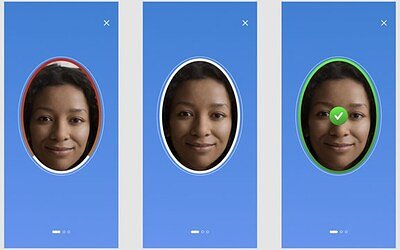
VANCOUVER, BC – April 17, 2026 – Dynamite Blockchain Corp. has unveiled a plan to fundamentally change how users secure their digital assets, aiming to replace complex passwords and vulnerable seed phrases with a user's own face. The company announced its upcoming "Dynamite Wallet," which will integrate biometric-bound cryptography and artificial intelligence to turn a facial scan into the key that unlocks a user's cryptocurrency.
The move addresses one of the most significant barriers to mainstream crypto adoption: the daunting task of private key management. Traditional crypto wallets rely on a 12 or 24-word "seed phrase," a cryptographic password that, if lost, means permanent loss of funds. If stolen, it provides complete access to a user's assets. Dynamite's solution aims to eliminate this single point of failure entirely.
"By replacing traditional long hard to remember passwords with biometric-bound cryptography, we believe the Dynamite Wallet will represent a new way for users to interact with blockchain networks," said Akshay Sood, Chief Executive Officer of Dynamite, in a press release. "As digital assets continue moving toward mainstream adoption, solutions that reduce friction while preserving security will be critical."
The Promise of Ephemeral Keys
At the heart of the Dynamite Wallet is a system designed to be both user-friendly and highly secure. Unlike traditional wallets that store a persistent private key on a device, Dynamite's approach creates a private key that exists only for a few moments.
The process begins when a user initiates a transaction. They are prompted to look into their device's camera for a facial scan. This isn't just a simple photo; the system employs AI-based "liveness detection" to ensure it's interacting with a real, live person, thwarting attempts to use a static image or video replay. This biometric data is then converted into a unique, encrypted signature.
This signature acts as the secret ingredient to generate a brand-new, ephemeral private key. This key is used once to cryptographically sign the transaction and broadcast it to the blockchain. Immediately after, the key is destroyed. It is never stored on the device or a server, theoretically minimizing the window of opportunity for hackers. This cycle—scan, generate, sign, destroy—repeats for every single transaction, meaning a compromised key from one transaction is useless for the next.
The wallet is set to launch with support for a wide array of popular blockchain networks, including Bitcoin, Ethereum, Solana, Kaspa, Tron, and Binance Smart Chain, allowing users to manage a diverse portfolio from a single interface.
A Crowded Field for Simplicity
Dynamite is not alone in the race to solve the crypto usability puzzle. The industry is rife with innovative wallet solutions trying to move beyond the cumbersome seed phrase. Competitors like Zengo use a technology called Multi-Party Computation (MPC), which splits the key into multiple pieces stored in different locations, eliminating a single point of failure. Others, like Coinbase's Smart Wallet, have embraced passkeys, allowing users to authenticate with the same Face ID or fingerprint sensor they use to unlock their phones.
Argent, another popular wallet, champions "social recovery," where users designate trusted friends or other devices to help them regain access if they lose their primary device. These methods have gained traction by offering a more familiar, app-like experience.
Dynamite's key differentiator is its direct binding of biometrics to ephemeral key generation. While competitors use biometrics primarily as an authentication layer to access a key management system (like MPC or passkeys), Dynamite claims to use the biometric data itself as the seed for generating the key on the fly. This subtle but significant architectural difference is what the company is betting on to provide superior security and simplicity.
The Double-Edged Sword of Biometric Security
While the promise of "face as key" is compelling, it walks a tightrope of immense technological potential and significant privacy risks. Cybersecurity experts and privacy advocates are quick to point out that biometric data is not like a password; if it's compromised, you can't simply change it.
Regulatory frameworks like Europe's GDPR classify biometric data as a "special category" requiring the highest level of protection and explicit user consent for processing. Similarly, privacy laws in North America impose strict rules on how companies collect, store, and use such sensitive information. Storing raw biometric data on a public, immutable blockchain is considered a major legal and security risk, a practice most experts advise against.
The more likely approach, which Dynamite's architecture suggests, is to store a protected, encrypted template of the biometric data off-chain. However, this still raises concerns. "If a system storing biometric templates is breached, the consequences are severe," noted one independent cybersecurity researcher. "That data is permanent and uniquely tied to an individual."
Furthermore, the technology itself is not infallible. Even with advanced AI liveness detection, the threat of sophisticated "deepfake" attacks, where AI is used to create realistic but fake videos, remains a concern. There are also documented challenges with the accuracy of facial recognition systems across diverse demographics, raising questions about inclusivity and the potential for false negatives (locking a legitimate user out) or false positives (granting access to an impostor).
Dynamite's Strategic Gamble
For Dynamite Blockchain Corp. (CSE: KAS, OTC: CRYBF), the new wallet is more than just a product—it's the centerpiece of its corporate strategy. The company, which positions itself as a "Kaspa-focused blockchain company," has been building what it calls a "Blockchain Ecosystem Strategy." The technology for the Dynamite Wallet is an evolution of the IMME Wallet platform, which it acquired through the C$4.8 million acquisition of Kaspa Secure Technologies Inc. in May 2025.
This strategic bet is not without financial pressure. The company's stock has seen significant volatility and a general downward trend over the past year. Financial filings report millions in losses and a 41% increase in outstanding shares, indicating share dilution to fund operations. The success or failure of the Dynamite Wallet could therefore be a pivotal moment for the company.
By aiming to solve one of crypto's most persistent problems, Dynamite is taking a high-risk, high-reward gamble. If the technology proves to be as secure and seamless as advertised, and if the company can successfully navigate the treacherous waters of biometric data regulation and privacy, it could capture a significant share of the market and finally provide the key to unlocking mainstream cryptocurrency adoption. However, the path is fraught with technical, regulatory, and competitive challenges that will test the resilience of its innovative approach.
The entire crypto community will be watching to see if making your face your fortune is the future of digital asset security or a cautionary tale in the making.