
- AI-generated shorts now make up nearly 40% of top animated titles in China (2025)
- Youhug Media's AI actors will only appear in AI-specific dramas, not live-action series
- China's micro-drama and animated shorts market valued at over 100 billion yuan ($14.5 billion) in 2025
Experts acknowledge AI's rapid advancement in content creation but emphasize that human creativity, emotional depth, and genuine connection remain irreplaceable elements of storytelling.
Youhug Media Unveils AI Actors, Betting on a Sci-Fi Future for Cinema
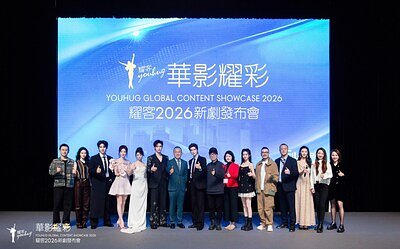
HONG KONG – March 23, 2026 – At its glamorous "Radiant Vision" gala in Hong Kong, Chinese production powerhouse Youhug Media unveiled a dazzling 2026 slate of star-studded television dramas. But beneath the glitz of celebrity appearances and blockbuster trailers, the company announced a far more radical vision for the future—one powered by artificial intelligence, headlined by digital actors, and poised to reshape the very definition of content creation.
While audiences buzzed about upcoming human-led epics like the historical drama Blossoms of Power and the psychological thriller Confessions, the true bombshell was the formal launch of Youhug's AICG Lab. This new division marks the company's official entry into the AI-generated drama race, a move solidified by the premiere of a fantasy short film, Qin Ling Qing Tong Gui Shi Lu, created entirely through a "full-chain AI process." The announcement signals a pivotal strategic shift, positioning Youhug at the vanguard of a technological revolution that is both thrilling and deeply unsettling for the creative industries.
A Dual Strategy for Dominance
Youhug Media's presentation was a masterclass in strategic duality. On one hand, the company showcased its continued commitment to high-budget, premium productions that have defined its success. The slate was a broad-ranging collection of genres, from the period road movie The Road to Splendor to the hot-blooded youth drama Ctrl+Alt+Life, each featuring prominent human actors and established creative teams. This served as a powerful reassurance to the market that traditional storytelling remains central to its brand.
Lu Chao, President of Youhug Media, framed this balanced approach in his opening address, stating that "elevating quality is the ultimate weapon against change." Yet, in the same breath, he pledged to "actively embrace AI empowerment to better tell Chinese stories." This dual strategy—investing in both proven human talent and speculative AI technology—suggests a company hedging its bets against an uncertain future, aiming to capture the present-day market while simultaneously building the tools for tomorrow's.
The lineup of traditional dramas is impressive on its own. Confessions reunites the acclaimed team behind The Pig, The Snake, and The Pigeon, promising a dark, stylized exploration of intergenerational trauma. Meanwhile, Rebirth offers a hot-blooded period epic, and The Awakening delves into a world of hardcore revenge. These projects represent a significant investment in the established production model, designed to meet the high expectations of a global audience for compelling, human-driven narratives.
The Dawn of the Digital Thespian
The night's most debated and dissected moment was the introduction of Qin Lingyue and Lin Xiyan, officially "signed" as Youhug's first AI actors. Generated entirely by algorithms, these digital personalities are the faces of the company's new frontier. Their debut in the AI-produced short film showcased a startling level of visual fidelity, with detailed world-building and atmospheric rendering that demonstrated the rapid advancement of generative tools.
However, the reaction online was immediate and deeply divided. While some praised the technical achievement, many viewers and industry observers quickly pointed out unsettling details. Social media forums lit up with accusations that the AI actors' faces appeared to be a composite, or "blend," of several well-known Chinese celebrities, raising urgent ethical questions about likeness rights and digital consent. Critics meticulously analyzed the characters' performances, noting an unnatural "blink frequency" and a subtle lack of emotional depth that placed them firmly in the uncanny valley—that uncomfortable space where artificial creations are almost, but not quite, human.
This controversy underscores the immense challenge ahead. Youhug Media has attempted to preemptively address the most significant fear: the replacement of human actors. The company issued a clear statement that its AI actors "will only appear in AI-specific dramas and will not be used in live-action series." It further emphasized that the emotional resonance delivered by human performance is "irreplaceable and will become increasingly precious." For now, the company is drawing a line in the sand, separating its human-led art from its AI-driven experiments.
An Industry at a Crossroads
Despite Youhug's reassurances, the announcement has sent ripples of anxiety through the industry's workforce. The fear of job displacement is palpable. One CEO of a capital enterprise, speaking anonymously, suggested that the economic logic is undeniable, predicting that "roles below the second lead may be entirely replaced by AI" in the near future. The concern extends beyond actors, as a full-chain AI process threatens to automate roles across the production pipeline, from cinematography and lighting to makeup and post-production.
This move places Youhug at the forefront of a burgeoning trend, particularly within China. The market for micro-dramas and animated shorts, a sector valued at over 100 billion yuan ($14.5 billion) in 2025, has become a fertile testing ground for AI. A year ago, AI-generated shorts were a novelty; today, they reportedly constitute nearly 40% of the top animated titles. Major competitors like Tencent and iQiyi are undoubtedly pursuing their own AI initiatives, but Youhug's public declaration and a clear AI actor strategy have made them the most visible pioneer.
Esteemed television producer Yu Zheng offered a more measured perspective, suggesting the current hype may be a "temporary trend." He argued that the core human elements of creativity—imagination, genuine emotion, and the deep-seated need for human connection—cannot be fully replicated by an algorithm. However, he also issued a stark warning: "individuals without talent might face elimination." This suggests a future where the bar for human creativity is raised, and only the most exceptional and emotionally resonant talent will thrive alongside their new digital counterparts.
Youhug's bold gamble has drawn a new map for the future of entertainment, charting a course into unknown territory. The company is betting it can harness the power of the algorithm to create new forms of content without sacrificing the soul of human artistry. As trailers for both its human-led epics and AI-generated shorts circulate online, the world is watching to see if this dual vision will lead to a creative renaissance or if the cost of automated efficiency will be the very humanity that makes stories worth telling.