
- 35 heads of state and over 6,000 global leaders attended the World Governments Summit where XPENG presented its 'Physical AI' vision.
- XPENG aims to launch mass-produced Level 4 autonomous vehicles and initiate Robotaxi trials in China by 2026.
Experts view XPENG's 'Physical AI' strategy as a bold but necessary evolution in mobility, emphasizing that the future of transportation lies in intelligent systems rather than just electrification, though success will depend on technological innovation and regulatory adaptability.
XPENG's Gambit: How 'Physical AI' is Driving Mobility's Next Chapter
DUBAI, UAE – February 12, 2026 – While the sleek lines of electric vehicles have dominated conversations about the future of transport for years, Chinese mobility firm XPENG used the global stage of the World Governments Summit (WGS) to declare that the true revolution is yet to come. Making its debut at the influential gathering in Dubai, the company argued that the next chapter isn't about the power source, but the intelligence that wields it.
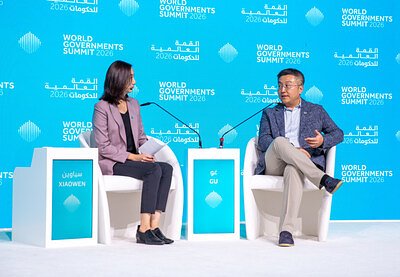
In a fireside chat before an audience of global leaders and policymakers, Dr. Brian Gu, Vice Chairman and President of XPENG, articulated a vision that extends far beyond electrification. "Electrification changes the energy source, but it is intelligence that will truly change how people move and live," he stated. This shift in focus from electric motors to artificial intelligence forms the core of the company's strategy, which it dubs the era of "Physical AI."
The Dawn of Physical AI
Physical AI represents the tangible embodiment of artificial intelligence—systems that don't just process data in the cloud but perceive, reason, and act in the physical world. For XPENG, this means transforming vehicles from functional tools into intelligent partners that reduce cognitive load. The company's vision encompasses not just cars, but a whole ecosystem including autonomous driving systems, flying vehicles, and even humanoid robots.
This concept is not unique to XPENG but represents a burgeoning frontier in technology, pursued by giants like Waymo, Tesla, and Boston Dynamics. Physical AI is the bridge between digital code and real-world action, enabling machines to navigate complex, unpredictable environments. For the automotive sector, this translates into vehicles that can learn from an infinite number of road scenarios, moving beyond pre-programmed responses to develop a more generalized understanding of physical reality. Dr. Gu predicted that this technological leap would make "autonomous driving and robotaxi services... part of everyday life" within the next decade, a bold timeline that underscores the rapid pace of development.
Underpinning XPENG's ambition is a full-stack, in-house approach to research and development. The company is developing its own hardware, software, and proprietary AI chips, such as its Turing series, to power its ecosystem. This vertical integration is seen as crucial for optimizing performance and accelerating learning, a strategy also favored by competitors like Nio and Tesla.
From Showroom to Summit: A Strategy of Global Engagement
XPENG's presence at the World Governments Summit—an event attended by 35 heads of state and over 6,000 global leaders—was a calculated move of corporate diplomacy. It signaled the company's intent to be a key voice in the global dialogue shaping the future of mobility and to smooth its path for international expansion.
This strategy was highlighted by a high-level meeting between Dr. Gu and Pedro Sánchez, the Prime Minister of Spain. While the discussion was framed around future opportunities, XPENG has already been making concrete moves in Europe. The company launched its vehicles in Spain and Portugal in 2024 through a partnership with the Salvador Caetano Group. More significantly, it has established its first European production line at Magna's plant in Graz, Austria, a move that helps mitigate the impact of EU tariffs on Chinese EVs and localizes its supply chain.
Beyond Europe, the company held a series of meetings with policymakers to explore opportunities across the Middle East and North Africa (MENA), a region actively investing in future technologies. By engaging directly with governments, XPENG is not just selling cars; it is positioning itself as a technology partner for nations looking to build smart cities and next-generation infrastructure.
The Race to Regulate Reality
The rapid advancement of Physical AI brings with it a host of complex societal and regulatory questions, which made the WGS a particularly apt venue for XPENG's message. As intelligent machines become more integrated into daily life, governments face the immense challenge of creating frameworks that foster innovation while ensuring safety, privacy, and ethical oversight.
Dr. Gu himself acknowledged that the success of autonomous mobility is contingent on "evolving regulatory frameworks." XPENG's ambitious plans to launch mass-produced Level 4 autonomous vehicles and initiate Robotaxi trials in China by 2026, followed by the mass production of a humanoid robot, bring these regulatory challenges into sharp focus. The company's Robotaxi approach is particularly notable for its reliance on a pure-vision system, forgoing the LiDAR sensors used by many competitors, which could present a different set of validation and safety verification hurdles for regulators.
The core of the debate, which echoed through the halls of the WGS, is how to govern technologies that learn and adapt in real-time. Crafting rules for a self-driving car or a humanoid assistant is fundamentally different from regulating a conventional product. It requires a new paradigm of governance, one that is as dynamic and adaptive as the AI it seeks to manage.
A Crowded Field of Intelligent Machines
XPENG's ambitious vision is being pursued in a fiercely competitive global arena. In the EV and autonomous driving space, it contends with Tesla's formidable brand and massive data-gathering capabilities, the premium positioning and battery-swapping technology of fellow Chinese innovator Nio, and the deep-pocketed R&D of traditional automakers. In the specialized field of autonomous mobility, Waymo remains a benchmark for robotaxi deployment.
The company's strategy to differentiate itself rests on its broad, ecosystem-level approach. By simultaneously developing intelligent EVs, flying cars, and humanoid robots, all powered by its own AI stack, XPENG is betting that the future of mobility is not a single product but an interconnected network of intelligent devices. This comprehensive approach, however, also spreads resources and focus across multiple, capital-intensive frontiers.
As XPENG drives its vision of Physical AI from the research lab to the global market, its journey will be a key indicator of the broader transition in mobility. Its success will depend not only on the sophistication of its technology but also on its ability to navigate the complex interplay of international markets, geopolitical dynamics, and the evolving rulebook for a world shared between humans and intelligent machines.
Topics & Related
Artificial Intelligence
Geopolitics & Trade
Generative AI
Machine Learning
AI & Machine Learning
Software & SaaS
ChatGPT
Related Company Pulse