
- GDP Growth Target: 5.5% for 2026, surpassing China's national goal of 4.5%–5%.
- Industrial Output Goal: Over CNY1.3 trillion in 2026, up from CNY1 trillion in 2025.
- High-Tech Investment: CNY120 billion allocated for industrial upgrading in 2026.
Experts would likely conclude that Xi'an's ambitious 2026 economic plan reflects a strategic pivot toward high-tech industries and global trade, positioning the city as a key driver of China's innovation-led growth while balancing sustainability and stability.
Xi'an Targets 5.5% Growth in Ambitious High-Tech Economic Leap
XI'AN, China – March 10, 2026 – As China charts its national course during the annual "Two Sessions" political meetings, the ancient capital of Xi'an has unveiled a bold economic vision for 2026, setting a GDP growth target of approximately 5.5%. The ambitious plan aims to transform the city into a dominant economic and innovation hub in Western China by channeling massive investment into high-tech industries, strengthening global trade links, and overhauling its urban landscape.
This target notably surpasses the national goal of 4.5% to 5% growth for 2026, signaling Xi'an's intent to serve as a high-performance engine for the country's broader strategy of fostering "new quality productive forces." Building on a solid 2025 performance that saw its regional GDP climb 4.7% to CNY1.39 trillion, the city is positioning itself as a critical player in China's next phase of development, moving beyond its legacy as the home of the Terracotta Army to forge a future in advanced manufacturing and global commerce.
A Blueprint for Regional Dominance
At the heart of Xi'an's 2026 strategy is a powerful financial commitment designed to accelerate its economic momentum. The government has targeted fixed asset investment to exceed CNY450 billion, with CNY120 billion specifically earmarked for industrial upgrading. This injection of capital is intended to push the city's total industrial output above CNY1.3 trillion, a significant leap from the one trillion yuan milestone it surpassed in 2025.
The strategy reflects a broader national directive encouraging key regional economies to "strive for better in practice" by setting tailored, ambitious goals. While China's national target offers flexibility for structural reforms and risk management, Xi'an's higher aim underscores its confidence in its industrial base and growth potential. The plan emphasizes boosting domestic demand through initiatives like promoting consumer goods trade-ins, while simultaneously strengthening the real economy through targeted industrial investments.
Last year's results provide a foundation for this confidence. In 2025, Xi'an's industrial added value grew by a robust 6.1%, and investment in high-tech manufacturing surged by an impressive 15.4%. This performance indicates that the city's pivot towards an innovation-led model is already yielding results, providing a springboard for the more aggressive targets set for 2026.
From Ancient Capital to High-Tech Powerhouse
Xi'an is aggressively shedding its image as solely a historical treasure, reinventing itself as a frontier for cutting-edge technology. The 2026 plan prioritizes the development of strategic emerging industries, including new energy, photovoltaics, commercial vehicles, and smart connected vehicles. This focus aligns directly with the national push for technological self-reliance and the cultivation of industries that can drive high-quality, sustainable growth.
To fuel this transformation, the city aims to achieve CNY520 billion in technology contract value and grow its roster of high-tech enterprises above designated size to more than 3,000. This push is designed to create a vibrant ecosystem of innovation that attracts talent and investment, particularly in sectors critical to China's future competitiveness, such as electric vehicles (EVs), renewable energy systems, and advanced autonomous driving technologies.
The city is poised to become a key node in China's rapidly expanding new energy sector. Investment will likely flow into EV manufacturing, battery production, hydrogen energy research, and the build-out of smart grids. This industrial focus not only promises economic returns but also contributes to national goals of carbon reduction and energy security, positioning Xi'an at the forefront of China's green transition.
Forging Global Connections on the New Silk Road
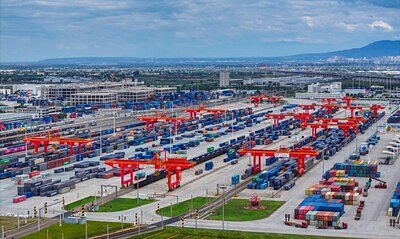
Parallel to its domestic industrial ambitions, Xi'an is cementing its role as a pivotal logistics and trade gateway between China and Eurasia. The China-Europe Railway Express, a cornerstone of the Belt and Road Initiative, has become a powerful engine for the city's economy. In 2025, the Xi'an hub operated 6,037 train trips, a 21.1% increase that mirrored the 21.1% surge in the city's total imports and exports, which reached CNY498.79 billion.
Major infrastructure projects are underway to amplify this strategic advantage. The ongoing Phase III expansion of Xi'an Xianyang International Airport will dramatically increase both passenger and cargo capacity, providing a crucial air freight alternative for high-value goods and complementing the extensive rail network. Furthermore, the construction of the Xi'an–Shiyan High-Speed Railway will enhance connectivity within China, facilitating the seamless flow of goods, talent, and business travel.
These projects are not merely about logistics; they represent Xi'an's ambition to become a fully integrated international hub, leveraging its geographic position to bridge domestic manufacturing centers with global markets. This outward-looking strategy is essential for sustaining growth, especially if domestic consumer demand faces headwinds, and it aligns with China's national policy of pursuing "high-standard opening-up."
Balancing Growth with Stability and Sustainability
While the headline figures point to aggressive growth, Xi'an's plan also incorporates measures to ensure development is balanced, sustainable, and socially inclusive. The government has explicitly acknowledged the need to mitigate risks in the real estate and local government debt sectors—a challenge faced by many cities across China. This proactive stance is critical for preventing the kind of imbalances that could derail long-term prosperity.
Urban and social development form a key pillar of the strategy. The city will advance 331 urban renewal projects, complete 39 resettlement projects for residents, and add 15,000 new student places in its schools. These initiatives aim to improve the quality of life, modernize aging infrastructure, and ensure that the benefits of economic growth are widely shared.
Environmental protection is also a stated priority, with plans to complete ecological restoration projects in the northern foothills of the vital Qinling Mountains, a critical natural barrier and water source for the region. This commitment to green development is essential for balancing rapid industrialization with long-term ecological health, aligning with China's overarching "dual carbon" goals. This comprehensive approach demonstrates an understanding that sustainable prosperity depends not only on economic output but also on social stability and environmental stewardship.
Topics & Related
ESG
Digital Transformation
Geopolitics & Trade
Financial Performance
Financial Services
Real Estate & Construction
Related Company Pulse