
- 6,000 freight trains handled by Xi'an's China-Europe Railway Express terminal in 2025
- 3,000 sensors monitoring Xi'an's 1,400-year-old City Wall
- 99.8% case completion rate for Xi'an's 24/7 citizen service hotline in 2025
Experts would likely conclude that Xi'an's Global Mayors Dialogue successfully demonstrated how historic cities can leverage their cultural heritage and technological innovation to foster international urban cooperation and sustainable development.
Xi'an Revives Silk Road Spirit for Global Urban Development
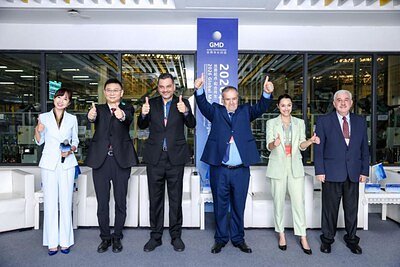
XI'AN, China – April 29, 2026 – At the ancient starting point of the Silk Road, a new chapter in global urban cooperation is being written. From April 27-29, the city of Xi'an hosted the "2026 Global Mayors Dialogue," bringing together mayors and municipal leaders from eight countries to forge a common path for the future of cities. Under the theme "Silk Road Starting Point Harmony for Shared Progress," the dialogue sought to chart a course for urban development empowered by technology and culture, culminating in a new consensus for shared growth.
Delegates from Egypt, Lebanon, New Zealand, Jordan, Oman, Tunisia, and Iraq engaged in a three-day immersive experience, exploring how this former imperial capital has transformed into a modern metropolis while meticulously preserving its 3,000-year-old heritage. The event is the latest in a series of similar dialogues hosted across China, from Hangzhou to Shanghai, signaling a concerted strategy of urban diplomacy aimed at fostering international partnerships at the municipal level.
A New Silk Road for Urban Diplomacy
The dialogue in Xi'an is more than a standalone conference; it represents a key component of China's broader vision for international cooperation, echoing the principles of its Belt and Road Initiative (BRI). By positioning Xi'an—a city whose history is synonymous with global exchange—as the host, organizers have powerfully linked the ancient trade routes with modern networks of technology, commerce, and ideas.
This strategy was evident in the delegates' itinerary, which showcased Xi'an's pivotal role in the BRI. A visit to the China-Europe Railway Express Xi'an Assembly Center provided a firsthand look at the city's logistical prowess. In 2025 alone, this terminal handled over 6,000 freight trains, solidifying its status as a critical artery connecting Asia and Europe. This modern-day caravan route demonstrates Xi'an's evolution from a historical symbol to an active hub in global trade, leveraging its legacy to build contemporary economic influence.
The event series, with previous stops focusing on themes like cultural legacy in Zhengzhou and low-carbon development in Shanghai, illustrates a consistent effort to build a global network of cities aligned on key development goals. The Xi'an dialogue builds on this foundation, using the city's unique identity to champion a model of development where history is not a relic but an active driver of future growth and international partnership.
The Smart City Blueprint: Tech and Tradition Intertwined
A central theme of the dialogue was Xi'an's remarkable ability to weave cutting-edge technology into the fabric of its ancient urban landscape. The city presented itself as a living laboratory for smart governance and sustainable innovation, offering a potential blueprint for other historic cities grappling with modernization.
Delegates toured advanced industrial sites like the Geely Xi'an "dark factory," where 934 robots assemble vehicles with futuristic efficiency, and LONGi Green Energy Technology Co., Ltd., a leader in the global solar industry. These visits highlighted Shaanxi province's growing strength in high-tech manufacturing and sustainable energy, fields that drew significant interest from international representatives.
Yet, it was the application of technology to cultural preservation and public service that left a lasting impression. The iconic Xi'an City Wall, a 1,400-year-old fortification, is now protected by a network of over 3,000 sensors and AI-powered algorithms that monitor the health of its ancient bricks in real-time. This fusion of the ancient and the digital resonated deeply with visitors. Abdul Hamid Al Kharusi, Deputy Wali of Wilayat Muttrah in Oman, a historic port city, captured this sentiment, stating, "We came to Xi'an to learn from its experience—how to preserve identity while integrating it with urban development."
The city's people-centric smart governance was also on full display. Delegates learned about the "12345 citizen service hotline," a 24/7 public feedback system that boasted a 99.8% case completion rate in 2025. This model of responsive governance impressed Elmoula Abdelbaki, a municipal affairs director from Tunisia's Tozeur Governorate, who expressed a desire to replicate the system to improve civil services back home.
Forging Global Partnerships from Energy to Heritage
The dialogue successfully transitioned from high-level discussions to identifying concrete areas for bilateral cooperation. The specific needs and interests of the visiting delegations found common ground with Xi'an's expertise, laying the groundwork for future partnerships.
Tania Tapsell, Mayor of Rotorua, New Zealand—a city renowned for its geothermal activity and Māori culture—found a particularly strong resonance. "In Rotorua, we are seeing more and more people driving BYD vehicles," she noted, highlighting the growing presence of Chinese green technology abroad. "Sustainable energy has made development in Shaanxi more resilient, and we look forward to learning about related technological innovations and further integrating artificial intelligence technologies." Citing New Zealand's own push into geothermal power and wellness tourism, she expressed hope for direct cooperation and exchanges with Xi'an.
From the Middle East, the focus was on cultural and educational collaboration. Jamal Abu Obeid, Chairman of Al-Ramtha New Municipality in Jordan, was clear about his objectives. He expressed a desire to "establish cooperation with institutions in Xi'an, invite more friends from Xi'an to participate in exchanges in culture, education, and technology." His vision extends to encouraging mutual tourism and fostering youth exchanges, building bridges between the two ancient civilizations.
These targeted discussions demonstrate the event's practical value, moving beyond symbolic gestures to create tangible pathways for knowledge sharing and joint projects in areas as diverse as green energy, smart city administration, and cultural heritage management.
The Xi'an Consensus: A Vision for Shared Progress
As the dialogue concluded, the participating mayors and representatives gathered to jointly release the "Global Mayors Dialogue - The Xi'an Consensus on Silk Road Urban Development." This document codifies the spirit of the event into a guiding framework for future collaboration. It is built on four key pillars: advocating for the continuity of civilizations, promoting technological empowerment, committing to a green transformation, and fostering people-to-people exchanges.
The consensus is more than a closing statement; it is a shared commitment to a model of urbanization that is inclusive, sustainable, and culturally aware. By championing the continuity of civilizations, the signatories acknowledge that a city's soul lies in its history and that heritage must be a cornerstone of future planning. The focus on technological empowerment and green transformation addresses the urgent global challenges of climate change and digital disruption, positioning cities as the primary arenas for innovation.
Finally, the emphasis on people-to-people exchanges reinforces the idea that true global partnership is built not just on trade and policy, but on mutual understanding and shared human experience. All parties expressed their intent to use the dialogue as a springboard for deepening practical cooperation, ensuring that the conversations started in Xi'an will translate into tangible benefits for citizens around the world, contributing to high-quality urban development for all.