
- $100 million raised in Series A funding (June 2024)
- 12-megajoule-class Vulcan facility planned for wall plug breakeven
- Two-beam laser architecture tested at OMEGA facility
Experts view Xcimer's methodical, data-driven approach as a promising step toward commercializing laser fusion, though significant engineering and economic hurdles remain.
Xcimer's Blueprint for Laser Fusion: From Lab Data to Power Plant
DENVER, CO – March 18, 2026 – In the global race to unlock the near-limitless potential of fusion energy, disciplined progress often speaks louder than bold proclamations. Xcimer Energy, a Denver-based startup, has taken such a step, announcing the completion of crucial experiments at the University of Rochester’s prestigious Laboratory for Laser Energetics (LLE). The successful tests, while highly technical, represent a vital piece of the puzzle in the company's methodical quest to transform laser-driven inertial fusion from a scientific milestone into a commercially viable power source.
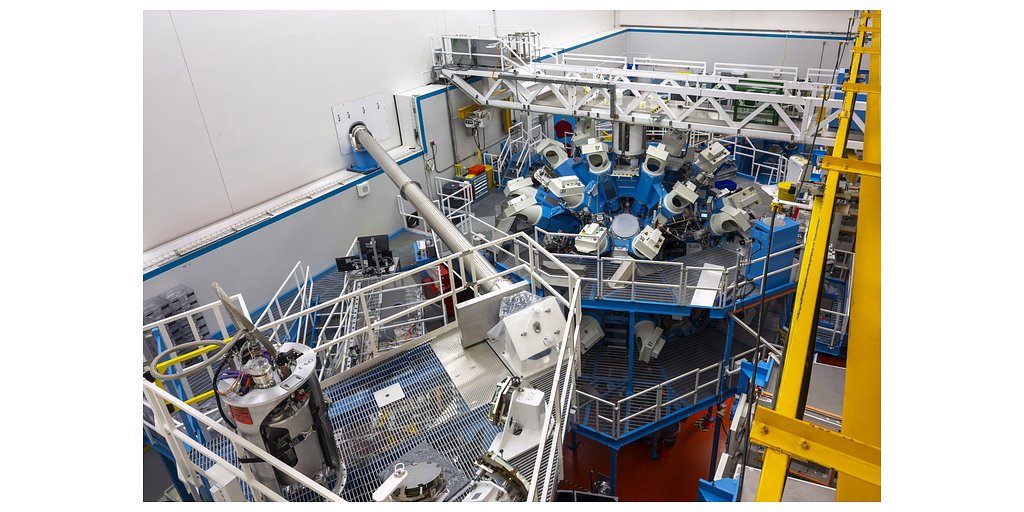
Scientists from Xcimer and its partner institutions used the world-class OMEGA Laser Facility to gather data that directly validates the complex physics models underpinning their unique approach. This isn't a declaration of final victory in the fusion race, but a critical engineering checkpoint, grounding theoretical designs in real-world experimental data and de-risking the path toward a functional fusion pilot plant.
Unpacking the Physics: From Halfraums to Fusion Power
The recent experiments centered on a component known as a “halfraum.” In inertial confinement fusion, lasers typically heat the inside of a tiny, hollow cylinder called a hohlraum. This process generates a bath of intense X-rays that symmetrically compress a fuel capsule at the center, creating the immense temperatures and pressures needed for fusion to occur. Xcimer’s tests focused on a half-hohlraum configuration, a key element in its simplified “two-beam” architecture.
Because the OMEGA facility isn't designed for Xcimer’s specific laser setup, the team creatively adapted the experiment. Beams were intentionally repointed to mimic the unique laser-target interaction conditions of Xcimer's proprietary design. By testing halfraums made of copper, gold, and lead, researchers measured critical parameters like radiation temperature and shock velocity. This data provides the hard evidence needed to refine their computer simulations.
“The goal of this campaign was to generate experimental data that directly informs our hohlraum design work,” explained Alison Christopherson, Head of Target Design at Xcimer. “This data provides the validation required for system-level confidence as we scale from individual experiments toward an integrated fusion energy system.”
Essentially, these tests are the scientific equivalent of calibrating your instruments before building a skyscraper. Without validated models, designing a full-scale fusion power plant would be an exercise in guesswork. With this new data, Xcimer and its collaborators—including General Atomics, which fabricated the targets, Los Alamos National Laboratory, and the Universidad Politécnica de Madrid—can move forward with greater certainty.
The Engineering Blueprint: A Step-by-Step Path to the Grid
This disciplined approach is the hallmark of Xcimer's strategy. The company has laid out a clear, multi-stage roadmap designed to systematically tackle the immense engineering challenges of commercial fusion. The recent OMEGA experiments are a foundational part of this plan, strengthening the physics basis for the company's future facilities.
Phoenix: This first facility, now nearing completion, is focused on de-risking the novel laser technology itself. It will validate key gas-optics elements and demonstrate the beam shaping capabilities essential to Xcimer’s design.
Anvil: The next step is a 200-kilojoule target-shooting facility. Anvil will use full-scale laser hardware to demonstrate integrated performance and, crucially, validate the laser-target coupling with just two shaped beams—a major departure from the multi-beam systems used in government research facilities.
Vulcan: The final planned research facility is a 12-megajoule-class machine designed to achieve “wall plug breakeven”—the point where the total energy produced by the system exceeds the total energy required to run it. This is the ultimate goal before constructing a commercial Fusion Pilot Plant (FPP).
This roadmap is backed by significant financial muscle. In June 2024, Xcimer secured a $100 million Series A funding round led by Hedosophia and including climate-focused investors like Breakthrough Energy Ventures and Lowercarbon Capital. The company was also one of a select few chosen for the U.S. Department of Energy’s Milestone-Based Fusion Development Program, which provides public funding contingent on achieving specific technical goals.
“These shots represent the kind of disciplined experimental validation required to turn laser fusion into an engineered energy system,” said Conner Galloway, co-founder and CEO of Xcimer Energy. “The question now is whether it can be engineered into something scalable and reliable. Every dataset like this helps derisk that path.”
The Crowded Race for Limitless Energy
Xcimer is not operating in a vacuum. The pursuit of fusion energy has become a dynamic and competitive field, attracting billions in private capital and spawning dozens of innovative companies. While Xcimer focuses on laser-driven inertial fusion, other leading contenders are pursuing different paths.
Commonwealth Fusion Systems, a spin-off from MIT, is a leader in the magnetic confinement approach, using powerful superconducting magnets in a device called a tokamak to contain the hot plasma. Backed by nearly $3 billion in capital, CFS aims to have its first power plant, ARC, delivering electricity in the early 2030s. Meanwhile, Helion Energy is developing a pulsed, magnetized target fusion system and has a bold agreement with Microsoft to supply power by 2028.
This diversity of approaches highlights the complexity of the challenge and the fact that no single path to commercial fusion is guaranteed. However, Xcimer’s focus on laser fusion leverages the only approach that has already demonstrated scientific breakeven, a 2022 achievement at the National Ignition Facility (NIF). Xcimer’s goal is to build on that scientific success by developing a laser architecture with significantly higher energy, efficiency, and a lower cost per joule, making the economics of laser fusion finally viable for the grid.
From Scientific Breakeven to Economic Reality
Achieving “scientific breakeven,” where the fusion reaction produces more energy than the laser light delivered to the target, was a monumental achievement. However, it is only the first step. The true goal for commercialization is achieving “net electricity gain,” where the entire power plant produces more electricity than it consumes to operate its lasers, pumps, and control systems.
This is the primary hurdle that all fusion companies, regardless of their approach, must clear. It involves solving profound challenges in materials science, as components must withstand extreme temperatures and intense neutron radiation for years on end. It also requires establishing a robust fuel cycle, particularly for tritium, a rare hydrogen isotope used in many fusion reactions. Furthermore, building the supply chains and regulatory frameworks for a new energy industry is a monumental task in itself.
Xcimer’s detailed, iterative roadmap and its focus on validating physics models with real-world data are designed to methodically address these exact challenges. By focusing on a simplified two-beam system and a more efficient laser, the company believes it can overcome the economic and engineering barriers that have kept previous laser fusion concepts confined to the laboratory. The recent experiments at OMEGA are a small but significant confirmation that their disciplined, engineering-first approach is on the right track.