
- 20 million miles: Workhorse's fleet of 1,100+ EVs has collectively driven this distance, displacing 2.3 million gallons of fuel and preventing 45 million pounds of CO2 emissions.
- 64% lower costs: Workhorse's electric fleet operates at this reduced fuel and maintenance cost compared to ICE vehicles.
- -558.76% operating margin: The company reported this deeply negative figure over the trailing twelve months on $10.62 million in revenue.
Experts would likely conclude that Workhorse's operational milestones and cost-saving data demonstrate the viability of its electric fleet, but its financial challenges and negative margins highlight the steep path to profitability in the competitive EV market.
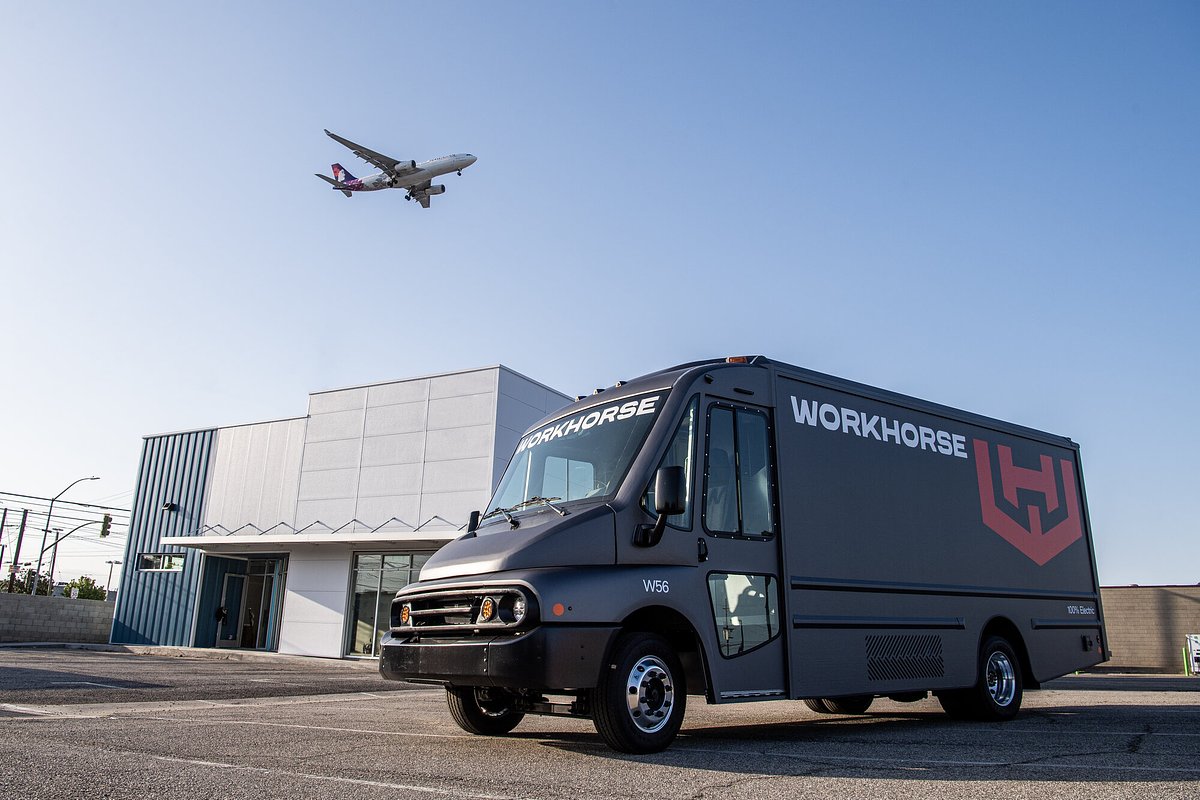
Workhorse EVs Pass 20 Million Miles Amidst Financial Headwinds
DETROIT, MI – March 10, 2026 – Workhorse Group Inc. announced today that its fleet of over 1,100 all-electric commercial vehicles has collectively surpassed 20 million miles of real-world service. The milestone serves as a significant validation for the Detroit-based manufacturer, showcasing the durability and performance of its electric trucks, buses, and shuttles across a range of demanding commercial applications.
According to the company, this extensive road time has displaced an estimated 2.3 million gallons of petroleum-based fuel and prevented more than 45 million pounds of CO2 emissions from entering the atmosphere. The achievement highlights a growing maturity in the commercial electric vehicle sector, where long-term operational data is becoming a critical currency for proving viability and winning customer trust.
"Twenty million miles is a significant threshold which reflects not only the quality and performance of our vehicles, but the trust that our many repeat customers have placed in Workhorse," said Scott Griffith, CEO of Workhorse. "Every day our vehicles safely and reliably transport the goods, packages and people that are the lifeblood of our economy, all with zero tailpipe emissions and pollution, helping to make life better for everyone along the route."
A Laboratory on Wheels
Far more than a vanity metric, the 20 million miles represent a vast repository of data on vehicle performance, battery management, and operational efficiency in harsh environments, from the scorching summer heat of Arizona to the sub-zero winters across Canada. This deep body of knowledge, gathered over more than a decade, is what Workhorse believes sets it apart from newer entrants in the increasingly crowded EV space.
A key component of this data-gathering strategy is 'Stables by Workhorse,' an independent service provider (ISP) for FedEx Ground that the company owns and operates in Ohio. This subsidiary runs a mixed fleet of Workhorse's electric vans alongside traditional internal combustion engine (ICE) trucks. This unique setup functions as a real-world laboratory, allowing the company to directly benchmark performance, uptime, and maintenance needs.
Data from this operation indicates that Workhorse's electric fleet runs at approximately 64% lower fuel and maintenance costs compared to its ICE counterparts. This tangible evidence of a lower total cost of ownership (TCO) is a powerful tool in convincing fleet operators to make the significant upfront investment in electrification.
Building the Future on Proven Experience
The insights gleaned from its deployed fleet and the Stables operation are not merely academic. Workhorse is channeling this experience directly into the design of its next-generation vehicle platform, dubbed 'Gen 7'. The company describes this as a "truly software-defined vehicle" built on a modular, building-block approach. This design philosophy aims to use a common set of scalable, interchangeable sub-systems across its Class 4-6 truck lineup, enabling rapid development of new vehicle configurations without spiraling engineering complexity.
This strategic pivot was significantly influenced by the company's December 2025 merger with Motiv Power Systems. The reverse merger saw Motiv's former CEO, Scott Griffith, take the helm of the combined entity, which is now focused exclusively on the medium-duty market. The deal integrated Motiv's own substantial experience, including its flexible Powertrain Control System (ePCS) and over 2.5 million miles of its own fleet data, into the Workhorse ecosystem.
"Unlike any other electric truck OEM, Workhorse is also its own customer, running our W56 through its paces in actual operations in our Stables subsidiary, and benchmarking performance and cost against internal combustion counterparts,” Griffith stated. “As we design and engineer our next generation, our plan is to move the industry from an era of unconnected, static hardware assets to always-on, smart nodes in an intelligent network.” To streamline this ambitious development, Workhorse has standardized its engineering workflow on Siemens' Xcelerator software platform, a move intended to enhance efficiency from design through the supply chain.
Navigating Financial Turbulence
Despite the impressive operational milestone and a clear technological roadmap, Workhorse faces significant financial headwinds. The company's stock (NASDAQ: WKHS) has seen substantial declines, and analyst consensus currently hovers around a "Hold" or "Sell" rating. Financial reports reveal deeply negative operating and net margins, with an operating margin of -558.76% over the trailing twelve months on revenues of just $10.62 million.
The company has stated its goal is to achieve cash flow breakeven at a production volume of approximately 2,500 vehicles per year. While this represents less than 1% of the estimated $23 billion medium-duty truck market, it is more than double the size of its currently deployed fleet of 1,100 vehicles, highlighting the steep climb ahead to reach profitability.
However, the merger with Motiv also shored up the company's financial position. The deal provided a stronger balance sheet and access to up to $50 million in new debt financing. This crucial liquidity is intended to fund growth, stabilize the supply chain, and shorten order-to-delivery times. The combined entity is also targeting at least $20 million in cost savings by 2026 through operational synergies and reduced overhead.
Market Validation from Major Fleets
While the balance sheet tells one story, market adoption tells another. Workhorse's vehicles are currently in service with ten of the largest medium-duty truck fleets in North America, including logistics giant Purolator, uniform service providers Vestis and Cintas, and numerous FedEx Ground ISPs. This adoption by major commercial players provides crucial third-party validation of the vehicles' performance and reliability.
This positive feedback is echoed by the company's dealer network. "In a little more than a year, we’ve sold and delivered more than 50 Workhorse trucks, and the feedback has been overwhelmingly positive," said Jerry Smith, President at California-based Kingsburg Truck Center. "Our customers report the Workhorse trucks consistently meet their needs for performance, durability and uptime, while offering significant savings on fuel and maintenance. We get frequent feedback that indicates 2026 will be a solid year for repeat orders.”
The company's flagship W56 step van is also gaining traction beyond the regulatory-driven market of California. FedEx Ground contractors like NorthStar Courier in Minneapolis are now deploying the vehicle, demonstrating its viability in colder climates and expanding the company's geographic footprint. This slow but steady accumulation of trust and proven performance, backed by 20 million miles of hard-won experience, forms the foundation of Workhorse's strategy to navigate its financial challenges and solidify its position as a veteran leader in commercial fleet electrification.
Topics & Related
Software & SaaS
AI & Machine Learning
Automotive Manufacturing
Decarbonization
Revenue
EBITDA
Related Company Pulse