
- $12.5 billion: The pet tech market size in 2025, projected to grow to $24 billion by 2030 (CAGR of over 16% for smart litter segment).
- 20-30% cost reduction: HSA/FSA eligibility lowers effective price of Litter-Robot by 20-30% for qualified buyers.
- First-mover advantage: Whisker is the only automatic litter box eligible for HSA/FSA reimbursement.
Experts view Whisker's HSA/FSA eligibility as a strategic innovation that expands accessibility for pet owners with medical needs while setting a precedent for the pet tech industry.
Whisker's HSA Play: How Pet Tech Just Hacked Health Spending
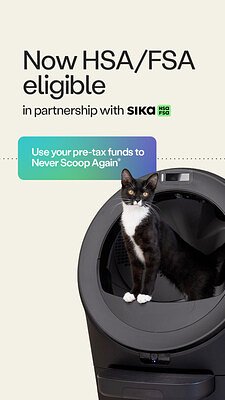
DETROIT, MI – December 05, 2025 – In a move that cleverly blurs the lines between pet care and human healthcare, Whisker, the maker of the popular Litter-Robot, has redefined the strategic playbook for the pet technology industry. The company announced that its lineup of automatic litter boxes and feeders are now eligible for reimbursement through Health Savings Accounts (HSA) and Flexible Spending Accounts (FSA), a first for the category. This isn't just a new payment option; it's a calculated maneuver that expands the company's addressable market while cementing its brand as an innovator focused on accessibility.
The announcement, effective today, positions Whisker's premium products as essential medical equipment for a specific subset of consumers. By leveraging a nuanced interpretation of IRS guidelines, the company has opened a new frontier for how so-called "convenience" products can be re-contextualized as vital aids for independent living, creating a significant competitive advantage in the process.
A New Definition of Medical Necessity
At first glance, using pre-tax health funds for a cat’s litter box seems to defy convention. IRS Publication 502, which governs qualified medical expenses, is explicit: costs for general pet health are not eligible. However, the strategic brilliance of Whisker's move lies in its framing. The eligibility isn't for the pet; it's for the pet owner.
The company is leveraging the established precedent for "medical equipment" that alleviates or mitigates the effects of a human disease or disability. To qualify, a customer must have a documented medical condition—such as chronic pain, arthritis, limited mobility, or even respiratory issues aggravated by dust from traditional litter—that makes the daily chore of scooping a litter box difficult or unsafe. The key that unlocks this benefit is a Letter of Medical Necessity (LMN) from a healthcare provider.
This is where Whisker's partnership with Sika Health, a platform specializing in facilitating HSA/FSA payments for non-traditional goods, becomes critical. Sika Health digitizes the LMN process, connecting customers with licensed telehealth providers who can issue the required documentation. In a move designed to eliminate friction, Whisker is covering the LMN processing fee for its customers. This removes both the administrative and financial hurdles, transforming a complex regulatory loophole into a seamless checkout option. By doing so, Whisker isn't just selling a product; it's selling an accessible, integrated health solution.
A First-Mover Advantage in a Booming Market
This strategic realignment arrives as the pet tech market is experiencing explosive growth. Projections show the industry expanding from roughly $12.5 billion in 2025 to nearly $24 billion by 2030, driven by the "humanization" of pets and a growing demand for smart, connected devices. Within this space, the smart litter and waste management segment is forecast to expand at a compound annual growth rate (CAGR) of over 16%.
By becoming the first and only automatic litter box to secure this HSA/FSA eligibility, Whisker has carved out a powerful niche and erected a significant competitive moat. Competitors like PetSafe and Petkit, which also offer automated pet care solutions, now face a new form of market pressure. They are no longer competing on features and price alone, but also on financial accessibility and regulatory ingenuity. Replicating Whisker’s model would require establishing a similar compliance framework and partnership, a time-consuming and complex endeavor.
"Our focus has always been on designing technology that makes life simpler and more empowering," Whisker CEO Jacob Zuppke stated in the official release. "HSA/FSA eligibility is more than a milestone – it's validation that innovation grounded in empathy can transform everyday life."
This move effectively expands Whisker's total addressable market. The high price point of the Litter-Robot (often upwards of $500) has historically been a barrier for many consumers. By allowing qualified individuals to use pre-tax dollars, the effective cost is reduced by 20-30%, depending on their tax bracket. This makes the product attainable for a new segment of needs-based consumers who stand to benefit most from the technology but may have been previously priced out.
The Human Impact of Financial Accessibility
Beyond the balance sheet, the strategic investment in HSA/FSA eligibility carries profound implications for pet owners. For individuals living with disabilities or chronic health conditions, the human-animal bond is often a critical source of emotional support and well-being. However, the physical demands of pet care can become a significant barrier to ownership.
The simple, repetitive act of bending to scoop a litter box can be an agonizing or impossible task for someone with severe arthritis or back pain. For those with respiratory conditions, airborne dust from clay litter can trigger serious health issues. In these scenarios, an automatic, self-cleaning litter box transcends convenience and becomes an enabling technology. It allows individuals to maintain their independence and continue caring for their companion animals without compromising their health.
Disability advocacy groups have long championed innovations that support independent living. While the focus is often on service animals, whose maintenance costs are already HSA-eligible, this development acknowledges that for many, a companion animal is an integral part of their support system. By making the tools for their care more affordable, Whisker is aligning its business strategy with a clear social benefit, generating significant brand loyalty and goodwill in the process.
Broader Implications for Pet and Health Industries
Whisker's move is a clear signal that the boundaries of "healthcare" are becoming more fluid. It sets a powerful precedent that could inspire other companies in the pet industry and beyond to explore similar avenues. We may see a future where other assistive pet products—such as automated feeders for owners with cognitive challenges or pet-monitoring cameras for those with anxiety—also seek LMN-based eligibility.
This development also dovetails with broader legislative trends. The proposed "People and Animals Well-being (PAW) Act," which seeks to make general veterinary expenses eligible for HSA/FSA spending, indicates a growing political appetite for formally recognizing the role pets play in human health. While that bill faces a long road, Whisker's success provides a market-based proof of concept that financial mechanisms can be used to support the human-animal bond.
For investors and market analysts, Whisker’s strategy is a case study in creating value through non-traditional means. The company identified a genuine consumer need, navigated a complex regulatory environment, and forged a strategic partnership to deliver a solution that is both profitable and socially impactful. It's a capital move that demonstrates long-term vision, moving beyond simple product innovation to reshape the financial landscape of its entire industry.