
- $40M raised since 2011 for melanoma research through Leveraged Finance Fights Melanoma (LFFM).
- 19 FDA-approved therapies developed with MRA funding, transforming survival rates.
- $4.3M raised in a single 2026 event, bringing total to nearly $40M.
Experts would likely conclude that strategic philanthropic investments in melanoma research have yielded significant scientific breakthroughs, improving survival rates and driving innovation in cancer treatment.
Wall Street’s $40M Bet on Curing a Cancer—And It’s Paying Off
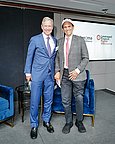
NEW YORK, NY – June 11, 2026 – Amid the masterworks of the Museum of Modern Art, another kind of masterpiece was being celebrated: a strategic alliance that is methodically deconstructing one of the world's deadliest cancers. On June 10, more than 1,100 leaders from the apex of leveraged finance, private equity, and law gathered for the 15th Annual Leveraged Finance Fights Melanoma (LFFM) event. They weren't just attending a gala; they were closing a deal. The result was a record-breaking $4.3 million raised for the Melanoma Research Alliance (MRA), the largest nonprofit funder of melanoma research worldwide.
This single evening's success brings the total capital raised by this group to nearly $40 million since 2011. What began as a grassroots effort has matured into a philanthropic heavyweight, demonstrating a powerful thesis: the same acumen used to identify undervalued assets and drive growth in the corporate world can be deployed to generate unprecedented returns in medical science.
The New Model of Philanthropic ROI
In the world of high finance, every investment is measured by its return. The leaders backing LFFM have applied this exact discipline to their philanthropy, and the results are staggering. This isn't just charity; it's a calculated investment in innovation, backing what MRA’s incoming CEO, Stephanie Kauffman, calls “bold scientific ideas, exceptional researchers, and promising new approaches to cancer treatment.”
The coalition of sponsors reads like a who's who of global finance and law, with Global Presenting Sponsors including HPS, Veritas Capital, Apollo|MidCap, General Atlantic, KKR, and Silver Lake, alongside legal giants like Kirkland & Ellis, Latham & Watkins, and Simpson Thacher. For this community, the due diligence is clear. MRA operates on a model that would appeal to any shrewd investor: thanks to the generosity of its founders, 100% of all public donations go directly to funding research, with zero overhead. It’s a fiscally efficient machine designed for maximum impact.
LFFM Co-Founder Jeff Rowbottom of General Atlantic framed it perfectly: "What makes LFFM so special is that this industry has embraced the belief that investing in medical research is one of the most meaningful investments we can make." The term 'investment' is key. It signifies a belief in a long-term value proposition—not in dollars, but in lives saved and futures secured.
From Lab Bench to Lifeline: The Science of Survival
That investment has yielded a portfolio of breakthroughs that have fundamentally altered the prognosis for melanoma patients. The nearly $40 million from LFFM has helped fuel an MRA research engine that has contributed to the development of 19 FDA-approved therapeutic approaches. A decade ago, a diagnosis of advanced melanoma was often a death sentence, with median survival measured in months. Today, for some patients on combination immunotherapy treatments pioneered by MRA-funded scientists, median survival can exceed ten years.
The scientific revolution has been driven by immunotherapies—drugs like nivolumab and pembrolizumab—that unleash a patient's own immune system to hunt and destroy cancer cells. These advancements have more than doubled the five-year survival rate for metastatic melanoma. The success has been so profound that melanoma is now considered a 'leading indicator' in oncology. The therapies proven effective against it are now being studied and applied to over 30 other types of cancer, including lung, breast, and pancreatic.
The funds raised by LFFM are now pushing into the next frontiers: next-generation immunotherapies, personalized cell therapies, AI-powered diagnostics for earlier detection, and crucial research into rare and aggressive melanoma subtypes that have historically been underfunded.
A Crusade Forged in Personal Combat
The immense financial and strategic power of this initiative is rooted in a deeply personal fight. LFFM was co-founded in 2011 by Jeff Rowbottom and Brendan Dillon of Veritas Capital, both of whom have personally battled melanoma. Their experience transformed an abstract health crisis into a concrete mission. They leveraged their extensive networks not just for capital, but to build a community galvanized by a shared purpose.
This mirrors the origin of the MRA itself. The alliance was founded in 2007 by Debra and Leon Black after Debra was diagnosed with stage II melanoma. Faced with a grim landscape of limited treatment options, the Blacks—Leon being the co-founder of private equity giant Apollo Global Management—decided to disrupt the field. They provided $40 million in seed funding and a commitment to cover all operating costs, creating the efficient, high-impact model that continues today.
As Mr. Rowbottom stated, "Fifteen years ago, we set out to build something that would make a meaningful difference... We could not have imagined the scale of what this community would accomplish together." The story of LFFM and MRA is a testament to how personal conviction, when combined with professional influence, can mobilize an entire industry to tackle a global problem.
The Unseen Fronts in the War on Melanoma
Despite the remarkable progress, the war is far from won. The urgency that fuels LFFM is underscored by sobering statistics. In 2026 alone, more than 112,000 Americans are expected to be diagnosed with invasive melanoma, and nearly 8,500 are projected to die from the disease—approximately one person every hour.
The disease does not strike evenly. It is one of the most common cancers among young adults, with incidence in women under 30 having risen by 50% since 1980. Certain populations face a disproportionately high risk; national data shows U.S. military veterans are 2.3 times more likely to develop melanoma, a consequence of prolonged UV exposure during training and deployment. Furthermore, while melanoma incidence is lower in people of color, they often face diagnosis at later, more dangerous stages, leading to significantly worse survival rates.
This complex reality is where the strategic funding of MRA becomes most critical. The alliance directs resources toward understanding these disparities and funding research into rare forms of melanoma—like acral, mucosal, and uveal—that are more prevalent in diverse populations. The fight continues on multiple fronts, from prevention and early detection to tackling the deadliest forms of metastasis, proving that the record-setting fundraising is not a victory lap, but a refueling for the battles that lie ahead.