
- $100 million: Motive Partners' strategic investment in Electric Mind, an AI-led services firm.
- $18.2 billion to $80 billion: Projected growth of the AI in FinTech market from 2026 to 2036.
- 70%: Financial institutions expected to be using AI at scale by late 2025.
Experts view this move as a clear signal that private equity is emerging as the new frontier for AI-driven financial innovation, with top-tier technology leaders increasingly opting for agile, transformational roles in the private markets over traditional financial institutions.
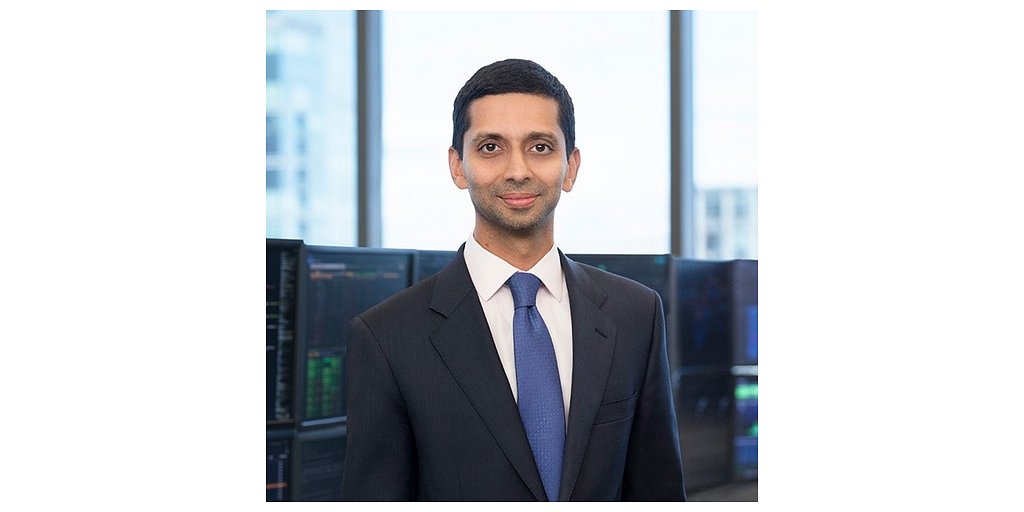
Wall Street Tech Titan Jumps to PE, Signaling Major AI Power Shift
NEW YORK, NY – May 06, 2026 – In a move sending ripples across the financial industry, Umesh Subramanian, one of Wall Street's most influential technology leaders, is leaving the high-frequency world of hedge funds for private equity. Motive Partners announced today that the now-former Chief Technology Officer of Citadel will join the specialist private investment firm as a Partner, effective July 1, 2026.
The appointment is far more than a high-profile executive shuffle. It represents a significant moment for the financial sector, underscoring a powerful talent migration from established financial giants to private investment firms that are increasingly positioning themselves as the new nexus of technological innovation. Subramanian's decision to move from one of the world's most technologically sophisticated trading environments into the private markets highlights a critical industry inflection point: the era of artificial intelligence in finance is shifting decisively from experimentation to full-scale, strategic deployment.
Subramanian's career is storied. He spent seven years as CTO at Citadel, overseeing the complex engineering organization that powers the firm's formidable research, trading, and risk management platforms. Before that, he dedicated over 13 years to Goldman Sachs, rising to Partner and Co-Head of the Technology Division. His move is seen as a rare instance of a sitting, top-tier CTO at the peak of his career making a direct leap into the private markets, a domain once seen as a technological laggard compared to elite hedge funds and investment banks.
The New Brain Drain: Tech Talent Flocks to Private Equity
Subramanian's transition is a prominent example of a broader trend reshaping the financial talent landscape. For years, private equity returns were often driven by financial engineering and leverage. Today, with increased market competition, the focus has pivoted sharply toward operational value creation. PE firms are no longer just buying companies; they are rebuilding them from the ground up, and technology—specifically AI—is the primary tool.
This shift has created a voracious appetite for a new kind of leader: the 'transformational operator' with deep technical expertise. Industry reports show a surge in PE firms hiring for roles in data science and AI, recognizing that technology is no longer a support function but the core of the investment thesis. Leaders who can implement AI-driven efficiencies and lead digital transformations are in high demand, commanding premium compensation and significant influence.
In this new environment, private equity offers a unique proposition for technology leaders like Subramanian. Instead of optimizing a single, albeit massive, platform, the role at Motive Partners provides a canvas to implement AI transformation across a diverse portfolio of financial technology companies. It’s a shift from running the machine to redesigning an entire fleet of them.
Motive's 'Operator' Model Gains a Strategic Powerhouse
For Motive Partners, Subramanian's appointment is a powerful validation of its core strategy. The firm operates on what it calls an “Investor-Operator-Innovator” (IOI) model, which pairs investment capital with seasoned operators who can drive transformation from within. The hiring of a technologist of Subramanian's caliber is the IOI model in its most potent form.
In his new role, Subramanian will be a member of the firm’s Executive Leadership and Investment Committees, tasked with leading AI-driven transformation across Motive's platform. This involves working directly with portfolio companies to embed advanced data architectures, applied AI, and modern engineering practices into their core business models.
This move aligns perfectly with Motive’s recent strategic actions. The firm has been vocal about its belief in AI's transformative power, recently publishing an analysis titled, “AI and Financial Technology: Existential Threat or Generational Opportunity – Speed Will Decide.” This thesis argues that AI will fundamentally re-architect financial services by working through, not around, the incumbent FinTech software that powers the industry. The firm has backed this view with capital, including a $100 million strategic investment in Electric Mind, an AI-led services firm, to accelerate the delivery of next-generation solutions.
Rob Heyvaert, Founder and Managing Partner of Motive Partners, framed the hire as a landmark event. “Umesh is one of the defining technology leaders of his generation,” he stated in the announcement. “Bringing in a leader of Umesh’s caliber – at the height of his career and directly from one of the most sophisticated technology environments in the world – is comparable to the most consequential talent inflections we’ve seen in our industry. It signals where the next decade of value creation in financial services will occur.”
An Industry Reaches its AI Inflection Point
Beyond the strategic implications for Motive, the move is a bellwether for the entire financial services industry. AI adoption has been accelerating for years, but 2026 is marking a clear transition. The AI in FinTech market is projected to swell from an estimated $18.2 billion this year to nearly $80 billion by 2036. By late 2025, over 70% of financial institutions were expected to be using AI at scale.
This widespread adoption is moving beyond isolated use cases like fraud detection and into core business functions, including risk modeling, asset management, and customer experience. Generative AI, in particular, is rapidly compressing costs and accelerating product development. However, many institutions are still hampered by legacy systems and a lack of unified data strategies, challenges that an experienced operator can help solve.
Subramanian’s own words reflect this new reality. “We are at a pivotal moment where AI is fundamentally reshaping how financial institutions operate and compete,” he commented. “The opportunity now is not just to build systems, but to reimagine entire operating models.” His decision to join Motive suggests a belief that private equity provides a more agile and impactful platform to drive this industry-wide reimagination than a more established, monolithic institution.
As AI moves from a buzzword to a fundamental pillar of finance, the war for talent is no longer just about hiring the best quants or traders. It is about securing visionary technology leaders who can architect the future. Subramanian’s jump to the private markets is a clear signal that the front lines of financial innovation are shifting, with private capital poised to lead the charge in deploying AI at scale and reshaping the industry for the next generation.