
- 14% of a project's total contract value can be lost to design errors, contributing to a billion-dollar industry problem. - Big View Studio's 1:1 projection technology allows clients to physically walk through floor plans before construction begins. - The service aims to reduce costly rework by identifying layout conflicts in the pre-construction phase.
Experts agree that Big View Studio's physical projection technology offers a significant advancement in pre-construction validation, potentially saving millions in rework costs by bridging the gap between design intent and physical reality.
Walk Your Blueprints: New Tech Turns Floor Plans into Reality
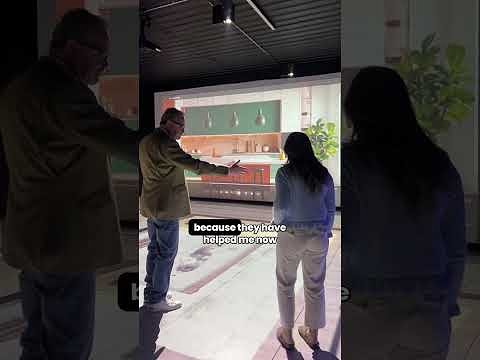
FORT COLLINS, Colo. – February 24, 2026 – For anyone who has squinted at a complex blueprint, trying to imagine the feel of a future home or office, a Northern Colorado company is offering a solution: walk through it before a single nail is hammered. Big View Studio has launched a service that projects architectural plans at a 1:1 scale onto a massive studio floor, transforming abstract lines on paper into a tangible, walkable space.
The technology aims to solve one of the most persistent and expensive problems in construction: the gap between a design's intent and its physical reality. By allowing homeowners, architects, and developers to "test drive" their floor plans, the Fort Collins-based firm is betting it can eliminate the design uncertainty that leads to costly errors, project delays, and client dissatisfaction. This physical pre-construction validation moves beyond digital tools, offering a new layer of confidence for what is often the largest investment in a person's life.
Beyond Virtual Reality: A Physical "Aha!" Moment
The architectural visualization market is saturated with advanced digital tools. Virtual Reality (VR) headsets can transport clients into stunningly realistic 3D models, while Augmented Reality (AR) can overlay digital elements onto a real-world construction site. While these technologies offer powerful immersive experiences, Big View Studio's approach is fundamentally different by emphasizing the physical over the purely digital.
Instead of strapping on a headset, clients physically walk through the projected layout. They can feel the width of a hallway with their own stride, test the clearance around a projected kitchen island, and experience the flow from one room to another in real-world scale. The company's launch material describes this as providing a definitive "Aha!" moment, moving decision-making from "hopeful uncertainty to absolute confidence."
This physical interaction addresses a subtle but critical limitation of VR. While virtual environments are visually immersive, the lack of physical feedback can make it difficult to truly judge spatial relationships. By grounding the visualization in the physical world, the projection technology allows for an intuitive understanding of scale that a purely digital walkthrough might miss. It provides a bridge between the architect's detailed CAD files and the client's need to feel how a space will actually function.
Tackling Construction's Billion-Dollar Rework Problem
The most compelling case for this technology lies in its potential for significant cost savings. In the construction industry, changes made after work has begun are notoriously expensive. Industry data consistently highlights that design errors and mid-build change orders are a primary driver of budget overruns and schedule delays. Some studies estimate that the costs associated with correcting design errors can amount to as much as 14% of a project's total contract value, contributing to an industry-wide problem worth billions annually.
Big View Studio’s service is positioned as a direct countermeasure to this risk. By identifying layout conflicts—such as an inefficient door swing, a cramped bathroom layout, or a poorly positioned structural column—in the pre-construction phase, teams can resolve them on the projection floor rather than with a demolition crew on the job site.
For a developer, catching a single design flaw before breaking ground can prevent thousands of dollars in rework, avoid weeks of delays waiting for revised plans and materials, and preserve the project's financial viability. For a homeowner, it means avoiding the heartbreaking choice between accepting a flawed design or paying a premium for a last-minute change order. This front-loading of the quality control process represents a significant shift, turning design verification into a proactive, collaborative exercise rather than a reactive, costly fix.
From Anxiety to Excitement: The Client Journey Reimagined
Building a custom home or a new commercial space is an inherently stressful process, much of which stems from the difficulty non-professionals have in reading and understanding technical drawings. A two-dimensional floor plan is a symbolic language, and misinterpreting it can lead to profound disappointment when the built reality doesn't match the imagined vision.
The 1:1 projection technology directly addresses this emotional pain point. It democratizes the design process by making the plan instantly understandable to everyone involved, regardless of their technical expertise. Standing within the glowing lines of their future master suite or navigating the layout of a new office floor allows clients to connect with the project on a visceral level.
This experience transforms the project from a theoretical concept into a tangible reality, replacing the anxiety of the unknown with the joy of discovery. It empowers clients to provide more specific and meaningful feedback, fostering a more collaborative and transparent relationship with their architect and builder. According to industry observations, projects that utilize immersive technologies for client presentations often achieve design approval significantly faster, as the clarity provided by the experience accelerates decision-making and builds trust.
A New Collaborative Tool with Adoption Hurdles
While the technology offers clear benefits for clients, its success also hinges on its adoption by architects and builders. Big View Studio is positioning its service not as a replacement for professional expertise, but as a powerful new tool in the professional's kit. The system is designed to integrate seamlessly with existing architectural workflows, importing standard CAD and Revit files directly into the projection system. For architects, it offers a powerful way to validate their vision and ensure client satisfaction, reducing the risk of post-design disputes.
However, widespread adoption faces potential hurdles. The most significant is accessibility. As a physically-based service located in Northern Colorado, clients and design teams from outside the region must travel to use it. This contrasts sharply with software-based VR solutions that can be deployed anywhere with a headset and a powerful computer. The cost of the service itself will also be a factor, particularly for smaller projects or firms with tight budgets.
Furthermore, the construction industry, while increasingly embracing technology, can be slow to integrate new processes. Overcoming inertia and demonstrating a clear return on investment will be crucial for the technology to move from a niche offering to an industry standard. Despite these challenges, the service represents a compelling step forward, highlighting a growing trend towards pre-construction verification and placing a local Colorado firm at the forefront of that innovation.