
- Carbon Impact: Algae Black™ has a net negative carbon impact of -4.16 kg of CO₂-equivalent per kilogram, preventing and removing over 100 million metric tons of CO₂ equivalent emissions annually if globally adopted.
- Market Growth: The algae ink market is projected to grow at a compound annual growth rate of over 16% through 2033.
- Cost Premium: Algae ink adds only 1-5% to the final packaging price compared to traditional ink.
Experts view Waiākea's algae-based ink as a groundbreaking, scalable solution for decarbonizing global packaging, offering both environmental and performance advantages over petroleum-based alternatives.
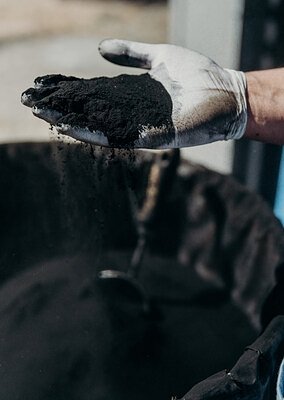
Waiākea's Algae Ink Aims to Decarbonize Global Packaging
HILO, HAWAIʻI – February 25, 2026 – In a move that could fundamentally change the color of sustainability, Waiākea Hawaiian Volcanic Beverages today announced it has become the first company in the world to commercially use carbon-negative algae-based ink on its beverage packaging. After five years of intensive research, the Hilo-based company is rolling out labels printed with ACTExact® UV Black Algae Ink, an innovation that replaces traditional petroleum-based pigments with a revolutionary alternative derived from algae.
The breakthrough, developed in a multi-year partnership with Living Ink Technologies, ACTEGA, and NextGen Label Group™, marks a significant milestone not just for Waiākea, but for the entire consumer packaged goods industry. It presents a scalable, commercially viable solution to a ubiquitous and often-overlooked source of carbon emissions: the ink on our packages.
A Greener Shade of Black: The Science of Algae Ink
At the heart of this innovation is Algae Black™, the carbon-negative pigment that gives the ink its color. For decades, the standard for black pigment has been carbon black, a material produced from the incomplete combustion of petroleum products. Globally, over 33 billion pounds of carbon black are produced annually, with a significant portion used in printing inks. According to a Life Cycle Assessment (LCA) from Living Ink Technologies, this conventional process is carbon-intensive, emitting approximately 3.75 kilograms of CO₂-equivalent for every kilogram of pigment produced.
Algae Black™ flips this equation on its head. The pigment is created using a proprietary process that transforms waste biomass from spirulina algae, a byproduct of the natural food colorant industry, into a stable black pigment. Instead of emitting carbon, the process sequesters it. The LCA, verified by researchers at Colorado State University, found that Algae Black™ has a net negative carbon impact of -4.16 kg of CO₂-equivalent per kilogram. This means that for every kilogram of petroleum-based carbon black replaced, the climate benefits from the avoidance of 3.75 kg of emissions and the removal of an additional 4.16 kg of CO₂ from the atmosphere.
The potential global impact is staggering. If the entire global supply of black pigment were replaced with this algae-based alternative, it could prevent and remove over 100 million metric tons of CO₂ equivalent emissions each year—roughly the same climate impact as taking 25 million cars off the road.
Beyond its climate benefits, the technology offers tangible performance advantages. Independent analysis from the Rochester Institute of Technology found that black algae ink is darker and more resistant to UV light than its traditional counterpart. Printers have also reported it is easier to clean from equipment, and its larger particle size makes it safer for workers compared to the fine, inhalable particles of conventional carbon black.
Beyond the Bottle: A Strategy of Open-Source Sustainability
Perhaps the most radical part of Waiākea's announcement is not the technology itself, but the strategy for its deployment. Rather than securing exclusive intellectual property rights to gain a competitive edge, Waiākea is championing an open-source approach through its partners. The goal is to make the technology accessible to businesses of all sizes, accelerating its adoption and maximizing its environmental impact.
"The historic B Corp score that followed our re-incorporation as a Public Benefit Corporation marked a new chapter for us," said Ryan Emmons, Co-Founder and CEO of Waiākea. "But milestones are only meaningful when they push you forward. Our algae based inks show our continued commitment to move an imperfect industry towards a better future for our ʻāina (land) and our keiki (children)."
This collaborative model appears to be working. The market for algae ink is projected to grow at a compound annual growth rate of over 16% through 2033, driven by mounting consumer demand for sustainable products and tightening regulations on petroleum-based chemicals. Waiākea may be the first to apply it to beverage packaging, but a growing list of major brands, including Nike, Patagonia, Adidas, and Crocs, have already begun using Living Ink's technology for packaging and product printing. This broad adoption demonstrates the technology's commercial readiness and scalability.
While algae ink is currently more expensive to produce than its fossil-fuel-derived counterpart, the cost premium on a final package is minimal—often adding just 1-5% to the packaging price. Proponents believe this gap will shrink rapidly as production scales up and more companies join the movement, creating the economies of scale needed to compete directly with petroleum.
Rooted in Aloha: A Holistic Approach to Planet and People
The adoption of algae ink is the latest chapter in Waiākea's decade-long story of environmental leadership. Founded in 2012, the company was one of the first in North America to use 100% post-consumer recycled (rPET) bottles, a move that uses 85% less energy and reduces carbon emissions by 79% compared to virgin plastic. It has since introduced its OceanPlast™ bottles, made from ocean-bound recycled plastic, and offers infinitely recyclable aluminum and low-carbon bulk packaging options.
This commitment to circularity is deeply embedded in the company's legal structure and ethos. In 2023, Waiākea reincorporated as a Public Benefit Corporation (PBC), legally binding it to a triple bottom line that balances profit with social and environmental performance. This commitment was validated in 2025 when it became a Certified B Corporation, achieving a score of 126.6—placing it in the top 5% of B Corps globally and marking the highest score ever for a water brand.
The company’s impact extends beyond packaging and into the community through its Kōkua Initiative, a non-profit foundation funded by 2% of company revenue. The initiative supports Hawaiian communities through conservation projects, educational opportunities, and aid for vulnerable populations, impacting over 170,000 people in Hawaiʻi last year alone. For every case sold, Waiākea also donates a month's supply of clean water to communities in Malawi through its partnership with Pump Aid.
From its sustainably sourced volcanic water to its smokeless coffee roasting process and now its carbon-negative ink, Waiākea is demonstrating how a company born on a small island can have an outsized positive impact. This latest innovation is another step toward a future that is not just sustainable, but truly regenerative.