
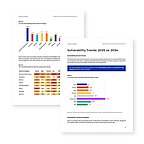
- Vulnerabilities doubled in 2025, with Remote Code Execution flaws surging by 128%.
Experts agree that patching speed has become a critical business resilience metric due to the accelerating pace of cyberattacks and AI-driven exploitation.
Vulnerability Overload: Why Patching Speed Is the New Business Metric
HOUSTON, TX – June 11, 2026 – The operational cadence of global commerce is now being dictated by a new, relentless drumbeat: the machine-speed of cyberattacks. For years, enterprises have managed digital risk through scheduled maintenance and quarterly security reviews. That era is definitively over. A dramatic acceleration in software vulnerabilities is not just outpacing but completely overwhelming traditional, human-paced corporate defenses, creating a strategic crisis that extends far beyond the server room and into the boardroom.
A stark new report from autonomous endpoint management provider Action1 reveals a landscape where the window for remediation has shrunk from weeks to mere hours, fundamentally altering the calculus of risk. The findings suggest that patching speed, long considered a mundane IT performance indicator, has been recast as a primary metric for business resilience. For any leader seeking a competitive advantage in 2026, understanding this shift isn't optional—it's imperative.
A Deluge of Digital Risk
The scale of the problem is staggering. According to the Action1 2026 Software Vulnerability Ratings Report, the number of disclosed vulnerabilities nearly doubled in 2025. This wasn't a uniform increase; the most dangerous categories saw the most explosive growth. Critical and privilege escalation flaws doubled, while vulnerabilities allowing Remote Code Execution (RCE)—the keys to the kingdom for attackers—surged by 128%. The data paints a clear picture: the digital tools that power modern commerce are becoming more fragile at an alarming rate.
This trend is corroborated by wider industry data, which saw a record of nearly 50,000 new Common Vulnerabilities and Exposures (CVEs) published in 2025. The situation is so severe that the U.S. National Vulnerability Database (NVD), the public repository for this information, has developed a critical backlog, leaving thousands of flaws without timely analysis and forcing security teams to fly blind.
The impact is most acute in the software that runs the business itself. Exploitation of enterprise applications like ERP, CRM, and collaboration platforms skyrocketed by an astonishing 800%. Simultaneously, a structural shift is underway as attackers turn their focus to new targets. Vulnerabilities in Apple's macOS, once considered a safer harbor, increased by over 1,000%, with privilege escalation flaws jumping a jaw-dropping 5,600%. This reflects the platform's deeper integration into corporate environments, often without the mature security infrastructure built around its Windows counterpart. As Jack Bicer, Director of Vulnerability Research at Action1, noted, "Many enterprises are still patching on human schedules while attackers operate at machine speed."
The Attacker's AI-Powered Advantage
This acceleration isn't happening in a vacuum. It's being driven by a fundamental change in how attackers operate. The rise of AI and automation in offensive security tools has given adversaries a decisive advantage in speed and scale. Sophisticated threat actors are now leveraging AI to discover and weaponize vulnerabilities faster than ever, often within hours of a flaw's public disclosure. Some industry analyses even point to a "negative time to exploit," where vulnerabilities are actively used in attacks before a patch is even available or the CVE is officially detailed.
This machine-speed offense invalidates the entire paradigm of schedule-driven security. The weekly or monthly patch cycle, a long-standing IT ritual, is now a gaping window of opportunity for compromise. Attackers are no longer just targeting high-severity, front-door vulnerabilities. The Action1 report highlights an increasingly common tactic where adversaries chain together multiple low-severity flaws in multi-stage attacks, turning seemingly minor issues into a pathway for full system compromise. This level of sophistication makes prioritization difficult and manual intervention nearly impossible.
The enterprise attack surface has become a dynamic, rapidly shifting battlefield. Network infrastructure, the very backbone of corporate connectivity, saw critical vulnerabilities climb 235%. Even the security products designed to protect organizations are now prime targets, with flaws in these trusted platforms jumping 39%. The message is clear: no part of the digital supply chain is immune, and the speed of the threat demands a proportional defensive response.
From IT Metric to Business Imperative
For too long, conversations about patching have been confined to IT departments, focused on uptime and operational disruption. This perspective is now dangerously obsolete. The direct line between an unpatched vulnerability and catastrophic business failure has never been shorter or clearer. According to the 2025 Verizon Data Breach Investigations Report, vulnerability exploitation is now one of the top two initial access vectors for breaches, nearly overtaking stolen credentials. It is the primary fuel for the ransomware economy, which claimed over 8,100 publicly listed victims in 2025.
When a critical flaw in a core business system like SAP or SharePoint is left unpatched, the risk isn't just theoretical. It translates into operational shutdowns, stolen intellectual property, regulatory fines, and irreparable reputational damage. The cost of a major data breach now runs into the millions, but the hidden costs of lost customer trust and competitive disadvantage are often far greater. This reality forces a necessary re-evaluation of risk.
The long-held practice of delaying patches on business-critical systems to ensure stability has become a form of high-stakes gambling where the house has an insurmountable edge. The calculus has inverted: the risk of disruption from a timely patch is now dwarfed by the near-certainty of exploitation. This is the crux of the new strategic reality. As Alex Vovk, CEO and Co-Founder of Action1, stated, "The threat landscape is no longer just bigger – it's faster, more automated, and hard to detect. Patching speed is no longer simply an IT metric. It's now a business resilience metric."
The Automation Mandate
Recognizing the problem is only the first step. The strategic response requires a complete overhaul of how organizations approach vulnerability management. The sheer volume of threats—over 130 new CVEs per day—makes manual triage and remediation a losing battle. Industry data shows the average time to fix a security flaw has ballooned to over 250 days, while organizations remediate only about 16% of their known vulnerabilities each month. This creates a permanent, exploitable security debt.
Automation is no longer an efficiency tool; it is a survival requirement. The only way to counter machine-speed attacks is with machine-speed defense. This means moving away from scheduled cycles and toward a model of autonomous, continuous remediation. Organizations must deploy systems capable of discovering vulnerabilities in real time across all endpoints—from servers to employee laptops—and applying patches automatically based on risk.
This new framework must be intelligent, prioritizing flaws based on evidence of active exploitation—using resources like CISA's Known Exploited Vulnerabilities (KEV) catalog—rather than relying solely on static severity scores that are often delayed or incomplete. Embracing this automated, risk-based approach is the defining strategic challenge for enterprises in 2026. It is the foundation for building a resilient organization that can not only withstand the constant barrage of threats but also maintain the operational velocity needed to compete and win in a turbulent digital world.