
- 700 km range: Volvo's new electric truck can travel up to 700 kilometers on a single charge, addressing range anxiety in long-haul transport. - 2030 hydrogen ICE launch: Volvo plans to commercially launch hydrogen-powered combustion engine trucks before 2030. - Multi-billion SEK investment: Volvo is committing significant financial resources to its dual-power strategy for decarbonization.
Experts would likely conclude that Volvo's dual-power strategy—combining advanced electric trucks with hydrogen-ready combustion engines—is a pragmatic approach to decarbonizing transport, acknowledging the need for flexible solutions as global infrastructure and regulations evolve.
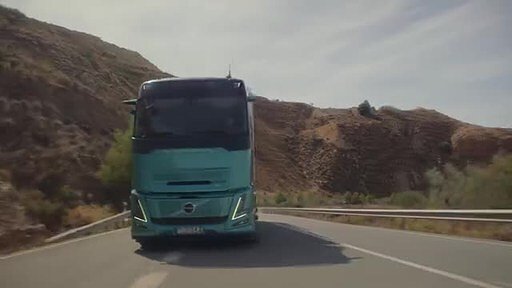
Volvo's Dual Power Play: 700km Electric Truck & Hydrogen-Ready Engine
GOTHENBURG, Sweden – May 12, 2026 – Volvo Trucks today unveiled a landmark global product launch, committing a multi-billion SEK investment to a dual-pronged strategy aimed at accelerating the decarbonization of the transport industry. The announcement includes a new heavy-duty electric truck with a groundbreaking 700-kilometer range and a completely new combustion engine platform designed for renewable fuels and future hydrogen applications, positioning the company to tackle diverse global market demands.
This move signals a pragmatic yet ambitious approach, acknowledging that the path to net-zero emissions is not a one-size-fits-all solution. While pushing the boundaries of electrification, the Swedish manufacturer is also future-proofing the internal combustion engine as a critical bridge technology.
The Electric Long-Haul Breakthrough
At the forefront of the launch is the new Volvo FH Aero Electric, a heavy-duty truck that dramatically extends the possibilities for zero-tailpipe-emission transport. Capable of traveling up to 700 kilometers (approx. 435 miles) on a single charge, the model directly challenges the range anxiety that has historically limited electric trucks to regional and urban routes.
This significant leap in range is enabled by new e-axle driveline technology, which integrates the electric motors and gearbox into the rear axle, freeing up chassis space for more powerful batteries. The truck supports a gross combination weight of up to 48 tonnes. Critically, its batteries can be recharged from 20% to 80% in approximately 50 minutes, a timeframe that aligns conveniently with the mandatory 45-minute rest period for truck drivers in Europe.
This performance places Volvo in a tight competitive race. While Tesla's Semi boasts a longer 500-mile (800 km) range for its top-tier model, Volvo's offering is a significant contender, especially when paired with the growing Megawatt Charging System (MCS) standard. It also puts pressure on other European rivals like Daimler Truck, whose eActros 600 offers a range of around 500 kilometers. By effectively enabling a full day's work on a single charge for many long-haul applications, Volvo is aiming to reach what its leadership calls a "tipping point" for electrification.
"Our new electric trucks are capable of replacing traditional trucks in most cases," said Roger Alm, President of Volvo Trucks, in the company's official statement. The upgraded range of electric models is intended to enable more transport segments and operators to make the switch away from fossil fuels.
Beyond Batteries: A Future for the Combustion Engine
In a clear acknowledgment of global infrastructure disparities, Volvo's investment is not solely focused on batteries. The company also introduced an all-new 13-litre engine platform that serves as the foundation for both new diesel and gas-powered trucks.
From its launch, this new engine is engineered to run on a variety of renewable fuels, including biodiesel (like HVO) and biogas. This allows fleet operators in regions with limited charging infrastructure to immediately reduce their carbon footprint using existing fueling networks.
More significantly, Volvo is betting on hydrogen as a future fuel for the internal combustion engine (ICE). The company confirmed it has begun testing hydrogen-powered combustion engine trucks on public roads and plans to launch them commercially before 2030. This technology leverages the proven durability and performance of diesel powertrains while emitting minimal CO2, offering another pathway to net-zero, particularly for demanding long-haul routes.
This dual-powertrain strategy underscores the company's view that multiple solutions are necessary. "In certain regions and transport segments we also need the combustion engine to reduce CO2 now, and in the future," Alm stated, highlighting the need for flexibility. "One single engine platform will give us synergies and larger production volumes." This approach provides a practical roadmap for customers who are not yet able to transition to fully electric fleets.
Navigating Global Regulations and Infrastructure Realities
Volvo's multi-pathway strategy appears well-aligned with the complex and evolving global regulatory landscape. In Europe, the "Fit for 55" package mandates aggressive CO2 reduction targets for heavy-duty vehicles—45% by 2030 and 90% by 2040. The accompanying Alternative Fuels Infrastructure Regulation (AFIR) requires member states to deploy hydrogen refueling stations every 200 kilometers along major transport corridors, creating a future market for Volvo's hydrogen ICE trucks.
In the United States, the EPA's technology-neutral emissions standards and California's stringent Advanced Clean Trucks (ACT) rule, which mandates an increasing percentage of zero-emission vehicle sales, are driving the shift. Volvo's new electric offerings directly address these ZEV mandates, while its advanced, renewable-fuel-ready combustion engines provide a compliant option for fleets across the country.
The availability of infrastructure remains the key variable. While electric charging networks are expanding, the build-out of a comprehensive megawatt charging system for heavy trucks will take years. Similarly, the "green" hydrogen economy is still in its infancy. By offering both advanced battery-electric vehicles and ICEs that can run on biofuels today and hydrogen tomorrow, Volvo is providing its customers with the tools to decarbonize at a pace dictated by their operational realities and regional infrastructure development.
The roll-out of the new battery-electric trucks is set to begin in 2026, with production centered in Gothenburg, Sweden, and Ghent, Belgium. Sales for the new combustion engines will commence in the third quarter of 2026, with production based in Skövde, Sweden. This massive product renewal, backed by a significant financial commitment, represents one of the most comprehensive efforts by a major truck manufacturer to navigate the complex transition to sustainable transport.