
- WTI crude prices dropped below $80 per barrel amid U.S.-Iran peace talks, highlighting market volatility.
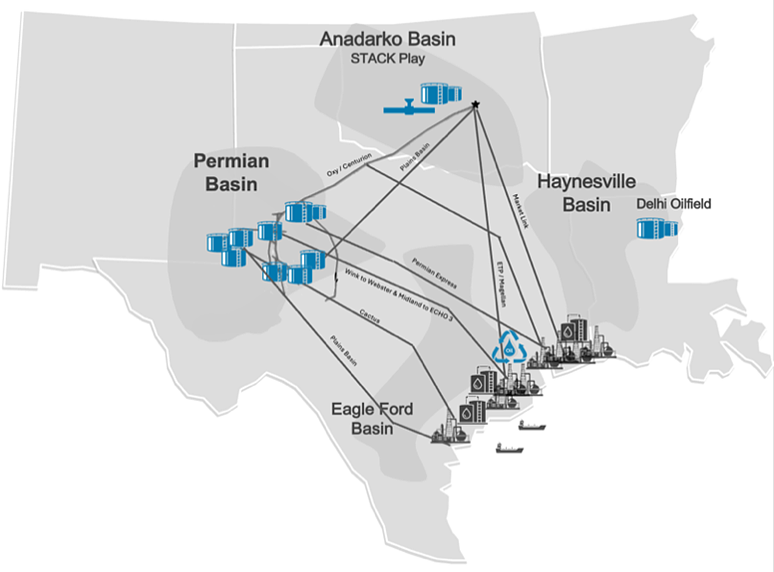
- Vivakor operates 10 pipeline injection stations and two major storage hubs with combined capacity of 220,000 barrels.
- The company projects $300 million in annualized revenue opportunities from new crude oil supply and trading deals.
Experts would likely conclude that Vivakor's strategic infrastructure positions it to capitalize on market volatility, though its aggressive financial maneuvers and competitive landscape present significant risks.
Vivakor's Volatility Play: The Unseen Network Stabilizing US Energy
DALLAS, TX – June 17, 2026 – In a market defined by whiplash, timing is everything. On a day when WTI crude prices tumbled below $80 per barrel on news of a potential U.S.-Iran peace pact, Vivakor, Inc. issued a statement highlighting the strategic value of its infrastructure amid elevated market volatility. The irony is palpable, but it cuts to the core of a deeper truth: for the midstream sector, the companies that own the pipelines, storage tanks, and truck fleets, the chaos itself is a business opportunity.
Just weeks ago, the market narrative was entirely different. Escalating geopolitical tensions in the Middle East had effectively choked off the Strait of Hormuz, sending Brent crude soaring and analysts scrambling to update their forecasts. S&P Global Ratings, for instance, revised its price assumption for the rest of 2026 to a staggering $110 per barrel. In that environment of scarcity and fear, the value of secure, domestic energy logistics becomes paramount. Today, with the sudden prospect of peace and a potential flood of OPEC+ supply, the market is grappling with a different kind of uncertainty. Yet, Vivakor’s central argument, articulated by its CEO, holds firm.
“Periods of elevated crude oil volatility typically increase the importance of strategically located transportation, storage, and pipeline-connected infrastructure across domestic oil producing regions,” stated Vivakor Chairman and Chief Executive Officer James Ballengee. His point is that whether prices are spiking or plunging, the physical movement and storage of oil must continue. It is this unglamorous but essential function that forms the bedrock of the U.S. energy system, a role that becomes more critical, not less, when headlines are dominated by dramatic price swings.
The Infrastructure Backbone
Vivakor’s confidence is rooted in a network of physical assets spread across the nerve centers of U.S. oil production, including the prolific Permian, Delaware, Haynesville, and Eagle Ford basins. This is the unseen machinery that connects the wellhead to the refinery. The company’s portfolio includes 10 pipeline injection stations in Texas and New Mexico, acting as crucial on-ramps to major arteries like the Centurion, Plains Basin, and Cactus II pipelines.
At the heart of its operations are two key storage hubs. The White Claw Colorado City Terminal in Texas boasts 120,000 barrels of storage capacity with vital connections to the Enterprise Pipeline and Scurry Gathering System. Further north, its Omega Terminal in Oklahoma provides 100,000 barrels of capacity with a direct link to the nation's benchmark pricing point in Cushing. These tanks serve as critical buffers, allowing producers and traders to store crude when prices are unfavorable or when logistical bottlenecks emerge.
Supporting this fixed infrastructure is a massive and mobile logistics arm. Following its acquisition of Endeavor Entities in late 2024, Vivakor now commands what it has called “one of the largest combined fleets of oilfield services in the continental United States.” Recent figures suggest the company operates over 500 commercial tractors and trailers, hauling approximately 50,000 barrels of crude oil and thousands of barrels of produced water daily. This fleet provides the last-mile connectivity that pipelines alone cannot, giving the company flexibility in a dynamic production landscape.
A High-Stakes Bet on Dislocation
While the press release paints a picture of steadfast stability, Vivakor’s recent actions reveal a company making aggressive, high-stakes moves to directly capitalize on market dislocation. In June alone, the company has announced a series of crude oil supply and trading deals that represent a significant strategic expansion. One transaction, moving Bakken crude, is projected to generate approximately $115 million in annualized revenue. Another, leveraging its Cushing-connected terminal, is estimated to bring in $108 million annually. In total, Vivakor projects its new and existing contracts could represent approximately $300 million in annualized revenue opportunities for 2026.
This flurry of activity is a bold maneuver, especially when viewed against the company’s recent financial performance. While its gross margin improved to a healthy 29.4% in the first quarter of 2026, overall revenue was down from the prior year following the divestiture of non-core assets. Furthermore, the company’s stock has declined significantly over the past year, and it reported a substantial net loss in 2025, albeit one heavily impacted by a non-cash goodwill impairment. To fund its operations and reduce debt, the company recently closed a $12 million private placement with institutional investors.
This juxtaposition of a struggling stock price with a surge in high-value commercial deals suggests a company in the midst of a sharp pivot, attempting to leverage its physical assets to play a more active role in the lucrative, if risky, world of crude trading. It is a strategy to turn market volatility from a background condition into a direct source of revenue.
A Crowded and Shifting Field
Vivakor is not operating in a vacuum. The Southwestern midstream sector is a fiercely competitive arena dominated by giants. In late 2024, ONEOK invested $2.6 billion to acquire Medallion Midstream, adding over 1,200 miles of crude pipelines in the Permian alone. Titans like Enterprise Products Partners and Plains All American, to whose networks Vivakor’s own assets connect, command immense scale and capital.
Against this backdrop, Vivakor’s strategy appears to be one of integrated, specialized service. However, public records raise questions about the long-term composition of its asset base. A letter of intent was signed in January 2026 for the potential sale of its Oklahoma midstream business—including the Omega Terminal highlighted in its recent press release—to Olenox Industries for approximately $36 million. While the deal’s status is not confirmed, the possibility of such a divestiture suggests Vivakor’s strategy is highly fluid, potentially involving the monetization of certain assets to fund other priorities, such as its expansion into environmental remediation services.
This is the complex reality behind the headlines. Midstream companies are the unsung heroes of the energy ecosystem, providing the stability that allows upstream producers to weather market storms. The demand for their services—transportation and storage—is durable, driven by relentless production from basins like the Permian, where the rig count is rising once again. Whether oil is at $110 or $78, it must be moved from Point A to Point B. For companies like Vivakor, the challenge and opportunity lie in navigating the turbulence, leveraging their physical footprint while making nimble financial plays in a market that can turn on a dime.