
- May 19, 2026: Primary election date for PA-03, effectively deciding the next congressperson due to the district's heavily Democratic lean. - April 29, 2026: Live debate date hosted by WHYY, a critical platform for the three Democratic candidates. - 100,000+: Number of people served by Dr. Ala Stanford's Black Doctors COVID-19 Consortium, highlighting her healthcare impact.
Experts would likely conclude that the PA-03 Democratic primary is a high-stakes race where voters face a clear choice between progressive activism, pragmatic leadership, and healthcare equity expertise, with the debate serving as a pivotal moment in shaping the district's future representation.
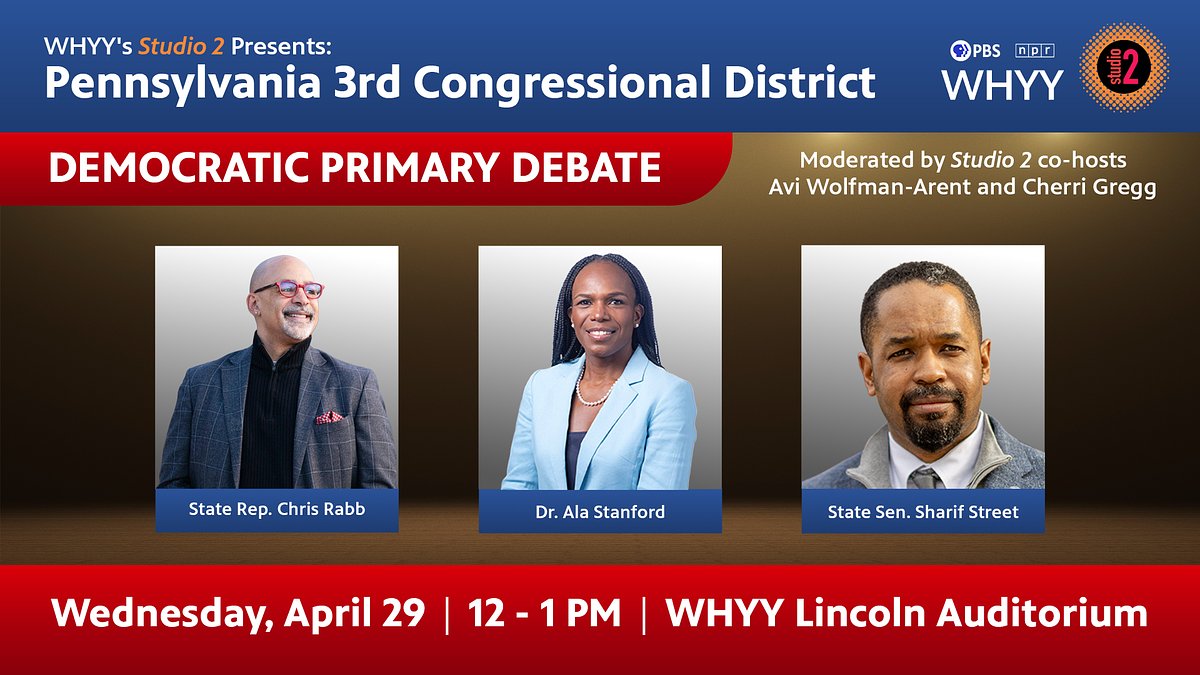
Visions for Philly: PA-03 Democratic Hopefuls to Clash in WHYY Debate
PHILADELPHIA, PA – April 16, 2026 – With the May 19 primary election fast approaching, the race to represent Pennsylvania's 3rd Congressional District is heating up as three prominent Democratic candidates prepare to face off in a live debate hosted by WHYY. The event, scheduled for April 29, will provide a critical platform for State Rep. Chris Rabb, Dr. Ala Stanford, and State Sen. Sharif Street to present their distinct visions for a district that serves as a vital cross-section of Philadelphia.
In a district so heavily Democratic that it is considered one of the most partisan in the nation, the primary is the de facto election. The retirement of incumbent U.S. Rep. Dwight Evans after nearly a decade in office has created a rare open seat, drawing a field of ambitious candidates eager to represent neighborhoods from West Philadelphia and Center City to Manayunk and Roxborough. This high-stakes debate offers voters their most direct opportunity to compare the leading contenders who are vying not just to win a primary, but to become the next voice for this diverse constituency in Washington.
A Race Defined by Divergent Paths
The contest for PA-03 features three candidates with deeply different backgrounds and political philosophies, presenting voters with a clear choice about the type of representation they want. The race pits a progressive activist against a nationally recognized health equity champion and a seasoned political insider, each with a unique claim to the seat.
State Rep. Chris Rabb, a five-term legislator representing the 200th District, has positioned himself as the “unapologetic progressive.” An author and professor, Rabb is foregoing re-election to his state House seat to focus entirely on his congressional bid. His campaign is built on an anti-establishment, “people-first agenda,” and he has a legislative history to back it up. Ranked as a top legislator by the ACLU-PA for his record on civil liberties, Rabb has championed bills on everything from criminal justice reform and ranked-choice voting to renewable energy and labor rights. He is a vocal supporter of Medicare-for-All and has called for a full repeal of the Taft-Hartley Act to bolster unions. His platform has resonated with the progressive wing of the party, earning him endorsements from organizations like the Working Families Party, Justice Democrats, and U.S. Rep. Summer Lee.
In stark contrast stands State Sen. Sharif Street, the current Chair of the Pennsylvania Democratic Party and son of former Philadelphia Mayor John F. Street. An attorney and state senator for the 3rd district since 2017, Street runs on a record of legislative accomplishment and his ability to “get things done.” His campaign highlights his role in creating Pennie, the state’s Obamacare exchange; passing medical marijuana legalization; and leading efforts on criminal justice reforms like automatic expungement. Street’s deep connections within the party establishment and organized labor have secured him endorsements from former Governor Ed Rendell, numerous local unions, and a host of city and state officials. His message is one of pragmatic, experienced leadership capable of delivering results for the district.
Dr. Ala Stanford enters the race as a formidable non-traditional candidate. A distinguished pediatric surgeon, she gained national acclaim as the founder of the Black Doctors COVID-19 Consortium, a grassroots effort that provided critical testing and vaccinations to over 100,000 people in Philadelphia’s underserved communities. Her work led to an appointment by President Biden to serve as a regional director for the U.S. Department of Health and Human Services. Stanford’s platform is rooted in her life’s work on health equity, arguing that policy should be crafted by those who understand the lived experiences of the people they serve. Her campaign focuses on the social determinants of health, including affordable housing, education, and food security. Her bid received a major boost with an early and powerful endorsement from the retiring Rep. Dwight Evans, signaling a transfer of trust from the district’s long-time leader.
The Issues Shaping the 3rd District's Future
While the candidates’ backgrounds diverge, their platforms converge on the core issues facing the district’s residents: affordability, public safety, and access to quality services. The debate will likely press them on the specifics of how they would tackle these challenges. On healthcare, Street points to his work on Pennie, while Rabb advocates for the broader, systemic change of Medicare-for-All, and Stanford brings the perspective of a frontline healthcare provider dedicated to eliminating disparities.
Housing is another critical flashpoint in a district experiencing both disinvestment and gentrification. Street has worked on affordable housing initiatives and supports legislation to curb ownership by private equity firms. Rabb, meanwhile, calls for “deeply affordable housing” as part of his progressive agenda. How each candidate proposes to balance development with community preservation will be a key point of differentiation.
On criminal justice, Street's record focuses on legislative reforms within the existing system, such as parole and bail reform. Rabb takes a more radical stance, having previously voiced support for abolishing ICE and pursuing broader justice system overhauls. These differing approaches reflect a fundamental debate within the Democratic party about the pace and scale of change.
Public Media Provides a Pivotal Stage
With no Republican candidates on the primary ballot, the outcome of the May 19 Democratic primary will almost certainly decide the next congressperson for the 3rd District. This dynamic elevates the importance of forums like the WHYY debate, which may be the only opportunity for voters to see the candidates challenge each other directly. The event underscores the vital role of public media in fostering an informed electorate, especially in local races that have a profound impact on community life.
Moderated by WHYY’s Studio 2 co-hosts Avi Wolfman-Arent and Cherri Gregg, the hour-long debate will be broadcast live on radio and online, with a television airing later that evening. As early fundraising reports show a competitive race and polls indicate a large number of voters remain undecided, the candidates’ performances could prove pivotal in swaying public opinion and shaping the future of this essential Philadelphia district.