
- 28% improvement in team communication in pilot programs
- 38 critical errors eliminated in simulated ER scenarios
- 3.5 medical errors and 2.3 patient deaths per month projected reduction in real-world settings
Experts agree that ER-VIPE's focus on soft skills and interprofessional collaboration significantly enhances patient safety and reduces preventable medical errors, setting a new standard for healthcare training.
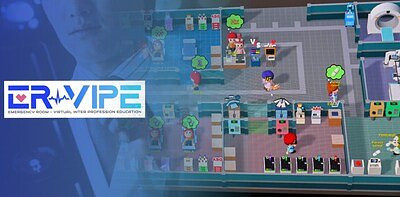
Virtual ER Game Trains Medics, Slashes Fatal Errors in Thai Hospitals
BANGKOK, THAILAND – January 13, 2026 – In the high-stakes environment of an emergency room, a clinical misstep can be fatal. But increasingly, medical experts recognize that errors often stem not from a lack of technical knowledge, but from failures in communication, teamwork, and situational awareness. Addressing this global challenge, Chulalongkorn University's Faculty of Medicine has developed ER-VIPE, a virtual reality simulation platform that is transforming how future healthcare professionals learn to work together under pressure.
The innovative program moves beyond traditional textbook learning, immersing students in a digital ER where they must collaborate to save lives. By focusing on these crucial "soft skills," the university aims to build more resilient and effective medical teams, directly tackling the root causes of preventable medical errors and enhancing patient safety across Thailand and beyond.
Gamifying the Gauntlet of Emergency Care
ER-VIPE, short for Emergency Room – Virtual Interprofessional Education, is more than just a video game; it is a sophisticated training ground built on a foundation of serious educational principles. Integrated into the university's Interprofessional Collaboration for Patient Safety course, the platform brings together students from five distinct disciplines: medicine, nursing, pharmacy, radiologic technology, and medical technology. Each student dons a VR headset and assumes the role of their professional avatar within the simulated environment.
Inside the virtual ER, these interdisciplinary teams are confronted with high-pressure scenarios that mirror real clinical challenges. They must triage, diagnose, and treat patients under strict time limits, forcing them to rely on clear communication and coordinated action. The platform features three patented scenes, including a complex respiratory failure case from the COVID-19 era, a cardiac ischemia patient requiring urgent resuscitation, and a chaotic crowded ER that tests prioritization and patient flow management.
The training is structured around TeamSTEPPS, an internationally recognized framework developed to improve patient safety outcomes. This evidence-based system emphasizes four core competencies: leadership, situation monitoring, mutual support, and communication. Asst. Prof. Dr. Khuansiri Narajeenron, the creator of ER-VIPE and a certified TeamSTEPPS trainer, stresses that clinical expertise alone is insufficient in modern healthcare. "If we don't communicate or see the bigger picture, medical errors will occur," she stated, highlighting a persistent challenge in healthcare systems worldwide. ER-VIPE is her answer to breaking down these communication barriers before they can impact real patients.
From Virtual Errors to Real-World Safety
The impact of ER-VIPE is not theoretical. Rigorous research and pilot programs have demonstrated tangible improvements in both student performance and patient safety metrics. Initial trials conducted in five hospitals yielded a remarkable 28% improvement in team communication and, crucially, led to the elimination of 38 critical errors during the simulated emergency room scenarios.
These results have led to powerful projections for real-world clinical settings. Hospitals adopting the training model anticipate an average reduction of 3.5 medical errors and 2.3 patient deaths per month. Furthermore, the focus on collaborative, patient-centered communication has been linked to a nearly 1% monthly increase in patient satisfaction scores. The training has proven effective in breaking down the "silo thinking" that often plagues healthcare, where professionals focus only on their specific tasks. Instead, ER-VIPE cultivates a system-based perspective, where every team member understands their role within the larger patient care ecosystem.
Beyond reducing errors, the program is also showing promise in addressing another critical issue in healthcare: burnout. Research conducted on participants shows that training with ER-VIPE leads to reduced stress and increased resilience, equipping future professionals with the psychological tools to handle the demanding nature of emergency medicine.
A National Blueprint for Healthcare Innovation
What began as a university project supported by Chulalongkorn's Second Century Fund (C2F) in 2020 has rapidly evolved into a model with national implications. The C2F, an endowment established to reinvest university property revenues into high-impact research, provided the foundational support to get ER-VIPE off the ground, reflecting a broader institutional strategy to foster innovation that addresses societal needs.
The platform's success has spurred its expansion beyond undergraduate education. It is now being used to train first-year medical residents, graduate students, and existing multidisciplinary hospital staff. Significantly, it has garnered strong interest from rural-doctor training programs, showcasing its potential to standardize and elevate the quality of emergency care in underserved regions of Thailand.
This momentum is being formalized at a national level. Nine of Thailand's professional healthcare councils have thrown their support behind ER-VIPE, advocating for the integration of its interprofessional collaboration principles into national Health Service Plans and professional training standards. The ultimate goal is to embed this type of collaborative training into hospital accreditation requirements, aligning with the "Zero Harm 2030" initiative—a global movement aimed at eliminating preventable harm in healthcare.
The Next Frontier: AI, Ethics, and Geriatric Care
With its current success, the ER-VIPE team is already pushing the boundaries of medical simulation further. A fourth patented scene, supported by the Chulalongkorn Innovation Fund, is currently in development and is poised to be a world first. This new module will focus on accidents in older adults, a demographic with complex care needs that often involve multiple comorbidities and unique ethical dilemmas.
The simulation will challenge teams to navigate these sensitive issues, such as obtaining consent for a blood transfusion from a confused patient or family member, forcing them to balance clinical urgency with ethical responsibility. According to the development team, the goal is to sharpen team clinical reasoning for accurate and timely diagnoses in this vulnerable patient group.
Most innovatively, this new scene will integrate a sophisticated artificial intelligence engine designed for soft-skill assessment. The AI will analyze a user's performance beyond clinical accuracy, providing real-time feedback on non-technical skills like vocal tone, pace of speech, and empathy markers in their communication. This moves the training from a static, pre-scripted experience to a dynamic one, where the simulation can adapt and provide concrete, quantifiable feedback on skills that have traditionally been difficult to measure. By combining a critical patient demographic with advanced AI assessment, ER-VIPE is pioneering a new standard for developing empathetic and effective healthcare professionals.
The project represents a significant step forward, aiming to cultivate a new generation of healthcare teams who not only possess deep clinical knowledge but also the collaborative intelligence to deliver safer, more effective care for all patients.