
- $14 billion: Global value of the renewable natural gas (RNG) market in 2024, projected to more than double by 2035.
- 35%: Expansion of North American RNG production capacity in the last year alone.
- 160,000 MMBtu: Annual RNG production capacity of Viridi’s Magnolia Landfill project in Alabama.
Experts view Viridi’s successful tax credit sale as a pivotal validation of the Inflation Reduction Act’s transferability clause, demonstrating a scalable financial model that accelerates private investment in renewable energy infrastructure and decarbonization projects.
Viridi’s Tax Credit Sale Fuels America’s Renewable Gas Boom
NEW YORK, NY – January 14, 2026 – In a move that signals a major acceleration in the U.S. clean energy transition, Viridi Energy announced it has successfully completed its first sale of federal Investment Tax Credits (ITCs) from a renewable natural gas (RNG) facility in Alabama. The transaction, tied to the company's Magnolia Landfill project, represents a critical milestone, validating a powerful financial model that uses federal incentives to channel private capital directly into green infrastructure.
This sale is one of the first clear examples of how the Inflation Reduction Act's (IRA) novel “transferability” clause for tax credits is working in practice. By monetizing the credits, Viridi, a portfolio company of investment giant Warburg Pincus, can immediately reinvest the proceeds into developing more projects that capture potent greenhouse gases and convert them into a usable, low-carbon fuel. The deal provides a blueprint for how developers can bypass complex tax equity structures, speeding up project financing and deployment across the nation.
The New Financial Engine for Clean Energy
At the heart of this milestone is the Section 48 Investment Tax Credit, a long-standing federal incentive supercharged by the IRA. While the credit itself isn't new, the IRA introduced a revolutionary concept: transferability. Previously, a renewable energy developer like Viridi could only use these tax credits if it had a substantial federal tax liability to offset. This created a bottleneck, often forcing developers into complicated and costly partnerships with large banks or corporations in what is known as the tax equity market.
Transferability changes the game. It allows developers to sell their tax credits directly to an unrelated third party for cash. The buyer, typically a corporation with a large tax bill, gets to reduce its taxes, while the developer receives non-dilutive capital to fund its projects. For a project like Viridi's, the base ITC is 6% of the project's cost, but it can jump to 30% or more if prevailing wage, apprenticeship, and other domestic content requirements are met.
This new mechanism effectively creates a more liquid and efficient market for financing clean energy. “Selling our first ITC credits is an important milestone for Viridi and validates our ability to execute and finance projects that deliver real-world outcomes,” said Dan Crouse, CEO at Viridi. “This transaction reflects the intent of federal energy policy: enabling private capital to flow efficiently into domestic clean energy infrastructure enabling transferable tax credits to help accelerate real projects with real outcomes.”
From Landfill Waste to Pipeline-Ready Fuel
The financial innovation is directly tied to a tangible environmental solution in Baldwin County, Alabama. The Magnolia Landfill, like thousands of others across the country, naturally produces landfill gas as organic waste decomposes. This gas is roughly 50% methane, a greenhouse gas with a warming potential more than 28 times that of carbon dioxide over a 100-year period. Historically, this gas was often flared or simply vented into the atmosphere.
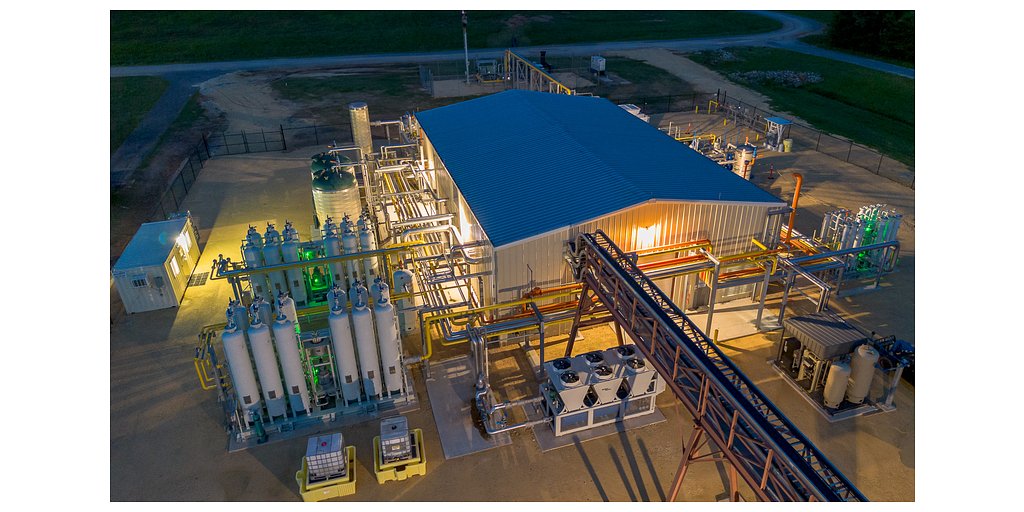
Viridi's facility captures this raw biogas and puts it through a sophisticated upgrading process. Using advanced membrane and adsorption systems, impurities such as carbon dioxide, moisture, and hydrogen sulfide are stripped away. The result is renewable natural gas, a purified stream of methane that is chemically identical to conventional natural gas. This RNG is clean enough to be injected directly into existing interstate pipelines, where it can be used to heat homes, power businesses, or fuel heavy-duty transport vehicles, displacing fossil fuels.
The process creates a virtuous cycle: it prevents harmful methane from escaping into the atmosphere, transforms a problematic waste product into a valuable commodity, and provides a source of domestic, low-carbon energy. This waste-to-energy model is central to decarbonizing sectors that are difficult to electrify, such as long-haul trucking and industrial heating.
A Blueprint for Local Impact in Baldwin County
While the financial transaction took place on a national stage, its impact is profoundly local. The Magnolia Landfill project is a public-private partnership with the Solid Waste Disposal Authority of Baldwin County. This collaboration generates a long-term revenue stream for the county through royalties on the gas produced, providing funds for public services without raising taxes.
The facility is projected to produce over 160,000 MMBtu of RNG annually, enough energy to supply thousands of homes. But the project's benefits extend beyond energy. It is part of a comprehensive vision for sustainable waste management in the county, which also includes a new 62,000-square-foot materials recovery facility (MRF) to enhance recycling and a 7,000-square-foot educational center to teach students and residents about the circular economy.
This integrated approach demonstrates how RNG development can serve as an anchor for broader community and environmental initiatives. The project not only mitigates local pollution but also creates economic value and educational opportunities, serving as a scalable model for other municipalities across North America looking to monetize their waste streams.
Fueling the National RNG Boom
Viridi's success in Alabama is a bellwether for the rapidly expanding RNG market. Valued at over $14 billion globally in 2024, the market is projected to more than double by 2035, driven by aggressive decarbonization mandates and corporate sustainability goals. North America is at the forefront of this growth, with production capacity expanding by 35% in the last year alone.
The transaction was facilitated by specialized advisors, highlighting the maturation of this new market. Mickelson & Co. served as the broker, connecting Viridi with a buyer for the credits, while the global law firm Hogan Lovells provided legal counsel. “We appreciate the collaboration from all parties involved in this transaction. Bringing together strong counterparties and advisors is essential to executing efficiently and ensuring these projects deliver long-term, reliable performance,” noted David Barry, CFO at Viridi Energy.
The demand for these credits and the underlying RNG is high. “We are excited to have participated in this transaction supporting the RNG market,” said Faith Larson of Mickelson & Co. “It was a pleasure to help broker this deal, and through the process we developed a deep respect for the Viridi team and their business model. We look forward to continuing our partnership and collaborating with Viridi as they develop additional RNG projects.”
With a portfolio that spans landfill gas, dairy waste, and food waste projects across the continent, Viridi is positioned to leverage this financing model repeatedly. The successful sale of its first tax credits sends a powerful signal to investors and developers: the pathway to financing American-made renewable energy is now clearer and more accessible than ever before, promising to turn thousands of sources of waste into hubs of clean energy production.