
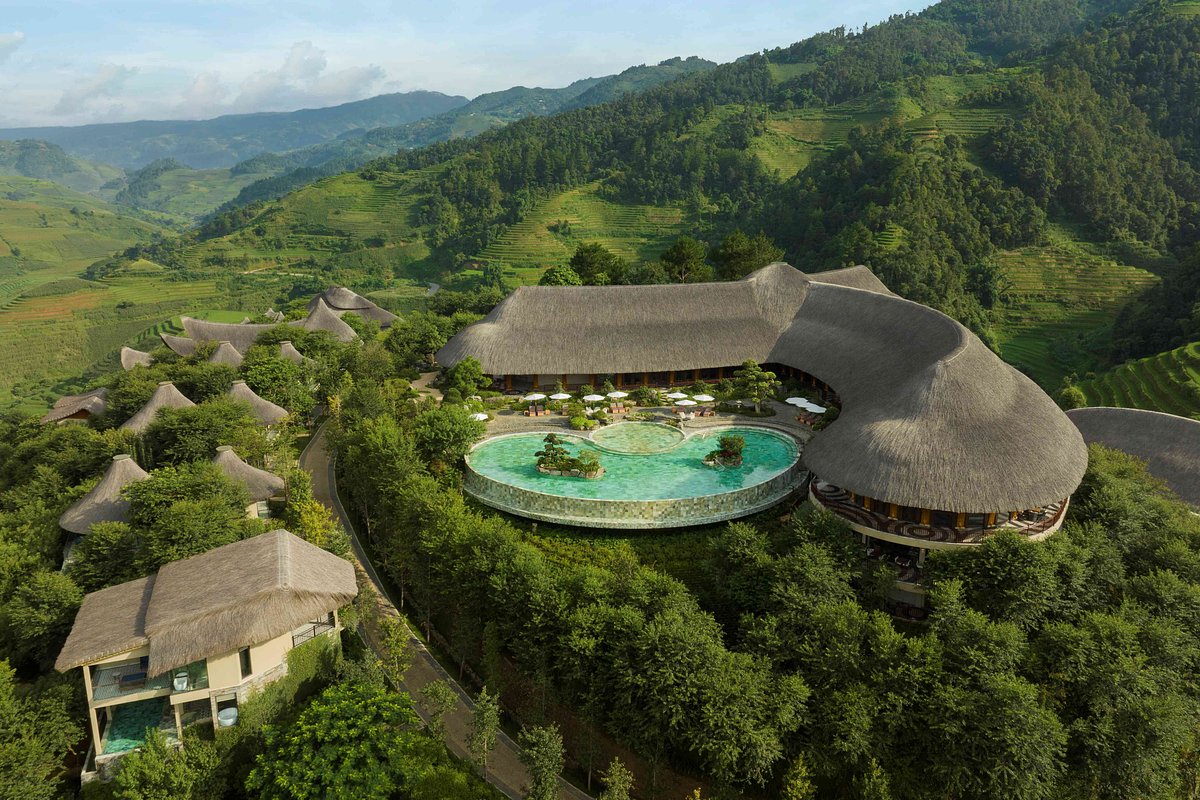
- World's Largest Bamboo-Structured Wellness Resort: Spanning 6.5 hectares at 1,500 meters above sea level in Vietnam's northern highlands.
- 2025 Award Winner: Recognized as the 'World's Best New Wellness Retreat 2025'.
- Cultural Integration: Located in a region where 90% of the population are Hmong communities, with deep cultural immersion programs.
Experts would likely conclude that Garrya Mu Cang Chai sets a new benchmark for sustainable luxury travel, blending innovative bamboo architecture, cultural preservation, and holistic wellness in a way that could redefine regenerative tourism in Southeast Asia.
Vietnam's Bamboo Jewel: A New Era of Sustainable Luxury Emerges
LAO CAI, Vietnam – December 16, 2025 – High in Vietnam's northern highlands, a monumental structure of woven bamboo now graces the mountainside, marking a pivotal moment for both sustainable architecture and luxury travel. Garrya Mu Cang Chai has officially opened its doors, a sprawling wellness resort set 1,500 metres above sea level within a protected national heritage landscape. Announced as the world's largest bamboo-structured wellness resort and the recipient of the 'World's Best New Wellness Retreat 2025' award, this property represents Banyan Group's ambitious entry into Vietnam with its contemporary Garrya brand.
Spanning 6.5 hectares of terraced mountainside, the resort is more than a destination; it's a statement. Situated a scenic three-hour drive from the more frequented town of Sapa, it offers an experience deliberately set apart from commercial tourism footprints. Here, amid the ancient rice terraces cultivated by Hmong communities for centuries, Garrya Mu Cang Chai aims to forge a new path for regenerative hospitality, one that intertwines monumental design, deep cultural respect, and holistic wellbeing.
An Architectural Marvel in a Heritage Landscape
The defining feature of Garrya Mu Cang Chai is its breathtaking bamboo architecture. The structures, which form the heart of the resort's public spaces and dining venues, rise from the landscape in elegant, fluid lines that echo the contours of the surrounding terraced fields. This is not merely construction; it is a celebration of traditional Vietnamese bamboo craftsmanship, showcasing the material's strength, flexibility, and inherent sustainability. The resort's claim as the world's largest of its kind underscores the scale and ambition of the project, creating a landmark that is both innovative and deeply rooted in local building traditions.
This architectural feat is situated within a profoundly significant location. The terraced rice fields of Mu Cang Chai were recognized as a National Heritage Site by Vietnam's Ministry of Culture, Sports and Tourism in 2007, protecting their unique cultural and aesthetic value. The resort's design philosophy appears centered on harmony, seeking to complement rather than dominate this protected landscape. Throughout the property, light motifs inspired by traditional Hmong brocade are subtly integrated into the design, serving as a constant tribute to the indigenous culture that has shaped this region for generations.
Redefining Wellness Beyond the Spa
While the architecture provides the frame, the core of the Garrya experience is a comprehensive approach to wellbeing. The resort features 110 private rooms, suites, and villas, each strategically positioned to offer panoramic views of the dramatic mountain scenery. At its center is the 8ELEMENTS Spa, which delivers restorative treatments guided by Banyan Group's signature 8 Pillars of Wellbeing.
However, the wellness journey extends far beyond the spa's walls. A key highlight is Northern Vietnam's most advanced 13-step hydrotherapy circuit, designed to invigorate and heal. This modern amenity is complemented by practices steeped in local tradition, including the use of regional herbal remedies. The commitment to holistic health is further embedded in daily activities, from movement classes and singing-bowl sessions designed to foster mindfulness to barefoot grounding practices that connect guests directly with the earth. Even the ReCharge Gym is framed by floor-to-ceiling windows, turning a workout into an immersive visual experience.
This philosophy permeates the resort's culinary offerings. The main restaurant, Refresh, presents seasonal menus built around organic produce sourced from local farms that use traditional Hmong cultivation techniques. Another venue, Charcoal Grill, draws inspiration from the rustic, open-fire cooking methods of mountain life, offering a primal and flavourful dining experience. This focus on locally sourced, mindfully prepared food underscores the resort's 360-degree approach to nourishment and wellbeing.
A Bridge to Hmong Heritage
Garrya Mu Cang Chai's most distinguishing feature may be its commitment to authentic cultural immersion. The resort is located in a region where original Hmong communities, who make up nearly 90% of the district's population, have maintained their traditions through centuries of relative isolation. Rather than creating a tourist bubble, the resort actively facilitates genuine connection and exchange.
Guests are encouraged to explore the surrounding landscape and culture through guided treks led by local Hmong community members, offering firsthand insights into their way of life. Craft workshops and storytelling sessions with local artisans and elders provide a platform for preserving and sharing generational knowledge, from textile weaving to agricultural practices. This model aligns with a growing movement in Vietnam towards community-based tourism, which seeks to empower ethnic minorities and ensure the economic benefits of tourism are distributed locally. Banyan Group's established corporate support for artisan communities, which saw it commission products from over 300 such groups in 2024, suggests a structured framework for this engagement.
The challenge for any development in such a culturally sensitive area is navigating the fine line between appreciation and commercialization. By integrating local guides, artisans, and culinary traditions directly into its core offerings, the resort aims to create a symbiotic relationship where Hmong culture is not just a spectacle but a living, breathing part of the guest experience.
Banyan Group's Vision for Regenerative Travel
The opening of Garrya Mu Cang Chai is a strategic masterstroke for Banyan Group. It plants a flag for its Garrya brand, which focuses on minimalist, restorative stays, in one of Southeast Asia's most compelling emerging destinations. The project embodies a wider shift in the luxury travel industry towards experiences that are not only opulent but also meaningful, sustainable, and transformative.
This ethos is backed by the parent company's broader sustainability commitments. According to its 2024 sustainability report, Banyan Group has made tangible progress in decarbonization, waste reduction—diverting 28% of total waste from landfills—and improved water efficiency across its properties. Programs like "Seedlings" further demonstrate a long-term investment in providing education and employment opportunities for young people in the communities where it operates.
By weaving together monumental design, ancestral traditions, and a forward-thinking wellness philosophy, Garrya Mu Cang Chai is not just offering a destination, but defining a new chapter for regenerative tourism in Southeast Asia.