
- 10 years: Vault12's Shamir Secret Sharing technology has secured high-value crypto assets for a decade.
- Nearly 1 million devices: Vault12 Guard protects assets on this many devices.
- Open-source release: Vault12's Shamir Secret Sharing plugin for Capacitor is now freely available to developers.
Experts would likely conclude that Vault12's open-source release of its quantum-safe Shamir Secret Sharing technology is a strategic move to establish trust, drive adoption, and position itself as a leader in post-quantum security, while fostering a broader ecosystem of secure applications.
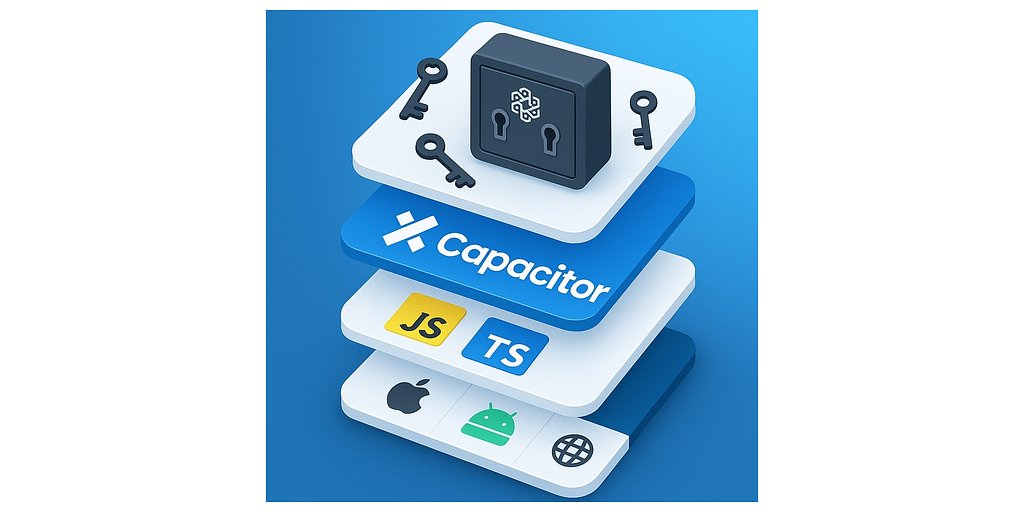
Vault12's Strategic Gift: Quantum-Safe Security for Every App
MIAMI, FL – December 02, 2025
In the world of cybersecurity, a new arms race is quietly underway—one that pits today's encryption standards against the theoretical power of tomorrow's quantum computers. The prevailing fear is a scenario dubbed "harvest now, decrypt later," where adversaries are already siphoning encrypted data, waiting for the day a quantum machine can crack it wide open. Against this backdrop, crypto inheritance firm Vault12 has made a striking move, not by hoarding its defenses, but by giving them away.
The company recently announced the open-source release of its Shamir Secret Sharing plugin for Capacitor, a popular framework for building cross-platform apps. In doing so, Vault12 has handed developers a battle-tested, quantum-safe tool that has secured high-value crypto assets for a decade. While it may seem counterintuitive for a venture-backed company to open-source a core component of its technology, a closer look reveals a shrewd strategic play to establish trust, drive adoption, and position itself as a leader in the nascent post-quantum security market.
A Different Kind of Quantum-Safe
To understand the significance of Vault12's move, one must first grasp the technology at its heart. The plugin doesn't use one of the new post-quantum cryptography (PQC) algorithms currently being standardized by the U.S. National Institute of Standards and Technology (NIST). Instead, it employs Shamir’s Secret Sharing (SSS), a scheme devised in the 1970s by Adi Shamir, the 'S' in the ubiquitous RSA encryption algorithm.
SSS provides what is known as information-theoretic security. Its protection doesn't rely on the computational difficulty of solving a complex math problem, which a quantum computer could one day overcome. Instead, its security is based on mathematical impossibility. The system works by splitting a secret—be it a password, a file, or a cryptocurrency private key—into multiple cryptographic 'shares'. To reconstruct the secret, a predetermined number of these shares must be brought together. Any fewer, and the shares are mathematically useless, revealing nothing about the original data.
Because its security isn't based on the types of problems quantum computers are designed to solve, SSS is inherently quantum-resistant. However, the method is not without its practical considerations. Standard implementations lack a mechanism to verify that shares are authentic during reconstruction, and the secret must exist in one place during the initial splitting and final reassembly, creating potential points of vulnerability. Despite this, its proven robustness in specific applications, like Vault12's own crypto inheritance service, makes it a powerful tool for a specific job: decentralized secret management.
The Business Case for Giving It Away
For a company whose primary product, Vault12 Guard, relies on this exact technology to protect assets on nearly a million devices, making the engine open-source is a bold business decision. It signals a strategy focused on building a moat through market adoption rather than proprietary code.
By releasing the plugin for Capacitor—a framework that allows web developers to build iOS, Android, and web apps from a single codebase—Vault12 is targeting a massive and influential community. It is effectively lowering the barrier to entry for implementing high-grade, quantum-safe security, turning a complex cryptographic concept into a readily deployable tool.
Blake Commagere, co-founder and COO of Vault12, framed the move as an act of empowerment. “Developers building self-custody and high-assurance apps need tools that won’t break the moment quantum computing becomes practical,” he stated in the release. “We’re making the same Shamir’s Secret Sharing engine that powers Vault12 Guard available to anyone building the next generation of secure, user-controlled applications.”
This strategy serves multiple business objectives. First, it establishes Vault12 as a thought leader and a trusted name in the post-quantum security space. By providing a reliable, production-proven tool, the company builds goodwill and brand equity. Second, it encourages the development of a broader ecosystem of secure applications. As more developers use Vault12's implementation of SSS, it becomes a de facto standard, indirectly strengthening the value proposition of Vault12's own commercial offerings that operate within that ecosystem. It's a classic platform play: foster the community, and the business will follow.
Reshaping Security for Crypto and Beyond
The most immediate impact of this release will be felt in the world of digital assets. The challenge of crypto inheritance—ensuring that assets are not permanently lost upon the owner's death—is a problem that SSS is uniquely suited to solve. It allows a user to distribute shares of their private key among trusted family members or legal guardians, creating a decentralized recovery system that doesn't rely on a single, fallible custodian. By open-sourcing its plugin, Vault12 is inviting the entire Web3 community to build more sophisticated and secure self-custody and inheritance solutions.
But the implications extend far beyond cryptocurrency. Any application that handles highly sensitive data can benefit from this approach. Imagine a healthcare app that splits a patient's master key for their medical records, distributing shares between the patient, their doctor, and a trusted family member. Consider a secure messaging platform for journalists that allows them to protect sensitive source information by distributing access keys. In a world of escalating data breaches and emerging quantum threats, the ability to eliminate single points of failure for critical data is a powerful competitive advantage.
Vault12's plugin offers a practical, application-layer defense that complements other post-quantum efforts. While major cloud providers and hardware companies like NetApp focus on integrating NIST-standardized PQC algorithms to secure data in transit and at rest, Vault12's solution provides developers with a tool for managing the secrets within their applications. It's a different but equally critical piece of the post-quantum security puzzle, one focused on user control and decentralized trust.
Ultimately, Vault12's open-source release is a calculated bet on the future of secure application development. It is an acknowledgment that in the fight against quantum threats, the most effective defense may not be a fortified wall, but a distributed network of empowered builders. By giving away its core technology, the company is not just contributing to the community; it is attempting to write the rules for a new era of digital security, positioning itself at the very center of the ecosystem it helps create.