
- Enrollment Growth: Student enrollment surged by over 20%, from 40,000 in 2018 to 48,000 by fall 2025.
- Graduate Increase: Annual graduates more than doubled, from 5,950 in 2019 to nearly 13,000 in 2025.
- Fundraising Success: UVU's first-ever comprehensive campaign raised over $250 million for student initiatives.
Experts would likely conclude that President Tuminez's tenure at UVU was marked by significant growth and strategic advancements, though her leadership style and handling of controversies also sparked internal divisions.
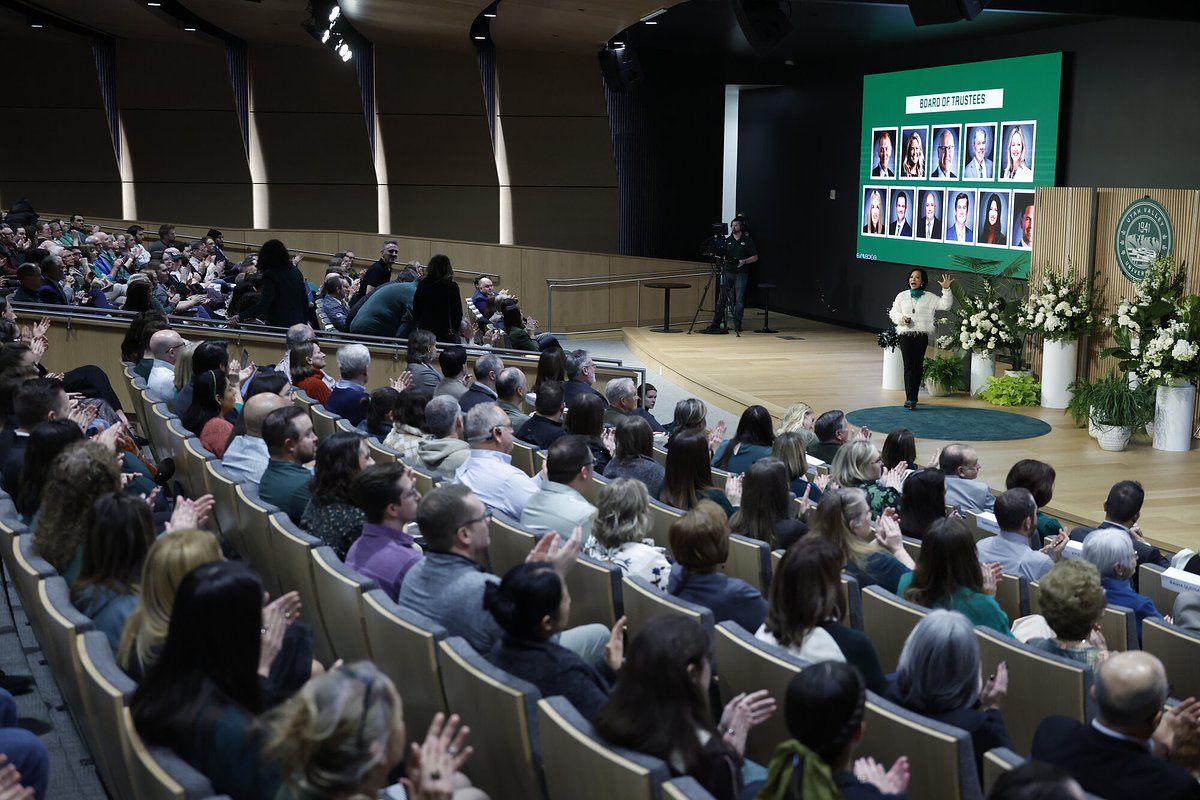
UVU President Tuminez to Resign, Leaving Legacy of Growth and Turmoil
OREM, Utah – January 14, 2026 – Dr. Astrid S. Tuminez, the seventh president of Utah Valley University, announced today that she will step down on May 1, concluding a dynamic and often complex seven-and-a-half-year tenure that reshaped Utah's largest public university. Citing a desire to devote more time to her family and personal pursuits, her departure initiates a search for a new leader to guide the institution into its next chapter.
"UVU has been a labor of love for me," President Tuminez said in a statement. "Education transformed my life from the slums of the Philippines to a global adventure, and I brought that conviction to UVU. My heart will always be green." Her personal story has often been cited as the embodiment of the university’s “come as you are” mission, which she championed throughout her presidency.
Her tenure, which began in the fall of 2018, is defined by a period of unprecedented expansion in student numbers, academic programs, and physical infrastructure, positioning UVU as a critical engine for the state's economy and workforce.
A Legacy of Unprecedented Growth
Under Tuminez's leadership, Utah Valley University solidified its status as the state's largest institution of higher education. Student enrollment surged by over 20 percent, growing from just under 40,000 in 2018 to more than 48,000 by fall 2025. More significantly, the number of annual graduates more than doubled, from approximately 5,950 in 2019 to nearly 13,000 in 2025, a testament to her focus on student completion.
This growth was fueled by a strategic vision she called "Vision 2030," a roadmap centered on exceptional care, accountability, and results. This strategy yielded tangible outcomes, including the university being named a Carnegie Opportunity University, a distinction held by only 16 percent of universities nationwide for advancing social and economic mobility.
Financial and physical expansion kept pace with student growth. Tuminez led UVU's first-ever comprehensive fundraising campaign, which raised over $250 million for student initiatives. The university’s endowment also more than doubled to $129 million during her presidency. The campus itself was visibly transformed with the addition of major facilities, including the Noorda Center for the Performing Arts, the Scott C. and Karen Keller Business Building, and the Scott M. Smith Engineering Building, which is central to UVU's goal of meeting the demands of Utah's "Silicon Slopes."
"President Tuminez has guided Utah Valley University through incredible growth, innovating the delivery and impact of higher education for students in our state," said Amanda Covington, chair of the Utah Board of Higher Education.
Academically, UVU expanded its offerings to include 110 bachelor's degrees and 22 master's degrees, and notably launched the Kahlert Applied AI Institute, the state's first applied artificial intelligence institute, to prepare students for the new economy.
Navigating Controversy and Crisis
While the metrics of growth are undeniable, Tuminez's presidency was also marked by significant challenges and internal friction. Her background in the corporate world, with roles at Microsoft and AIG Global Investment Group, informed a leadership style focused on "agility," "competitiveness," and accountability to stakeholders. This approach, while driving results, sometimes clashed with traditional academic culture, leading some faculty to express concerns that she was out of touch with the university's core academic mission.
A major controversy arose in 2019 following the suicide of veteran professor Michael Shively, who was under investigation by the university for alleged policy violations. The handling of the investigation drew sharp criticism from some faculty and an external foundation, which characterized the process as unprofessional and biased. These events fostered a climate of fear among some faculty and raised questions about administrative support.
More recently, Tuminez's leadership was tested by a traumatic campus event in September 2025, when a shooting outside her office resulted in the death of conservative commentator Charlie Kirk. The incident sent shockwaves through the university community and prompted a difficult balancing act between ensuring campus safety, preserving an open environment for free expression, and managing the collective grief and trauma.
A New Blueprint for Leadership Transition
The search for UVU’s eighth president will be the first conducted under a new model established by the Utah System of Higher Education (USHE). This new framework, shaped in part by recent state legislation, aims to ensure both continuity and a competitive search process.
A key feature of the new model is the establishment of a presidential transition team that will remain in place for the first six months of the new president's tenure. This extended support structure is designed to provide a smoother handover and help the new leader navigate the university's strategic priorities from day one.
Furthermore, the search will operate under enhanced confidentiality rules intended to attract a broader and more qualified pool of candidates. Proponents argue that protecting the identities of applicants, especially those in high-profile positions elsewhere, is crucial for a successful national search. However, this approach has raised concerns about transparency and the level of community involvement in the early stages of the selection process. The Utah Board of Higher Education has affirmed that the final selection will be made in an open public meeting after the search committee recommends its top finalists.
"We are grateful for her leadership and will work closely with the Board and the university to ensure a smooth and well-supported transition," said USHE Commissioner Geoffrey Landward.
The Path Forward for Utah's Largest University
President Tuminez’s successor will inherit a university that is larger, wealthier, and more integral to Utah's future than ever before. They will be tasked with carrying forward ambitious projects like the full implementation of Vision 2030 and the development of the 225-acre Vineyard campus, a planned health and wellness village designed to serve the region's booming population.
However, the next leader will also face a complex set of challenges. Higher education across Utah is bracing for a "demographic cliff," with the college-age population projected to decline after 2032, intensifying competition for students. Simultaneously, state universities are under pressure to reallocate funds toward high-demand, high-wage degree programs, while battling inflationary costs and a shifting public perception of the value of a college degree.
For UVU, the path forward will require building on the momentum of the Tuminez era while navigating these external pressures and healing internal divisions. The next president must continue to champion the university’s unique dual mission of providing both career-focused technical education and robust bachelor's and master's degree programs, all while staying true to the inclusive "come as you are" ethos that defines the institution.