
- 5 hubs: flynas becomes the first Saudi airline to operate from five hubs across the Kingdom.
- 11 destinations: The new Abha hub will initially connect to 11 domestic and international routes.
- $6.5 billion: Investments in the Aseer region to attract up to 10 million visitors annually by 2030.
Experts view flynas's new Abha hub as a strategic move that aligns with Saudi Vision 2030, enhancing tourism and economic growth in the Aseer region through improved air connectivity and infrastructure development.
flynas's New Abha Hub to Supercharge Saudi Tourism Ambitions
RIYADH, Saudi Arabia – January 14, 2026 – Low-cost carrier flynas today announced a major strategic expansion with the establishment of a new operations base at Abha International Airport, set to launch on March 29. The move, made in cooperation with airports operator Cluster2 Company and the Aseer Development Authority, marks a significant milestone, making flynas the first Saudi airline to operate from five hubs across the Kingdom.
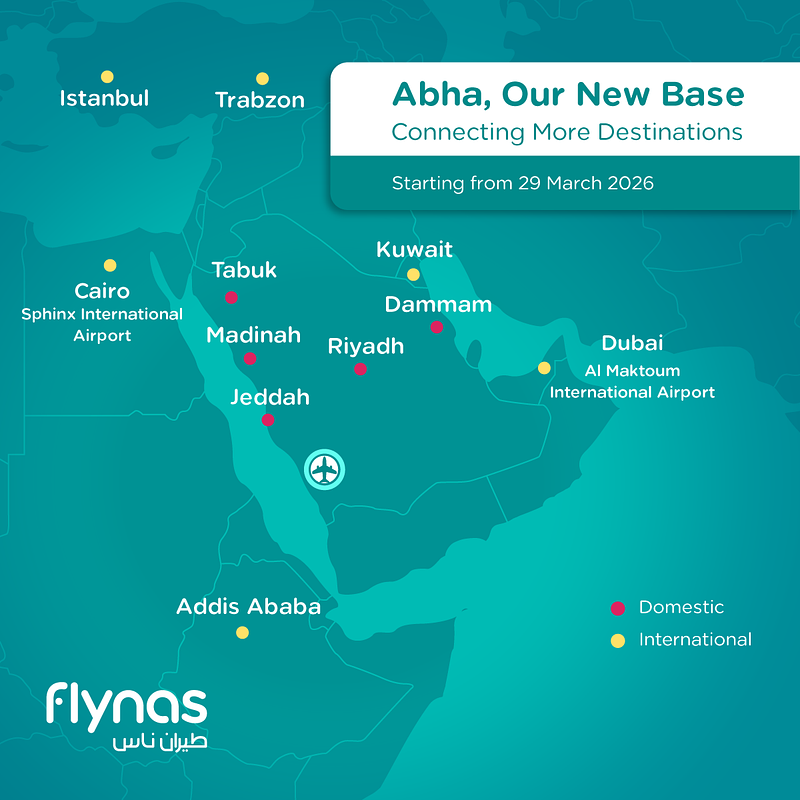
This expansion is not merely an addition of routes but a calculated move designed to be a primary engine for tourism and economic growth in Saudi Arabia's southern Aseer region. In its initial phase, the new hub will connect Abha with 11 domestic and international destinations. The network includes six international routes to Dubai, Cairo, Istanbul, and Addis Ababa, with seasonal flights to Kuwait and Trabzon. These will supplement existing domestic flights to Riyadh, Dammam, Jeddah, Madinah, and Tabuk. The airline has also stated its intention to gradually double the number of destinations served from this burgeoning hub.
A Strategic Pillar for National Ambitions
The launch of the Abha base is deeply intertwined with the ambitious goals of Saudi Vision 2030, which seeks to diversify the Kingdom's economy away from oil and transform it into a global tourism and logistics powerhouse. The Aseer region, with its verdant mountains and unique cultural heritage, is central to this vision. The Aseer Development Authority is spearheading a monumental effort to attract up to 10 million visitors annually by 2030, supported by investments exceeding $6.5 billion.
This state-level commitment is already bearing fruit, with projects like the Soudah Peaks luxury mountain destination projected to contribute over $7.7 billion to the Kingdom's GDP. The establishment of a robust air transport network is the critical link needed to bring these visitors to the region. flynas's new hub directly addresses this need, aligning corporate growth with national development objectives.
Bander Almohanna, CEO and Managing Director of flynas, emphasized this strategic alignment in the official announcement. “The launch of our new operations base in Abha represents a strategic investment designed to build an integrated national operating network,” he stated. “Beyond operational growth, the hub aims to stimulate economic and tourism development in the Aseer region, supporting the goal of transforming it into a year-round global tourist destination. This initiative directly aligns with the National Civil Aviation Strategy and the overarching objectives of Saudi Vision 2030.”
Reshaping the Skies Over Southern Saudi Arabia
By establishing its fifth operational base after Riyadh, Jeddah, Dammam, and Madinah, flynas solidifies its dominance in the Kingdom's competitive low-cost carrier market. While Abha International Airport (AHB) is already served by carriers including the national airline Saudia and its LCC subsidiary flyadeal, as well as regional players like Air Arabia and flydubai, the scale of flynas's expansion is set to significantly alter the competitive landscape.
The introduction of new direct international routes to cities like Istanbul and Addis Ababa opens up previously untapped markets for both inbound tourism and outbound travel for the region's residents. Currently, the most frequent routes from Abha are domestic connections to Riyadh and Jeddah. The new flynas network will provide greater international connectivity, reducing reliance on transfers through major hubs and making the Aseer region a more accessible and attractive destination on its own.
This pioneering five-hub strategy gives the airline unparalleled network flexibility and reach within the Kingdom, enabling it to efficiently move passengers across the country and beyond. It's a model that leverages the LCC's inherent agility to support the nation's decentralized development strategy, which focuses on building up regional economic centers in addition to the traditional metropolitan areas.
Fueling a Regional Economic Renaissance
The most profound impact of the new hub will be felt on the ground in Abha and the surrounding Aseer province. Enhanced air connectivity is a proven catalyst for economic growth, and the region is poised for a significant uplift. The development is expected to create a cascade of opportunities, beginning with direct aviation jobs and extending throughout the local economy.
The Aseer region's tourism sector has already created nearly 48,000 jobs, and this number is set to climb sharply as visitor numbers increase. The influx of tourists facilitated by the new flights will drive demand for hospitality, retail, transportation, and local guide services, stimulating small business growth and increasing local spending. This aligns with Saudi Arabia's broader goal of creating 1.6 million tourism-related jobs by 2030.
Furthermore, the increased logistics capacity supports more than just tourism. It enhances the region's potential as a center for trade and commerce, providing local businesses with better access to domestic and international markets. As the region's profile grows, it is expected to attract further private investment in infrastructure and services, creating a self-reinforcing cycle of development and prosperity.
Building an Airport for the Future
This ambitious expansion in flight operations is matched by an equally ambitious transformation of Abha International Airport's infrastructure. To accommodate the projected surge in traffic, the airport is undergoing a massive expansion under a public-private partnership (PPP) model. The first phase, set for completion by 2028, will increase the airport's annual capacity from its current 1.5 million passengers to an astounding 13 million.
The new terminal, designed by the renowned architectural firm Foster + Partners, is inspired by the traditional stone buildings of the nearby Rijal Almaa village. The design prioritizes natural light, local materials, and a modular layout that allows for future growth. Upon completion, the new terminal will boast 20 gates, modern passenger boarding bridges, and an expansive area of nearly 70,000 square meters, a sevenfold increase from the current facility.
With the capacity to handle over 90,000 flights annually, the redeveloped airport will be more than ready to support flynas's growth and the region's tourism aspirations. The synergy between the airline's network expansion and the airport's infrastructure development creates a powerful combination, ensuring that Aseer is not just a destination on a map, but a fully equipped and accessible gateway ready to welcome the world.