
- $355 million: The global market value for Low CTE electronic glass cloth, previously dominated by Asian firms.
- $52 billion: The amount allocated by the CHIPS and Science Act of 2022 to bolster U.S. semiconductor manufacturing.
- First domestic production: North America’s first domestically manufactured Low CTE glass fiber fabric for AI chip components.
Experts view this partnership as a critical step toward strengthening U.S. technological sovereignty and supply chain resilience in the semiconductor industry, aligning with national security and economic priorities.
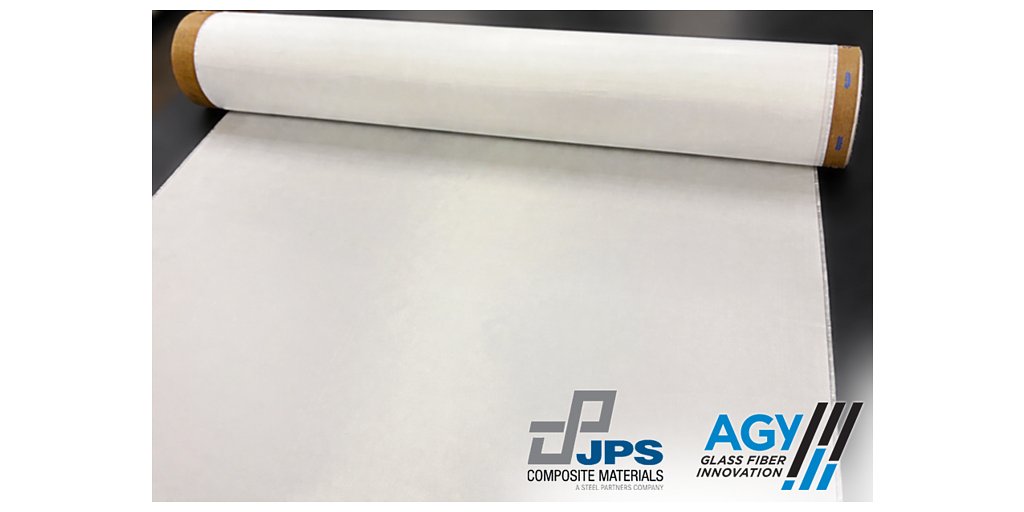
US Firms Launch Domestic Production of Vital AI Chip Component
AIKEN, SC & STATESVILLE, NC – February 25, 2026 – In a significant move to fortify the American semiconductor supply chain, specialty glass fiber manufacturer AGY and fabric expert JPS Composite Materials have announced a strategic partnership to produce a critical material for next-generation computer chips. The collaboration will yield North America’s first domestically manufactured low coefficient of thermal expansion (Low CTE) glass fiber fabric, a foundational component for the advanced packaging technologies that power artificial intelligence, data centers, and high-performance computing.
This alliance brings together two key players in American advanced manufacturing. AGY, the sole remaining specialty glass fiber manufacturer in the United States, will supply its proprietary L-HDI™ ultra-low CTE glass fiber from its facility in Aiken, South Carolina. This fiber will then be transported to Statesville, North Carolina, where JPS Composite Materials, a leading weaver of high-performance fabrics, will transform it into a semiconductor-grade fabric. The result is a fully domestic supply chain for a material previously sourced almost exclusively from Asia.
The Unseen Foundation of Modern Electronics
While invisible to the end-user, Low CTE glass fiber fabric is an indispensable element in the quest for smaller, faster, and more powerful electronics. It serves as the reinforcement layer within integrated circuit (IC) substrates—the platform upon which semiconductor chips are mounted. Its primary function is to provide dimensional stability and prevent the substrate from warping under the intense heat generated during manufacturing and operation.
The core challenge lies in a fundamental law of physics: materials expand and contract with temperature changes. A silicon chip has a very low coefficient of thermal expansion (CTE), typically around 3-4 parts per million per degree Celsius (ppm/°C). However, the organic substrate materials they are mounted on expand at a much higher rate. This mismatch creates immense physical stress, which can cause the entire package to bend or warp, leading to faulty connections and device failure.
This is where AGY's L-HDI™ glass fiber and the resulting fabric from JPS become critical. Engineered to have a CTE that closely mimics that of silicon, the fabric counteracts the substrate's natural tendency to expand. By minimizing this thermal mismatch, the material allows for higher interconnect density, enabling more complex and powerful chip designs. This is particularly vital for cutting-edge packaging platforms like Chip-on-Wafer-on-Substrate (CoWoS), which stack multiple chips together to achieve massive performance gains in AI and supercomputing applications. Without such advanced materials, the warpage would be too severe to reliably manufacture these complex, multi-chip modules.
“Our L-HDI glass fiber platform was developed to meet the increasing dimensional stability and dielectric performance demands of next-generation IC substrates,” said Patrick Hunter, Chief Commercial Officer and President of AGY, in a statement. “By partnering with JPS Composite Materials LLC, we are delivering a fully domestic solution that strengthens supply chain resiliency while supporting leading-edge packaging innovation.”
Bolstering America's Technological Sovereignty
The establishment of this domestic supply chain resonates deeply with a broader national strategy to regain leadership in the semiconductor industry. For decades, the United States has seen its share of global semiconductor manufacturing decline, creating dependencies on foreign nations for critical components. The supply chain disruptions of recent years laid bare the economic and national security risks of this reliance.
This partnership directly addresses these vulnerabilities and aligns with the core objectives of the CHIPS and Science Act of 2022. The landmark legislation allocated over $52 billion to incentivize domestic semiconductor manufacturing, research, and workforce development, with a specific focus on building out the entire ecosystem, including materials and advanced packaging. The AGY and JPS collaboration is a tangible result of this strategic shift, localizing a key material and insulating a vital sector from geopolitical instability.
The global market for Low CTE electronic glass cloth, valued at over $355 million, has been dominated by international firms, primarily in Asia. By creating a North American source, this initiative not only provides a secure alternative for domestic chip packagers but also positions the U.S. to compete in a high-value, high-growth market.
“This partnership positions both companies at the forefront of advanced electronics materials manufacturing in the United States,” noted Keith Bendyk, President, JPS Composite Materials. “By combining AGY’s specialty fiber technology with JPS’s fabric expertise, we are enabling domestic production of a material that is critical to AI infrastructure and advanced semiconductor packaging.”
A Carolinas Corridor for Critical Materials
The collaboration also highlights the emergence of regional hubs for advanced manufacturing. With AGY’s glass fiber production in Aiken, South Carolina, and JPS’s weaving operations in Statesville, North Carolina, a specialized corridor for semiconductor materials is taking shape in the Carolinas. This concentration of expertise and production capability creates a powerful synergy, streamlining logistics and fostering a local ecosystem of skilled labor and innovation.
For AGY, its status as the nation's last specialty glass fiber producer underscores its crucial role in the defense and technology industrial base. For JPS, a subsidiary of the diversified holding company Steel Partners, the venture represents a strategic expansion into the booming semiconductor sector, leveraging its decades of experience in producing precision fabrics for the aerospace and defense industries. The economic ripple effects are expected to include the creation of high-skilled manufacturing jobs and further investment in the region as the domestic semiconductor industry continues to grow.
The Rigorous Path to Commercialization
While initial production is underway, the new fabric is now entering a critical phase known as customer qualification. In the high-stakes world of semiconductor manufacturing, where reliability is paramount, introducing a new material is a meticulous and lengthy process. Potential customers—the companies that assemble the final chip packages—will conduct extensive testing to validate that the AGY-JPS fabric meets their exacting performance standards.
This qualification process involves subjecting the material to a battery of tests, assessing its thermal properties, dielectric performance, and mechanical durability under simulated operational stress. Engineers will build prototype packages using the fabric and evaluate their long-term reliability. Only after passing these rigorous evaluations, which can take many months, will the material be approved for use in high-volume manufacturing. This deliberate pace ensures that the foundational components of the world's most advanced electronics are utterly dependable. The collaboration supports broader U.S. initiatives to localize critical semiconductor materials, enhance supply chain security, and advance domestic manufacturing capabilities in support of AI, aerospace, defense, and high-performance computing markets.