
- First non-Chinese firm to export sodium-ion batteries at scale
- $40–$50 per kWh projected cost for sodium-ion batteries, potentially cheaper than lithium iron phosphate (LFP) batteries
- 100–160 Wh/kg energy density for sodium-ion batteries, lower than high-end lithium-ion (200–280 Wh/kg)
Experts view UNIGRID's achievement as a significant step in diversifying the global energy storage market, offering a safer, more cost-effective, and geopolitically resilient alternative to lithium-ion batteries, particularly for stationary applications.
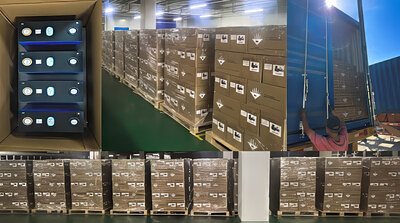
US Firm UNIGRID Begins Global Sodium-Ion Battery Shipments
SAN DIEGO, CA – January 15, 2026 – In a move poised to reshape the global energy storage market, San Diego-based UNIGRID Inc. announced today it has commenced commercial-volume international shipments of its proprietary sodium-ion battery cells. The milestone makes the University of California, San Diego spin-off the first company outside of China to export the promising battery technology at scale, signaling a new phase of competition and diversification in a sector critical to the clean energy transition.
This achievement was made possible by a combination of critical transport certifications and an innovative manufacturing strategy that sidesteps the need for multi-billion-dollar gigafactories. As the first containers of UNIGRID's NCO sodium-ion cells leave foundries for international customers, the event marks a significant step in validating a more accessible, cost-effective alternative to the dominant lithium-ion battery.
A New Contender in the Global Battery Race
For years, the development and commercialization of sodium-ion batteries have been overwhelmingly led by Chinese firms. Giants like CATL, which began mass production of its sodium-ion cells in late 2025, and HiNa Battery, have established a formidable early lead. UNIGRID's successful scale-up of international exports represents a pivotal moment, introducing a key American player onto the global stage and challenging the forming monopoly.
The strategic implications are profound. With sodium being hundreds of times more abundant than lithium and geographically widespread, sodium-ion technology offers a pathway to reduce reliance on supply chains concentrated in a few nations. While other Western companies have made notable progress—such as Natron Energy beginning commercial production for the U.S. domestic market in 2024 and the UK's Amte Power securing transport certification—UNIGRID's achievement is distinct in its focus on commercial-volume international export of cells.
This move diversifies the global supply chain for next-generation batteries, a key goal for policymakers in the United States and Europe seeking to bolster energy independence and technological sovereignty. By proving a non-Chinese firm can bring sodium-ion to the global market at scale, UNIGRID has opened a new front in the race to power the future.
The Promise of Sodium: Safer, Cheaper Energy Storage
Sodium-ion's emergence from the lab to commercial reality is driven by a compelling set of advantages over traditional lithium-ion chemistries. The primary appeal lies in its raw materials. Sodium, derived from common salt, is cheap and abundant, eliminating the environmental and geopolitical concerns associated with lithium and cobalt mining.
This material advantage is expected to translate into significant cost reductions. Industry analysts project that as production scales, sodium-ion battery costs could fall to between $40 and $50 per kilowatt-hour, making them potentially cheaper than even the most cost-effective lithium iron phosphate (LFP) batteries. This price point is critical for mass adoption in grid-scale energy storage, where cost is a primary driver.
Beyond cost, sodium-ion technology boasts a superior safety profile. UNIGRID's cells are designed to be inherently safer, with no risk of thermal runaway, a notorious fire hazard in some lithium-ion batteries. This makes them safer to transport, store, and operate, a crucial factor for applications in residential energy storage and dense urban environments.
However, the technology is not without trade-offs. Sodium-ion batteries currently offer a lower energy density, typically ranging from 100-160 Wh/kg, compared to 200-280 Wh/kg for high-end lithium-ion cells. This makes them less suitable for applications where space and weight are paramount, such as long-range electric vehicles. Instead, their sweet spot lies in stationary applications—utility-scale grid storage, commercial and industrial power backup, and residential solar storage—as well as in motive uses like forklifts, buses, and potentially entry-level electric cars.
Disrupting Manufacturing: The Fab-Less Revolution
Perhaps the most disruptive element of UNIGRID's strategy is not its chemistry, but its business model. The company operates on a 'fab-less, foundry-subscription' model, an approach that is standard in the semiconductor industry but revolutionary in the capital-intensive world of battery manufacturing.
Instead of undertaking the immense financial burden and long timelines of building its own gigafactories, UNIGRID focuses on its core competency: designing and perfecting its proprietary sodium-ion cell technology. The physical manufacturing is then outsourced to a network of established foundry partners. This allows the company to leverage existing infrastructure and expertise, enabling a rapid and capital-efficient scale-up.
"This milestone validates a path for us to bring safe, scalable NCO sodium-ion technology to global markets," said Darren H. S. Tan, CEO and co-founder of UNIGRID. "Through collaboration with our foundry partners, we've proven that advanced battery chemistries can be commercialized without massive capital buildouts."
This approach dramatically lowers the barrier to entry for new battery innovations, allowing the company to move from pilot-scale production to commercial export volumes in under a year. By shipping Grade A cells directly from foundries to customers in standard 40-foot ocean containers, UNIGRID has created a nimble and scalable global supply chain.
Navigating the Logistical Gauntlet
A major, often-overlooked hurdle in commercializing a new battery chemistry is logistics. Before a single cell could be shipped internationally, UNIGRID had to secure the critical UN38.3 transport certification in 2025. This global standard involves a battery of rigorous safety tests, including simulations of altitude, extreme temperatures, vibration, and short circuits, to ensure it can be transported safely.
The maturation of sodium-ion technology was recently recognized in the 8th revised edition of the UN standard, which now includes specific testing clauses for this chemistry. Clearing this regulatory hurdle was a non-trivial accomplishment that unlocked access to global markets.
Yet, even with certification, the company's first shipments presented a novel challenge. According to UNIGRID, its exports were the first of their kind at several international ports. Authorities accustomed to handling conventional lithium-ion batteries had to navigate entirely new processes and declarations for the unfamiliar chemistry, highlighting the pioneering nature of the company's efforts.
With these dual obstacles of certification and international shipping logistics successfully overcome, UNIGRID is now positioned to begin fulfilling its off-take agreements with customers in 2026. The company's success provides a blueprint for other innovators, demonstrating a viable path from the laboratory to the global market that could accelerate the entire energy storage industry.