
- Estimated cost savings: 30-50% compared to Microsoft Unified Support
- Response time SLA: 15-minute initial response time (actual average under 8 minutes)
- Potential cost increase: Up to 1,800% jump in cost per case filed under Microsoft's new Unified for Partner (UfP) model
Experts view US Cloud's white-label program as a significant alternative for Microsoft partners facing rising costs and service quality issues, potentially reshaping the support landscape by empowering partners to compete directly with Microsoft's OEM support.
US Cloud Challenges Microsoft with New White-Label Partner Program
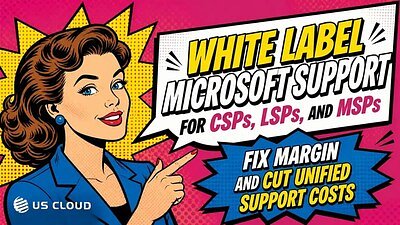
ST. LOUIS, MO – May 12, 2026 – As Microsoft partners brace for a seismic shift in the tech giant's support ecosystem, third-party support provider US Cloud today launched a program designed to offer an alternative path. The company announced its White Label Microsoft Support Program, an offering it bills as an industry first, aimed directly at Managed Service Providers (MSPs), Cloud Solution Providers (CSPs), and other channel partners feeling the squeeze from Microsoft's evolving policies.
The program allows these partners to sell enterprise-grade Microsoft support under their own brand, while US Cloud provides the technical engineering and infrastructure invisibly in the background. The move is timed to preempt what many analysts and partners anticipate will be significant cost increases and restructuring within Microsoft's partner support framework, providing a potential lifeline to partners struggling with shrinking margins and the high cost of OEM support.
"Microsoft partners have been stuck in a tough spot for years. They have struggled to meet the rigorous Microsoft support requirements," said Matt Harris, US Cloud CEO, in a statement. "We built this program to turn that on its head and give partners a real alternative."
The Partner's Dilemma
For years, Microsoft partners have navigated a complex and often challenging relationship with the very ecosystem they support. A primary source of friction is the cost and structure of Microsoft's own enterprise support. With the Unified Support model, costs are calculated as a percentage of a company's total Microsoft spending, including Azure consumption and licensing. As a result, support bills automatically inflate as a company invests more in Microsoft's cloud, regardless of whether their need for support tickets increases.
This model has created significant margin pressure for partners who resell Microsoft services. Now, the landscape is set to change again. Microsoft is transitioning its partners from legacy support programs like Advanced Support for Partners (ASfP) and Premier Support for Partners (PSfP) to a new model dubbed "Unified for Partner (UfP)." While positioned by Microsoft as a modernization of partner support, many in the channel are wary.
Industry insiders have expressed deep concern that UfP, with its revenue-based pricing aligned to a partner's cloud business, will exacerbate the cost issue. One Microsoft Direct CSP, speaking on condition of anonymity, calculated that the new model could result in an eightfold increase in their annual support costs and a staggering 1,800% jump in the cost per case filed. This financial pressure, combined with the operational difficulty of engaging Microsoft's increasingly automated support channels, has left partners actively searching for alternatives.
A New Model for Channel Support
US Cloud's program aims to be that alternative by fundamentally changing the operational model for partners. Instead of acting as a middleman between an unhappy client and a multi-layered OEM support system, partners can now own the entire support relationship. The white-label model allows partners to brand and price the support service as their own, maintaining direct control over the customer experience and protecting their margins from unpredictable OEM cost hikes.
"We didn't just launch another partner program. We invented a completely new operational model so Microsoft partners can deliver enterprise-grade support without handing margin share and customer control back to OEM," explained Renee Rose, Channel Program Manager at US Cloud. "Nothing else like this exists in the Microsoft channel today."
While other third-party support providers exist, and some white-labeling is available for specific products like Microsoft 365, US Cloud's claim to an "industry-first" rests on the comprehensive, enterprise-grade nature of its offering. The program provides support across the entire Microsoft stack—including Azure, Dynamics, and Windows Server—specifically for partners to resell. This removes the significant operational and financial barrier of building a 24/7, senior-level engineering team, a feat that is out of reach for most channel partners.
"Keeping full control of the client relationship has been a major issue for Microsoft partners in the past," Rose noted. "Now partners have total control without the total costs killing their margins."
Beyond Cost: The Service Quality Promise
While cost savings, which US Cloud estimates at 30-50% compared to Microsoft Unified Support, are a major draw, the program also stakes its reputation on superior service quality. A common complaint leveled against large OEM support structures is the inconsistent experience, long wait times, and the feeling of being passed between junior-level engineers across different time zones. End-clients often feel like their critical issues are lost in a bureaucratic maze.
US Cloud contrasts this with a promise of rapid, expert-led service. The company guarantees a 15-minute initial response time SLA for all issues, regardless of severity, and states its actual average response is under eight minutes. Furthermore, it touts a team composed entirely of senior-level, US- and EU-based Microsoft-certified engineers. The goal is to connect clients with an expert who can begin solving the problem immediately, rather than simply triaging a ticket.
"Nobody is made to feel like a chess piece whose Microsoft issues keep getting shuffled across the board," Rose said. "We're talking about giving Microsoft partners access to fast response and consistent service, which is what customers expect today."
This focus on a better customer experience is a key part of the value proposition for partners. By offering a branded support service backed by strong SLAs and expert engineers, partners can differentiate themselves in a crowded market and build stronger, more profitable client relationships.
Reshaping the Support Landscape
The launch of a dedicated white-label program for enterprise support represents a significant development in the Microsoft ecosystem. It empowers partners by giving them leverage and choice in a domain long dominated by the OEM. For enterprise customers, the rise of credible third-party and partner-led support options introduces new competitive pressure that could force improvements in both cost and service quality across the board.
By enabling the channel to compete directly on support, US Cloud is effectively arming Microsoft's own partners to challenge a key part of Microsoft's business. This move could accelerate a market shift where partners are no longer just resellers of licenses and cloud services, but are instead full-service providers who own the entire customer lifecycle, including the critical function of high-level technical support. As the cloud market continues to mature, the ability to deliver reliable, responsive, and cost-effective support may become the most important differentiator of all.