
- $150 million US investment in Zipline, with up to $400 million in service fees from African nations
- 1.8 million deliveries completed, reducing maternal deaths by 56.4% in Ghana and 51% in Rwanda
- Expansion to 15,000 health facilities, serving 130 million people
Experts agree this public-private partnership represents a transformative shift in global health logistics, proving that technology-driven, results-oriented aid can achieve measurable outcomes while fostering local ownership and sustainability.
US Bets on Drones: Zipline Deal Reshapes African Aid & Healthcare
SOUTH SAN FRANCISCO, Calif. – November 25, 2025 – The landscape of foreign assistance and global health logistics is undergoing a radical transformation, powered not by convoys of trucks, but by fleets of autonomous drones. In a landmark agreement announced today, the U.S. Department of State is backing American robotics firm Zipline with up to $150 million to dramatically expand its life-saving medical delivery network across Africa. This initial investment is set to be more than doubled by up to $400 million in service utilization fees from participating African nations, creating a powerful new model for public-private partnership.
The initiative aims to triple Zipline’s reach from 5,000 to 15,000 health facilities, providing on-demand access to blood, vaccines, and essential medicines for as many as 130 million people. This is not just an expansion of services; it represents a strategic pivot in U.S. foreign policy, moving away from traditional aid paradigms toward a results-driven, technology-forward approach.
A New Blueprint for Commercial Diplomacy
At the heart of this partnership is an innovative “pay-for-performance” model, a first of its kind for the State Department in a project of this nature. The U.S. capital is not a simple grant; it is an incentive. Funds are unlocked only after African governments sign commercial contracts to expand the service and commit their own resources to pay for ongoing logistics. This structure is designed to ensure local ownership and long-term financial sustainability, shifting the narrative from donor dependency to sovereign investment in critical national infrastructure.
“This partnership is an example of the innovative, results-driven partnership at the core of the America First foreign assistance agenda,” said Under Secretary of State for Foreign Assistance, Jeremy Lewin. “By strategically deploying assistance resources to catalyze private capital, incentivize local buy-in, and champion American businesses, President Trump’s foreign assistance agenda is bringing developing economies into the 21st century.”
This move signals a new era of commercial diplomacy. The U.S. is leveraging its private sector’s strengths in AI, robotics, and autonomous systems to achieve global health goals while simultaneously bolstering American innovation and competing for technological influence on the world stage. For years, Zipline has designed and manufactured its autonomous aircraft in the U.S., meaning this international expansion directly supports domestic jobs and technological leadership.
“For years presidents and prime ministers have told me they want the best of what America has to offer: innovation, jobs and 21st century technology to leapfrog into the future,” noted Keller Rinaudo Cliffton, CEO and Co-Founder of Zipline. “Today, the State Department is making that happen.”
From Days to Minutes: Verifying the Life-Saving Impact
The strategic importance of the deal is matched only by its proven humanitarian impact. Since its first delivery in Rwanda in 2016, Zipline has completed over 1.8 million commercial deliveries, turning logistical nightmares that could take up to 13 days into precise, under-30-minute operations. The results, verified by independent research, are staggering.
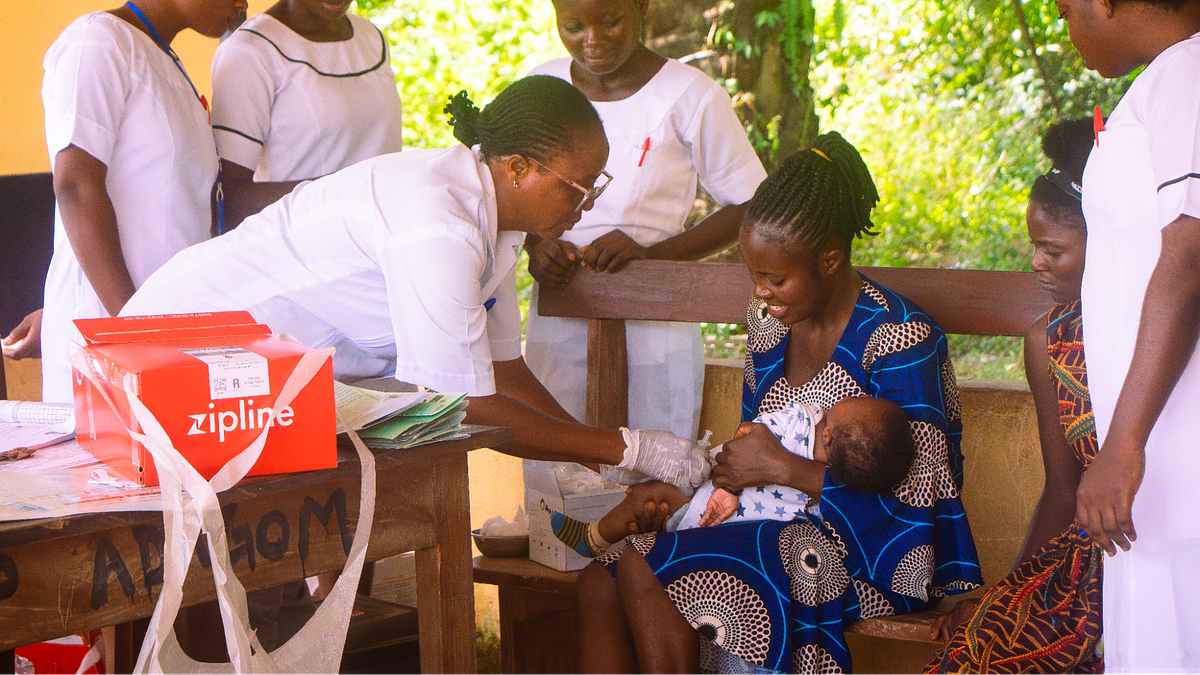
A recent study conducted with the Ghana Health Service found that facilities served by Zipline saw a 56.4% reduction in maternal deaths. Researchers attribute this not only to the rapid availability of blood and emergency medicines but also to a resulting increase in public confidence, which led to a 25% rise in women choosing to give birth in professionally staffed health facilities. Similarly, a 2023 Wharton School study in Rwanda concluded that Zipline’s on-demand blood delivery cut in-hospital maternal deaths from postpartum hemorrhage by 51%.
Beyond maternal health, the service has slashed medicine and vaccine stockouts by 60% and boosted immunization rates significantly, making it one of the most cost-effective public health interventions ever studied. This verifiable success is what drives African governments to invest their own funds.
“In Côte d’Ivoire, our priority is to guarantee every citizen rapid, reliable, and equitable access to essential health products,” said Pierre Dimba, Minister of Health. He confirmed the “concrete impact” on supply times and patient services, aligning with the nation's vision of a “modern, resilient health system.” Leaders in Nigeria and Rwanda echoed this sentiment, framing the technology as foundational to the future of their healthcare systems and a tool for strengthening health sovereignty.
Scaling a Sustainable Business Model
The five countries targeted for expansion—Rwanda, Ghana, Nigeria, Kenya, and Côte d’Ivoire—are not passive recipients but active clients. This partnership validates Zipline's business model, which treats governments as customers and logistics as a service. Each new Zipline hub is permanent infrastructure, staffed by a locally hired and trained workforce, creating skilled jobs and fostering economic growth.
Rwanda, Zipline’s first national-scale partner, is expected to be the first to sign on under the new agreement. Plans include a third distribution center and the deployment of Zipline’s newer, short-range Platform 2 drone for urban deliveries. In Nigeria, Africa’s most populous nation, the service will expand from three to eight states. For a country with over 200 million people, such a logistics network is not a luxury but a necessity for equitable healthcare.
This market-driven approach demonstrates a viable path for companies to achieve both profit and purpose. By solving an intractable problem—the final-mile delivery gap—with a scalable technological solution, Zipline has created a compelling value proposition for governments, health systems, and now, foreign policy architects.
Navigating the Headwinds of Innovation
While Zipline’s success is remarkable, the path for drone logistics in Africa has not always been smooth. Other high-profile projects on the continent have faltered, running into a wall of regulatory hurdles, infrastructural deficits, and a failure to adapt to local contexts. Many nations still grapple with outdated aviation rules that are ill-suited for autonomous aircraft, creating a complex and often prohibitive operating environment.
Public acceptance and data privacy also remain significant considerations. However, Zipline appears to have navigated these challenges by embedding its operations within national health systems and proving its value through tangible, life-saving outcomes. The “pay-for-performance” model further mitigates risk by ensuring government commitment from the outset, a crucial factor that has been missing in past donor-funded pilot projects that withered once initial funding dried up.
This landmark partnership does more than just scale a successful service; it offers a replicable blueprint for how philanthropy and foreign assistance can catalyze private innovation to build sustainable, country-owned solutions. What began as a bold experiment in Rwanda is now becoming the backbone of 21st-century health infrastructure, demonstrating that the future of logistics is not just autonomous, but equitable.