
- BIFMA-certified: URBANICA's Conference Chair meets rigorous safety, durability, and ergonomic standards.
- Hybrid work shift: Meeting room usage has skyrocketed as offices pivot to collaboration hubs.
- Sustainability pledge: URBANICA plants a tree for every chair purchased.
Experts would likely conclude that URBANICA's strategic entry into the conference chair market reflects a broader shift toward prioritizing ergonomics and employee well-being in collaborative workspaces, positioning the company to capitalize on evolving office design trends.
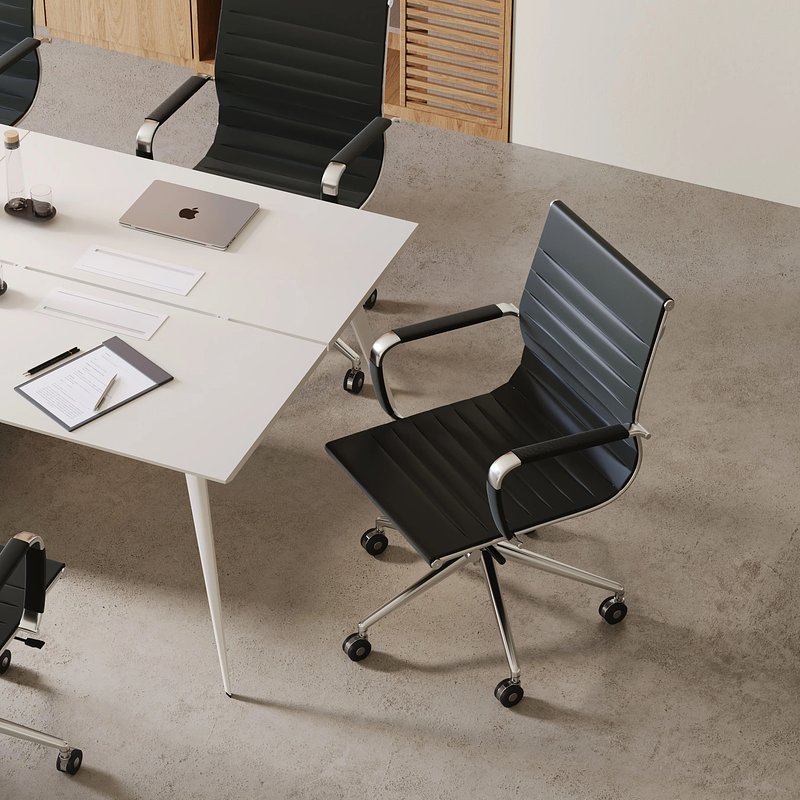
URBANICA's Strategic Sit: Why Your Meeting Room Chair Is Big Business
LAUDERHILL, FL – June 18, 2026 – In the relentless pursuit of productivity and talent, the corporate world has obsessed over the ergonomics of the individual workstation. Billions have been invested in adjustable desks and fine-tuned task chairs. Yet, a critical arena of corporate life has remained a stubbornly uncomfortable backwater: the conference room. Today, URBANICA Furniture made a calculated move into this neglected territory with the launch of its Conference Chair, a product that signals a much larger shift in how companies must think about the architecture of work.
While the announcement of a new chair may seem routine, URBANICA's entry into collaborative seating is a strategic play that warrants a closer look. It’s a bet that the next frontier for employee well-being, productivity, and competitive differentiation lies not at the personal desk, but in the shared spaces where strategy is forged, clients are won, and culture is built. The launch is less about a single piece of furniture and more about a declaration that the ergonomic revolution is finally ready to move beyond the cubicle.
The Ergonomic Blind Spot
For decades, the conference chair has been an aesthetic choice, not a functional one. Selected for its look or its ability to stack in a closet, its primary role was to fill a room, often at the expense of the people in it. The result is a universal experience: the hour-long meeting that feels like three, marked by fidgeting, strained backs, and waning focus. URBANICA's press release highlights this gap, noting that meeting rooms are where “important decisions” are made, yet are often designed with chairs that “only look professional but do not support real comfort.”
Deconstructing the Conference Chair’s specifications reveals a direct assault on this problem. The use of high-density nylon mesh is a deliberate choice for breathability and dynamic support, conforming to the user’s spine to prevent the heat buildup and stiffness common in traditional upholstered or leather chairs. Paired with premium, high-density foam, the design aims to distribute weight and relieve pressure points, a critical factor for maintaining focus during extended discussions.
Crucially, the chair is BIFMA-certified. This is more than just a marketing buzzword; the Business and Institutional Furniture Manufacturers Association puts products through a gauntlet of tests for safety, durability, and performance ergonomics. This certification provides an objective baseline of quality, assuring buyers that the chair can withstand the rigors of a high-traffic, multi-user environment while providing legitimate ergonomic benefits. It’s a tangible answer to the question of whether a chair can be both durable enough for a shared space and supportive enough for an individual.
The New Architecture of Collaboration
The timing of this launch is no accident. It lands squarely in a professional landscape reshaped by hybrid work. As companies redesign their offices, the focus is shifting from rows of individual desks to dynamic, collaborative hubs. The office is no longer primarily for heads-down solo work; it is the central node for teamwork, mentorship, and cultural immersion. Consequently, the value and usage of meeting rooms, huddle spaces, and training areas have skyrocketed.
Workplace consulting firms have consistently highlighted this trend, noting that the physical office must now offer a compelling reason to commute. That reason is collaboration. If employees are expected to spend hours in team sessions, brainstorming workshops, and client presentations, the environment must support that activity. An uncomfortable chair becomes more than a minor annoyance; it becomes a direct impediment to the very purpose of the space. It signals to employees and clients alike that their comfort is a low priority.
URBANICA is tapping into this paradigm shift. By extending its ergonomic philosophy from the individual desk to the conference table, the company is promoting a holistic approach to workplace wellness. The message is that comfort and support shouldn't be a luxury confined to a personal workstation but a standard feature of the entire office ecosystem. This aligns with the broader push to design workspaces that actively enhance employee well-being, a key factor in attracting and retaining top talent in a competitive market.
A Calculated Move in a Crowded Market
Launching a new chair means entering a fiercely competitive arena dominated by titans like Herman Miller and Steelcase, whose iconic products command premium prices and decades of brand loyalty. At the same time, a new wave of direct-to-consumer (DTC) brands like Branch and Autonomous have carved out a significant share of the mid-range market. URBANICA’s strategy appears to be a hybrid approach, aiming to flank both segments.
By operating exclusively online, URBANICA can offer what it calls “premium” features—BIFMA certification, high-end materials, a 10-year warranty—at a price point that undercuts the legacy giants. This DTC model bypasses the costly overhead of showrooms and traditional distribution networks, theoretically passing those savings to the customer. It’s a value proposition designed to appeal to growing businesses, coworking spaces, and established companies looking to upgrade their facilities without the sticker shock of high-end designer furniture.
Furthermore, the focus on the conference room is a shrewd niche strategy. While competitors offer conference seating, it is often a secondary part of a vast catalog. By launching a product specifically tailored and marketed for this “underserved” segment, URBANICA creates a clear narrative and a focused sales pitch. The addition of a sustainability promise—planting a tree for every purchase—further refines its brand identity, appealing to the growing number of businesses for whom environmental and social governance is a key purchasing consideration.
This launch is not merely an addition to URBANICA’s product line; it is an expansion of its total addressable market. It allows the company to sell a complete, ergonomically consistent package to its clients, outfitting not just the individual but the entire team environment. This move transforms URBANICA from a seller of chairs into a provider of comprehensive workspace solutions, significantly strengthening its strategic position. The company is making a clear statement that in the modern office, the conversation about productivity must include every seat at the table.