
- $1.3 trillion: Projected global AI market size by 2030, with up to 40% influenced by sovereignty requirements (McKinsey).
- 71%: Global leaders view sovereign AI as a 'strategic imperative' or 'existential concern' (McKinsey).
- 65%: Governments worldwide expected to implement technological sovereignty requirements by 2028 (Gartner).
Experts agree that sovereign AI solutions like UltiSim's Data Fusion Plane are becoming essential as organizations prioritize data control, security, and regulatory compliance in their AI adoption strategies.
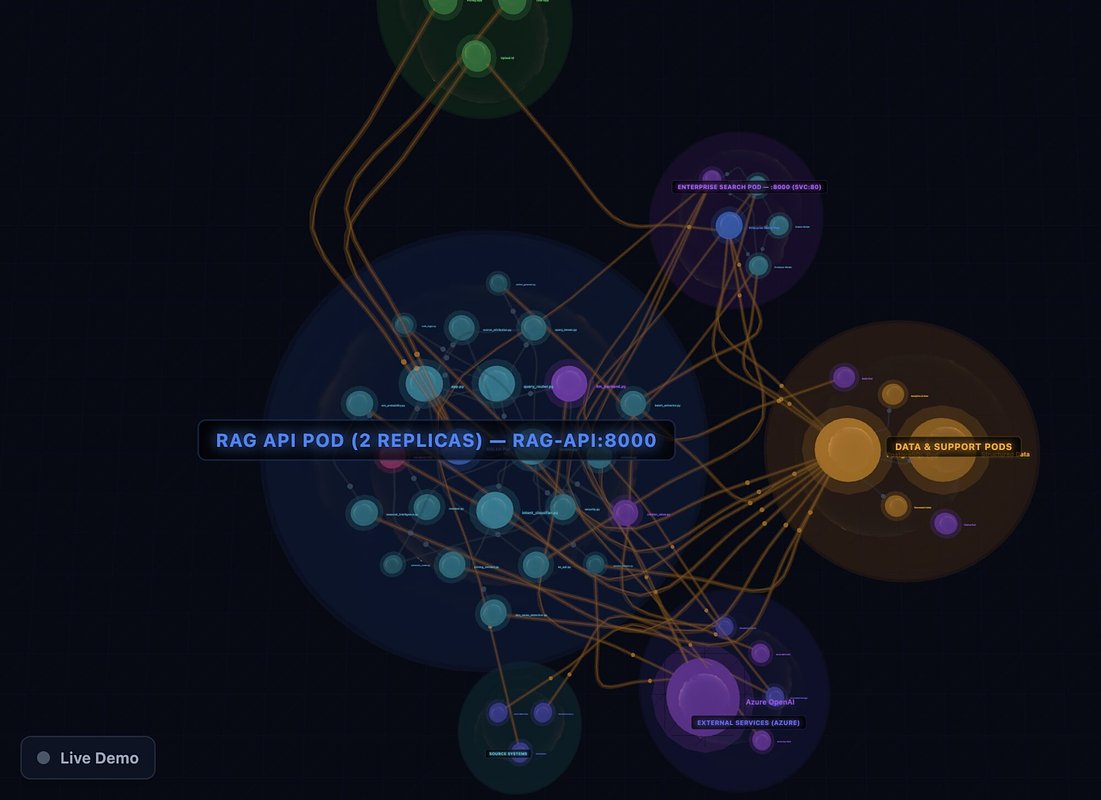
UltiSim Targets Sovereign AI Market with New Data Fusion Platform
CHAPEL HILL, NC – April 09, 2026 – As enterprises and governments grapple with how to adopt artificial intelligence without ceding control of their most sensitive information, local AI infrastructure firm UltiSim Inc. today launched its Data Fusion Plane. The new platform is designed to provide mid-market organizations and government agencies with a secure, sovereign AI infrastructure, allowing them to leverage advanced AI capabilities while keeping their data firmly behind their own firewalls.
The announcement positions UltiSim to capitalize on a seismic shift in the technology landscape toward what industry analysts call 'sovereign AI'—the capability for a nation or organization to control its own data, models, and compute infrastructure. The platform promises to deliver sophisticated AI tools, including digital twins and advanced data analysis, without the vendor lock-in or data privacy concerns often associated with dominant cloud hyperscalers.
“When organizations have a complex system to begin with, then add AI to it, it’s really hard for them to understand everything that’s happening with their data,” said Richard Boyd, UltiSim CEO and co-founder, in the company's official announcement. “We bring that understanding to give them transparency, sovereignty, and the ability to make the most of AI.”
The Rising Tide of Data Sovereignty
UltiSim's launch arrives at a critical moment. The global push for AI is increasingly tempered by concerns over data privacy, national security, and economic independence, fueling a multi-billion dollar demand for sovereign solutions. According to a recent McKinsey report, up to 40% of all AI spending by 2030—a market projected to exceed $1.3 trillion—could be influenced by sovereignty requirements. The same report found that 71% of global leaders view sovereign AI as a "strategic imperative" or even an "existential concern."
This trend is driven by a complex web of new regulations and geopolitical realities. The European Union, with its landmark GDPR and the forthcoming EU AI Act, has set a global precedent for stringent data governance. Meanwhile, other nations are rapidly developing their own policies to protect digital assets and foster domestic tech ecosystems. Analyst firm Gartner predicts that by 2028, a full 65% of governments worldwide will implement technological sovereignty requirements to shield themselves from foreign regulatory interference.
This has created a significant challenge for many organizations. While eager to adopt AI, they are wary of solutions that require them to move vast quantities of proprietary or classified data to third-party cloud servers, even those located within their own country. The fear is not just about security breaches but also about losing control, becoming dependent on a single vendor, and being subject to the laws of the vendor's home country. According to research from IDC, a significant number of early AI projects have failed, leading 70% of IT teams to reconsider their approach and prioritize foundational platforms built on data governance and trust.
A New Architecture for AI Control
UltiSim claims its Data Fusion Plane directly addresses these challenges with a fundamentally different architecture. One of its most significant claims is that it operates without requiring a centralized data lake. Traditionally, AI projects begin by consolidating all relevant data into a single, massive repository—a complex, costly, and time-consuming process that creates a high-value target for cyberattacks.
Instead, UltiSim's platform is designed to connect to disparate and siloed data sources where they already exist. It uses what appears to be a sophisticated data virtualization layer, creating a unified logical view of the data that AI applications can access securely and on-demand. This approach not only speeds up deployment but is central to its promise of data sovereignty, as sensitive information never has to leave the organization's control.
At the core of the system is a 'compound AI' engine. This architecture combines the pattern-recognition and content-creation abilities of modern generative AI with the logic and rules-based precision of symbolic AI. This hybrid approach is enhanced by an advanced Retrieval-Augmented Generation (RAG) engine that uses neural knowledge graphs. In practice, this means that when the AI generates a response or an analysis, it is grounded in the organization's own verified data, dramatically reducing the risk of the 'hallucinations' or factual errors that plague many off-the-shelf AI models.
The company emphasizes that its platform is built to be portable and future-proof, avoiding vendor lock-in. By handing over the "digital keys," UltiSim provides its customers' engineering teams with the control and training needed to manage, maintain, and expand their own AI systems and digital twins autonomously.
From Orbit to Outcomes: Putting Theory into Practice
The practical value of such a system is highlighted by early feedback. The platform enables the creation of a "common operating picture," a term often used in defense and government to describe a single, unified view of a complex operational environment. For a client like ERT, which supports government customers in space, defense, and national security, this capability is invaluable.
“The UltiSim Data Fusion Plane is really powerful,” said Vir Thanvi, vice president at ERT, in a statement included in the launch announcement. “Having a completed, common operating picture of everything involved in sensor collection and production of data is immensely valuable.”
This ability to synthesize diverse data streams—from satellite sensors to operational reports—into a coherent and actionable intelligence picture is a key use case for the sovereign AI market. UltiSim's focus on rapid deployment, with a claimed 90-day timeline, and built-in tools to accelerate security compliance for standards like SOC-2 and FIPS 140-3, is clearly aimed at removing the primary barriers to AI adoption for its target mid-market and government clients.
Led by Boyd, whose team draws on two decades of experience in the specialized fields of modeling and simulation, UltiSim is making a bold play. It is betting that a growing number of organizations are no longer asking if they should adopt AI, but how they can do so on their own terms. By offering a platform that promises the power of AI with the assurance of control, the company is providing a compelling answer.