
- 10,000th organ transplant completed by UCHealth, marking six decades of medical progress.
- 1,000th lung, 1,000th heart, 5,000th kidney, and 3,000th liver transplants achieved in 2025 alone.
- Robotic-assisted surgery adopted since 2020, enabling smaller incisions, faster recovery, and higher survival rates.
Experts agree that UCHealth's milestone reflects transformative advancements in transplant medicine, driven by robotic precision and organ preservation technologies, significantly improving patient outcomes and accessibility.
UCHealth's 10,000 Transplants: A Six-Decade Medical Revolution
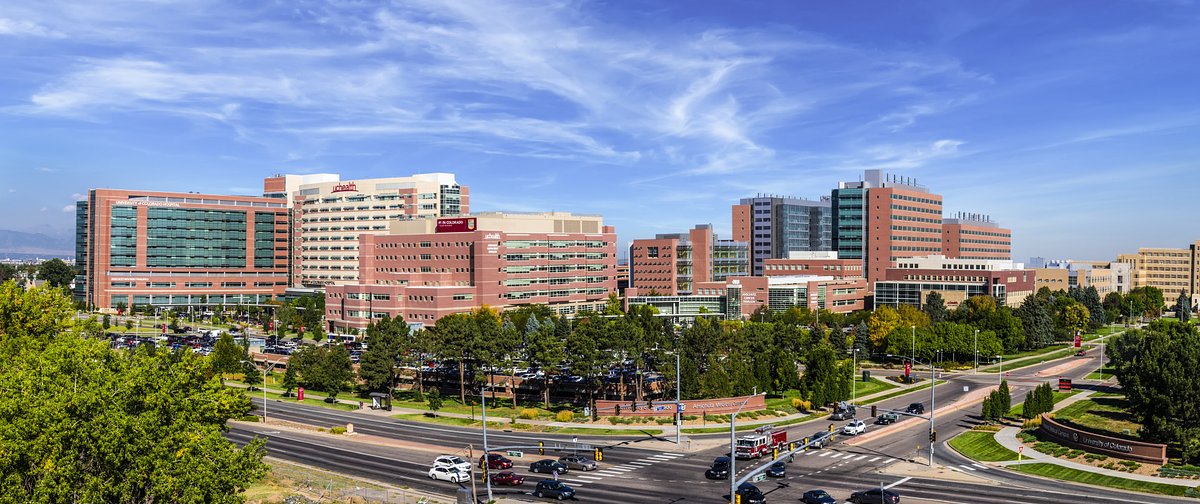
AURORA, CO – March 13, 2026 – A major milestone was marked at UCHealth University of Colorado Hospital as the institution announced the completion of its 10,000th organ transplant, a culmination of six decades of pioneering medical work. What began as a risky, experimental field in the 1960s has evolved into a high-tech discipline where robotic arms and advanced preservation technologies make life-saving procedures safer and more accessible than ever. The achievement was underscored by a landmark year in 2025, which saw the program complete its 1,000th lung transplant, 1,000th heart, 5,000th kidney, and 3,000th liver transplant.
From Experimental Frontier to Robotic Precision
In the early days of transplant medicine, the procedures were fraught with peril and uncertainty. The University of Colorado Hospital, now part of UCHealth, was at the global epicenter of this frontier, performing the world's first-ever liver transplant in 1963. Patients in that era faced long, arduous recoveries, often spending weeks or months in the hospital.
“When we were performing transplants in the 80s, the procedures were far more invasive and every transplant carried uncertainty,” said Dr. Igal Kam, who served as chief of transplant surgery at UCHealth from 1988 to 2016.
The stark contrast between then and now is vividly illustrated by the experiences of living donors separated by nearly 60 years. In 1966, a 22-year-old Patty Newman Coy Byrn donated a kidney to her brother. The procedure, one of the first of its kind in Colorado, was profoundly invasive. “They cut me from the middle of my stomach to the middle of my back, and they took a rib out to get the kidney out so it wasn’t damaged,” recalled Newman Coy Byrn, now 82.
Fast forward to December 2025. Sam Carter donated a kidney to her sister using a state-of-the-art, robotic-assisted surgical technique. Her experience was worlds apart. “I spent only one night in the hospital after my surgery,” Carter said. “The incisions are small and recovery is fast. It’s incredible we get to do this, to give an organ so that someone else can start their life over.”
The Robotic Revolution in the Operating Room
The dramatic shift in the donor and recipient experience is largely thanks to relentless innovation, most notably the adoption of robotic-assisted surgery. UCHealth launched its robotic transplant program in 2020, first for kidney donors, then expanding to kidney recipients in 2021 and liver donors and recipients in 2023. This technology represents a paradigm shift in surgical practice.
During a robotic procedure, a surgeon operates from a console, controlling slender robotic arms equipped with instruments. These arms are inserted into the patient through several small incisions, often no wider than a pencil. The system provides a magnified, high-definition 3D view from inside the body, eliminates natural hand tremors, and allows for a range of motion that surpasses human capability. This precision leads to smaller incisions, less blood loss, reduced post-operative pain, and significantly shorter hospital stays. For many patients, particularly those with obesity who might have been considered too high-risk for traditional open surgery, robotics has opened a new door to life-saving care.
“Today, UCHealth performs robotic-assisted kidney transplants, multi-organ surgeries, and complex living donor procedures, all with dramatically shorter recovery times and higher survival rates,” said Dr. Trevor Nydam, the current chief of transplant surgery at UCHealth University of Colorado Hospital. “Decades of innovation have really changed the game for transplant surgery.”
Empowering Heroes in a Time of Need
These technological leaps are not just about improving surgical outcomes; they are a critical tool in the fight against a national health crisis. More than 100,000 people across the United States are currently on the waiting list for a life-saving organ, and an estimated 13 people die each day waiting. The vast majority—nearly 90%—are waiting for a kidney.
Living donation offers a powerful solution, providing a healthy organ without the often-prolonged wait for a deceased donor. By making the donation process safer, less invasive, and easier to recover from, institutions like UCHealth are helping to lower the barrier for potential donors. The hospital's living donor program is now one of the largest in the country, a testament to its focus on expanding access to transplantation.
“Making living donation more accessible has the power to change the trajectory for patients who might otherwise wait too long,” Dr. Nydam noted. “By continuing to innovate and make donation safer and less disruptive to donors’ lives, we hope more people will consider this extraordinary act of generosity.”
A Regional Leader Pushing National Boundaries
As the largest comprehensive transplant center in the Rocky Mountain region and the only one in Colorado performing all solid organ transplants—heart, lung, liver, kidney, and pancreas—UCHealth's impact is profound. Its patient outcomes are consistently as good or better than national averages, with aggressive efforts to get patients transplanted quickly, which is proven to lead to better results.
Beyond robotics, another key innovation has been the advancement of organ perfusion technology. For deceased donations, this 'organ-in-a-box' technology keeps organs viable outside the body for longer periods. It allows clinicians to monitor and assess the organ's health before transplantation, reducing uncertainty and increasing the number of usable organs from the donor pool.
From a single, daring procedure in 1962 to a comprehensive, high-tech program that has now given 10,000 individuals a second chance, UCHealth's journey reflects the broader story of modern medicine. It is a story of relentless innovation, where each technological breakthrough not only refines the art of the possible but also brings new hope to thousands of patients and their families still waiting for the ultimate gift.