
- 67,184 professional visitors and 1,156 exhibitors attended productronica Shanghai 2026, covering 100,000 square meters of exhibition space.
- China aims for over 85% automation in key production processes for major enterprises by 2027.
- China's core AI industry has surpassed 900 billion yuan, supporting over 5,000 enterprises in manufacturing innovation.
Experts agree that China is leading the AI-driven transformation of electronics manufacturing, with autonomous systems and embodied intelligence reshaping the industry's future.
Shanghai Expo Spotlights AI-Driven Future of Electronics Manufacturing
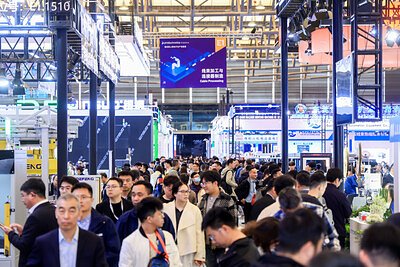
SHANGHAI, China – April 02, 2026 – The factory of tomorrow is no longer a distant concept; it was on full display in Shanghai. The recent productronica Shanghai 2026, which concluded on March 27, served as a powerful testament to the rapid, intelligence-driven transformation of the global electronics manufacturing industry. Attracting 67,184 professional visitors and 1,156 exhibitors across a sprawling 100,000-square-meter exhibition space, the event was more than a trade show; it was a window into a future where production lines think, learn, and adapt.
The exhibition highlighted a seismic shift from traditional automation to AI-powered autonomous systems, reinforcing China's ambition to lead the next industrial revolution. "productronica Shanghai 2026 once again highlights China's central role in the global electronics manufacturing value chain," stated Dr. Reinhard Pfeiffer, CEO of Messe München, the event's organizer. The expo provided a critical platform for technological exchange, showcasing innovations that span the entire industry, from robotics and quality inspection to advanced materials and wiring harnesses.
China's Intelligent Manufacturing Blueprint
The vibrant show floor at productronica Shanghai was a direct reflection of China's ambitious national strategy. Initiatives like "Made in China 2025" and the more recent "AI Plus" plan are not just policy documents; they are the engine driving the innovations showcased at the event. The government's goal is to deeply integrate artificial intelligence across key industries, with the electronics sector at the forefront. This state-level push aims to achieve over 85% automation in key production processes for major enterprises by 2027.
Jan Rohde, CFO and Deputy General Manager of Messe Muenchen Shanghai, noted the industry's rapid advance "toward intelligent production." This was evident in every corner of the expo, where the conversation has moved beyond simple automation to what is now termed "embodied intelligence"—AI integrated into physical systems that can perceive, reason, and interact with the real world. This national focus has created a fertile ecosystem, with China's core AI industry already exceeding 900 billion yuan and supporting over 5,000 enterprises dedicated to pushing the boundaries of what's possible in manufacturing.
From Automation to Autonomy: The AI Revolution in SMT
Nowhere was the transition to intelligent manufacturing more apparent than in Surface Mount Technology (SMT). For decades, SMT lines have been a benchmark for automation, but the integration of AI and digital twins is now accelerating a transformation from automated processes to truly autonomous and adaptive systems.
Industry leaders like FUJI demonstrated solutions that turn a smart factory into an intelligent one. By partnering with AI firms, FUJI is deploying systems that provide AI-powered guidance to SMT lines, analyzing real-time machine data to proactively detect production risks and offer actionable solutions. This marks a crucial shift from reacting to problems to preventing them entirely. Similarly, KOH YOUNG, a pioneer in 3D inspection, has embedded AI into its platforms. Its systems now move beyond simply identifying defects; they use vast amounts of 3D data to predict potential failures, optimize processes in real-time, and automate troubleshooting, significantly reducing manual intervention and false calls. This evolution toward a closed-loop, self-optimizing process is becoming an essential component of the modern smart factory.
The Rise of Embodied Intelligence and High-Voltage Systems
The concept of "embodied intelligence" came to life through advanced robotics and automation solutions at the expo. The next generation of industrial robots on display are no longer confined to repetitive tasks within a cage. Companies like ABB, in partnership with technology giants like Nvidia, are developing autonomous robots trained in virtual environments. These robots can adapt to complex, unstructured factory floors, collaborating with human workers and making decisions in real-time. ABB's establishment of an "Embodied Intelligence Laboratory" in early 2026 underscores the industry's commitment to breaking through bottlenecks in perception and decision-making for intelligent agents in the physical world.
This move towards greater intelligence is mirrored in the evolution of core components, particularly wiring harnesses. Driven by the explosive growth of New Energy Vehicles (NEVs) and their high-voltage platforms, wiring systems are becoming complex data and power distribution networks. Exhibitors such as Komax and Schleuniger showcased highly automated solutions for processing these advanced harnesses. Using cloud-based software and integrated quality monitoring, these systems allow manufacturers to handle more complex, customized requirements with greater efficiency and precision, meeting the critical demands of the intelligent mobility sector.
Redefining Precision Across the Value Chain
The drive for smaller, more powerful, and more reliable electronic devices is pushing innovation in every part of the manufacturing process. As components shrink to microscopic sizes, the technologies used to assemble and protect them must become exponentially more precise. At productronica Shanghai, companies like Nordson EFD and Musashi Engineering showcased high-precision dispensing solutions capable of delivering minute, perfectly controlled amounts of advanced adhesives and materials. These technologies are critical for ensuring the long-term reliability of products in demanding sectors like automotive, medical technology, and consumer electronics.
Simultaneously, AI is revolutionizing quality inspection and testing. The industry is rapidly moving away from manual or 2D inspection methods toward automated, data-driven 3D analysis. Companies including Omron and Viscom presented AI-based visual inspection systems that can identify subtle defects with superhuman accuracy and speed. This not only enhances product quality but also provides crucial data that feeds back into the production loop, enabling continuous process improvement and supporting the flexible, high-quality manufacturing environments of the future. The event's ten high-level forums further explored these trends, bringing together experts to chart the course for the industry's continued evolution. With the next productronica Shanghai already scheduled for March 2027, the industry is poised for another year of rapid advancement driven by the relentless pursuit of intelligent manufacturing.