
- Torque Output: AF300 delivers over 192 Nm, AF400 up to 290 Nm
- Market Growth: Global axial flux motor market projected to exceed $395 million by 2032
- Funding: Turntide raised over $485 million, achieving 'unicorn' status with $1B+ valuation
Experts would likely conclude that Turntide's compact, high-torque axial flux motors offer a practical and scalable solution for hybridizing existing fleets, addressing key barriers to electrification such as space constraints and cost.
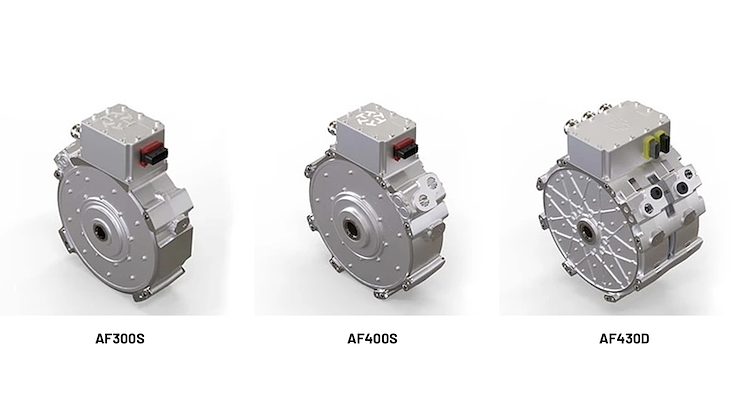
Turntide Unlocks Hybrid Future with Compact, Powerful Motor Lineup
GATESHEAD, U.K. – April 22, 2026 – As industries from logistics to agriculture grapple with volatile fuel prices and mounting pressure to decarbonize, Turntide Technologies today announced a significant expansion of its electric motor portfolio that could accelerate the shift to hybrid systems. The global electrification leader has introduced new axial flux motors designed to deliver high power in a compact form, directly addressing a core challenge for manufacturers and fleet operators: fitting modern electric powertrains into existing, space-constrained vehicle designs.
The company unveiled its new AF300 and AF400 models, which join its existing lineup and promise substantial torque in a low-profile package. The AF300 provides over 192 Newton meters (Nm) of continuous torque, while the larger AF400 delivers up to 290 Nm. By offering these motors in both single- and double-stacked configurations, Turntide aims to give original equipment manufacturers (OEMs) and fleet managers the flexibility to match power requirements precisely to their needs, from commercial trucks to off-highway equipment.
The Engineering Edge in a Crowded Field
The announcement places Turntide at the forefront of a rapidly growing market. The global axial flux motor market, valued at over $150 million in 2022, is projected to exceed $395 million by 2032, driven by the technology's inherent advantages over traditional radial flux motors. Axial flux motors, often described as 'pancake' or 'disc-type' motors, have a fundamentally different architecture that allows them to be significantly more compact and lightweight while delivering superior torque density—in some cases, up to four times greater than their radial counterparts.
This power-to-size ratio is critical for hybridization. While competitors like YASA (a subsidiary of Nidec) have made inroads in high-performance automotive with their own powerful and compact motors, Turntide is focusing on making the technology scalable and durable for high-volume industrial and commercial applications. A key innovation highlighted in the release is the introduction of cast casings for its AF430S and AF430D models. This manufacturing process, which Turntide plans to extend across the entire portfolio, moves away from more complex, costly production methods. Casting improves durability and consistency, crucial for the demanding environments of construction sites and long-haul trucking, while also driving down costs—a critical factor for mass adoption.
“Hybridization is gaining momentum because it delivers what we call a dual green effect,” said Turntide CEO Steven Hornyak in the company's announcement. “It reduces fuel consumption and emissions while improving operating economics at the same time. Turntide’s axial flux motors make it possible to deliver hybrid systems where space and performance have typically been limiting factors.”
A Pragmatic Path to Greener Operations
For many fleet operators, the prospect of full electrification remains a distant and expensive goal, requiring massive capital investment in new vehicles and charging infrastructure. Turntide’s strategy directly targets this hesitation by offering a more immediate and economically viable solution: retrofitting existing diesel-powered fleets.
The compact design of the new axial flux motors enables them to be integrated into existing drivetrains without requiring a complete vehicle redesign. This allows fleet owners to convert their current assets into more efficient hybrid machines, extending the equipment's operational life while achieving significant fuel savings. Turntide claims these hybrid retrofits can reduce fuel consumption by 10% to 20%, depending on the application. For a large fleet, such savings represent a substantial improvement to the bottom line and a measurable reduction in carbon footprint.
This approach directly tackles the primary barriers to adoption for many OEMs and fleet managers, which include high initial costs, manufacturing complexity, and the daunting logistics of platform overhauls. By providing a 'drop-in' style solution, the company offers a practical bridge technology that delivers immediate environmental and economic benefits. This strategy appears to be resonating with investors, as Turntide has successfully raised over $485 million in funding, earning it 'unicorn' status with a valuation over $1 billion. Backers include high-profile, climate-focused funds such as Bill Gates' Breakthrough Energy Ventures and the Amazon Climate Pledge Fund, signaling strong confidence in the company's approach to scalable decarbonization.
Powering a Strategic Shift in Mobility
Turntide's expansion is more than just a product launch; it's a strategic move to position itself as a pivotal supplier in the global transition to electric and hybrid power. The company is not just selling motors but a comprehensive solution that includes power electronics and system integration support, helping OEMs navigate the complexities of electrification.
The flexibility of the expanded motor range allows for precise application tuning, whether for a light commercial vehicle needing a boost in urban environments or a heavy-duty piece of agricultural machinery requiring consistent torque for demanding tasks. This configurability, combined with the push toward cost-effective, high-volume manufacturing, positions Turntide to capture a significant share of the industrial and commercial vehicle market.
As the technology matures and manufacturing scales, the advantages of axial flux motors are expected to drive their adoption across an even wider array of industries. Their lightweight and compact nature makes them ideal candidates for future innovations like in-wheel motors, which could further simplify vehicle design and improve efficiency. While challenges related to manufacturing complexity and material costs have historically slowed adoption, innovations like Turntide’s cast casings represent a significant step toward overcoming these hurdles and industrializing the technology for the mass market. With this expanded portfolio, Turntide is not just offering components but is actively engineering a more accessible and immediate path toward a hybridized future.