
- 9x year-over-year growth for Trucking Hub in 2025
- Unified TMS adoption replacing fragmented software solutions
- Reduced administrative workloads and improved operational visibility for carriers
Experts agree that the trucking industry is undergoing a critical shift toward unified Transportation Management Systems (TMS) to enhance efficiency, reduce costs, and improve compliance, as demonstrated by Trucking Hub's rapid growth.
Trucking Hub's 9x Growth Signals a Unified Tech Revolution in Trucking
CHICAGO, IL – January 13, 2026 – By Alexander Harris. Technology provider Trucking Hub has announced a staggering 9× year-over-year growth for 2025, a figure that serves as a powerful indicator of a fundamental transformation sweeping the trucking industry. Carriers, grappling with economic pressures and operational complexity, are increasingly abandoning their patchwork of disparate software tools in favor of single, unified Transportation Management Systems (TMS).
The Chicago-based company's rapid expansion, driven by what it calls an industry-wide consolidation trend, underscores a pivotal moment for logistics technology. As fleets seek to streamline every aspect of their business, the demand for comprehensive platforms that integrate dispatch, compliance, safety, and back-office functions has surged, marking a clear departure from the fragmented digital solutions of the past.
The End of Software Silos
For years, many trucking companies have managed their operations using a collection of disconnected point solutions—one system for dispatch, another for ELD compliance, a separate one for accounting, and yet another for telematics. This fragmented approach creates significant inefficiencies, data silos, and administrative burdens. Staff must navigate multiple logins, vendors, and user interfaces, while critical data remains isolated, preventing a holistic view of the business.
This operational friction is becoming untenable in the face of rising costs for fuel, insurance, and maintenance, coupled with a complex and ever-changing regulatory landscape enforced by bodies like the Federal Motor Carrier Safety Administration (FMCSA). The administrative overhead required to manually sync data between systems, ensure compliance, and generate comprehensive reports eats into already thin profit margins. Industry analysis confirms that carriers are actively seeking ways to automate workflows and reduce these manual touchpoints to remain competitive. The old model of juggling five or six different software tools is no longer a sustainable strategy for growth or even survival.
The Rise of the Unified Platform
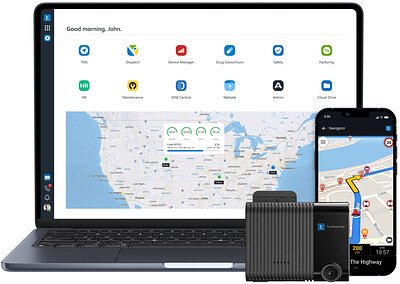
In response to these challenges, the concept of an all-in-one TMS has gained significant traction. Trucking Hub's success is a case study in this market shift. The company’s platform unifies core trucking operations—including dispatch, compliance, ELD, safety, telematics, accounting, and maintenance—into a single, connected ecosystem. This consolidation is the driving force behind its explosive growth.
"Carriers aren't looking for more software, they're looking for one system that actually runs their business," stated Milos Pavlovic, CEO of Trucking Hub, in the company's announcement. "Our growth is driven by fleets consolidating dispatch, compliance, safety, recruiting and operations into Trucking Hub, instead of managing five or six different tools."
This move toward integration delivers tangible benefits that resonate deeply with fleet owners and managers. Independent user reviews and industry reports highlight that carriers adopting unified platforms experience significantly reduced administrative workloads, faster onboarding for new staff and drivers, and crucially, improved operational visibility. Having all data in one place allows for real-time insights, better decision-making, and the ability to automate processes like invoicing and driver settlements, freeing up back-office teams to focus on more strategic tasks.
A Competitive and Evolving Marketplace
Trucking Hub is not alone in recognizing this industry need, but its rapid growth suggests its approach is resonating, particularly within the small to mid-sized carrier segment. The TMS market is a dynamic and competitive field, populated by a wide range of providers. Large, established players have long offered powerful, albeit complex and costly, systems for enterprise-level fleets. In parallel, a new generation of cloud-based, user-friendly platforms has emerged, aiming to democratize access to this powerful technology.
These modern TMS solutions are designed for agility and ease of use, often targeting fleets that lack large IT departments or the capital for massive software implementations. Trucking Hub positions itself as a solution "built by carriers, for carriers," emphasizing an intuitive design that addresses real-world operational pain points. This focus on delivering enterprise-level functionality without the associated complexity appears to be a key differentiator. The company's growth, which it reports as organic and not driven by recent major funding rounds, suggests strong product-market fit and customer satisfaction.
Empowering Fleets for Future Growth
The ultimate impact of this technological shift extends beyond simple efficiency gains. By consolidating operations onto a single platform, carriers can scale their business more effectively without proportionally increasing back-office headcount. The automation of routine tasks and the clarity provided by a unified data source empower fleets to handle more loads, manage more trucks, and maintain compliance with greater ease.
Customer feedback from across the industry echoes this sentiment. Fleet managers report significant time savings, with platforms that offer features like AI-driven document processing and integrated driver mobile apps transforming daily workflows. For drivers, a single app for viewing dispatches, submitting paperwork, and checking settlements simplifies their administrative tasks, contributing to better job satisfaction in an industry struggling with driver retention. For the back office, the ability to move from dispatch to invoice within one system eliminates redundant data entry and accelerates cash flow.
As the trucking industry moves further into 2026, the trend toward operational consolidation is expected to accelerate. With economic uncertainties and competitive pressures showing no signs of abating, the reliance on integrated, intelligent, and efficient technology will only grow, setting a new standard for how modern trucking companies operate and thrive.