
- 760W Power Output: Trinasolar's Vertex N G3 module delivers a maximum power of 760 watts, the highest in the market.
- 21.6% Renewable Target: South Korea aims for renewable sources to constitute 21.6% of total electricity generation by 2030.
- 85±5% Bifaciality: The module's high bifaciality boosts energy generation by 10–20% in ground-mounted projects.
Experts agree that Trinasolar's Vertex N G3 module offers a strategic solution to South Korea's solar challenges, combining high efficiency, advanced technology, and strong bankability to optimize land use and improve project viability in a constrained market.
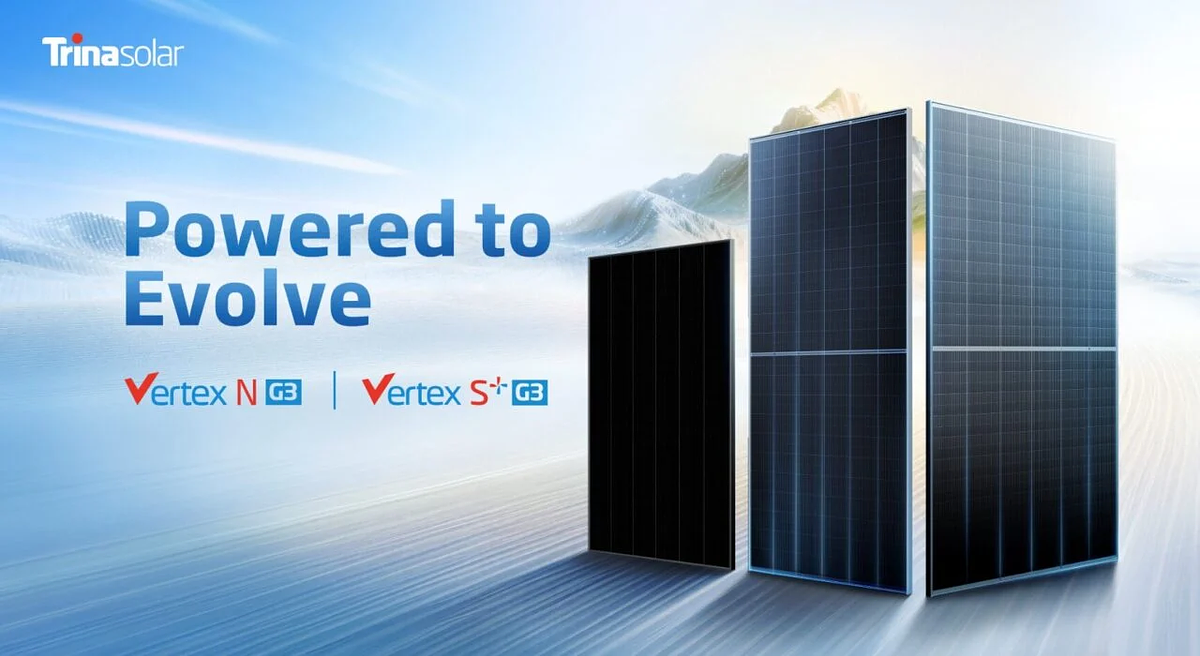
Trinasolar's 760W Module Targets South Korea's Solar Hurdles
SEOUL, South Korea – April 23, 2026 – Global solar technology leader Trinasolar has officially introduced its most powerful module to date, the Vertex N G3, to the South Korean market. The launch signals a strategic move to address the nation's unique energy challenges with a new benchmark in solar efficiency and power output. The module, boasting a maximum power of 760 watts, is built on advanced n-type i-TOPCon Ultra technology, designed to maximize energy production in a country grappling with ambitious renewable goals and significant physical constraints.
A New Powerhouse for a Crowded Landscape
South Korea is at a critical juncture in its energy transition. With governmental mandates aiming for renewable sources to constitute 21.6% of total electricity generation by 2030, the pressure to accelerate solar deployment is immense. However, this ambition clashes with the geographical reality of a densely populated, mountainous country where land suitable for large-scale solar farms is both scarce and expensive.
This dynamic has created a market where maximizing energy yield per square meter is not just a preference but a necessity for project viability. Developers are increasingly seeking solutions that can generate more power from a smaller footprint, thereby optimizing land use and improving project returns. The introduction of the Vertex N G3 is poised to directly meet this demand. By packing 760W of power into a single panel, developers can achieve their target capacity with fewer modules, reducing the overall project area and associated land costs.
Furthermore, the country's grid infrastructure faces strain from the intermittent nature of renewables. Higher string power, enabled by the Vertex N G3's optimized electrical characteristics, allows for more efficient system design. This can lead to a reduction in balance of system (BOS) costs—which include wiring, mounting hardware, and inverters—and can simplify the process of grid integration, a common bottleneck for new solar projects in the region.
Redefining Performance with Advanced Technology
The impressive 760W output of the Vertex N G3 is underpinned by Trinasolar's proprietary n-type i-TOPCon Ultra cell technology. Unlike older p-type PERC technology, n-type cells are known for their higher conversion efficiency and superior performance over the long term. They suffer less from light-induced degradation (LID), ensuring more stable power output from the first day of operation.
A key feature enhancing the module's yield is its high bifaciality of up to 85±5%. This means the rear side of the panel can capture reflected sunlight from the ground (albedo) and convert it into additional electricity. In typical ground-mounted utility-scale projects, this can boost total energy generation by an additional 10–20%, a significant increase that directly improves a project's financial model.
Durability and long-term performance are also central to the module's design. The Vertex N G3 features a low linear degradation rate of just 0.35% per year after the first year, backed by a 30-year power output warranty. This slow rate of degradation ensures a predictable and consistent energy yield over the project's entire lifecycle. Its stable temperature performance is another critical advantage, as n-type cells lose less power in the high temperatures of summer, a crucial factor for maintaining output during South Korea's varied seasonal conditions. The module is also specifically engineered for resilience in the humid, coastal environments common across the Korean peninsula, protecting investments against challenging weather.
The Competitive Edge in a Fierce Market
Trinasolar enters a highly competitive South Korean market. The arena includes formidable domestic players like Hanwha Q Cells, which has long held a dominant position, as well as other global giants such as LONGi and Jinko Solar, all of whom are vying for market share with their own high-efficiency n-type module offerings. In this environment, differentiation is key.
The Vertex N G3's 760W power rating places it at the apex of commercially available modules, providing a distinct advantage in a market obsessed with power density. While competitors offer modules in the 600W to 720W range, Trinasolar's offering pushes the boundary, providing a clear value proposition for developers focused on maximizing output. This technological leadership, combined with the module's superior bifaciality and degradation metrics, creates a compelling case for its adoption in both large-scale utility projects and space-constrained commercial and industrial (C&I) installations.
Bankability as the Cornerstone of Project Viability
Beyond sheer technical specifications, the financial security behind a solar module is paramount for developers, investors, and lenders. Trinasolar has solidified its position in this regard, having achieved a 100% bankability rating in the prestigious BloombergNEF (BNEF) PV Module Bankability Survey for the eighth consecutive year. This perfect score reflects the deep confidence that global financial institutions and independent power producers have in the company's financial stability, product quality, and ability to honor its long-term warranties.
For a South Korean developer seeking project financing, specifying a module with top-tier bankability can be the difference between approval and rejection. It de-risks the investment for lenders, often leading to more favorable financing terms and a smoother path to financial close. This assurance, coupled with the module's ability to lower the Levelized Cost of Electricity (LCOE) through higher energy yield and reduced BOS costs, makes a powerful argument for its selection. The 30-year warranty is not just a promise of performance but a testament to the financial robustness of the company standing behind it.
"In South Korea, delivering high-efficiency systems within constrained site conditions requires both strong product performance and local execution," stated Li Na, President of Korea, Trinasolar Asia Pacific, in the official announcement. "The Vertex N G3 brings the latest TOPCon technology to the market, backed by our Korea-based team providing technical and after-sales support."
This combination of cutting-edge technology, market-specific design, and unwavering bankability positions the Vertex N G3 as a pivotal new tool for South Korea's renewable energy sector. The module is scheduled to be available for utility-scale and C&I projects across the country by the end of 2026, setting the stage for a new era of high-efficiency solar deployment.