
- 40 MW, 160.48 MWh: Capacity of the Gamma Battery Energy Storage System (BESS) project in Romania.
- 12,000+ cycles: Cell cycle life of the Elementa 2 Pro battery system, enhancing longevity and reducing costs.
- 5 GW: Romania's target for battery energy storage capacity by the end of 2026.
Experts view the Gamma project as a critical milestone in Romania's energy transition, demonstrating how advanced integrated battery systems can stabilize grids and support renewable energy integration, setting a new standard for the region's clean energy future.
Trina Storage Ignites Romania's Grid with New Integrated Battery Tech
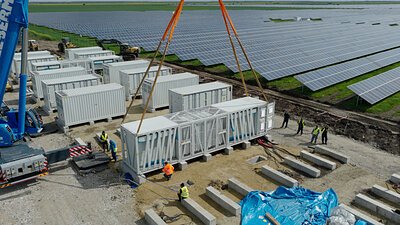
MUNICH, GERMANY – May 29, 2026 – In a significant move to bolster Eastern Europe's energy infrastructure, global energy storage provider Trina Storage has completed the delivery of a pioneering battery system to Romania. The Gamma Battery Energy Storage System (BESS) project, located in Izvoarele, Giurgiu County, is now set for installation, marking the first European deployment of Trina's advanced Elementa + Electra integrated solution.
The 40-megawatt, 160.48-megawatt-hour project represents a critical step in Romania's push toward renewable energy integration. Developed for LSG Building Solutions SLR, the utility-scale system is on track for commissioning in the third quarter of 2026, where it is expected to play a pivotal role in stabilizing the national grid as the country rapidly expands its clean energy portfolio.
"The successful delivery of the Gamma project represents another important milestone for Trina Storage in Europe," said Gabriele Buccini, Head of Trina Storage Europe. "As energy storage markets continue to expand across Europe, we are seeing growing demand for integrated Cell-to-AC and bankable storage solutions capable of supporting long-term grid flexibility and renewable integration."
A Technological Leap in Energy Storage
At the heart of the Gamma project is the debut of Trina Storage's Elementa + Electra integrated architecture. This isn't just another battery installation; it's a showcase of a next-generation, vertically integrated system designed for superior efficiency and streamlined operation. The project combines 32 units of the Elementa 2 Pro, a liquid-cooled battery system, with four Electra AC units.
The Elementa 2 Pro containers are the core of the system, each boasting a capacity of over 5 MWh. They are built with Trina's own in-house manufactured 314Ah cells, a key differentiator that allows the company to control quality and performance from the most basic component up. This "cell-to-AC" philosophy ensures that all parts of the system are designed to work together seamlessly. According to the company, this vertical integration allows for a cell cycle life exceeding 12,000 cycles, significantly enhancing the system's longevity and reducing its lifetime costs.
The Electra units complete the package by integrating power conversion and medium-voltage step-up functions. This combines the DC power from the batteries with the AC grid, enabling more coordinated performance and simplifying the complex process of connecting a large-scale storage asset to the utility network. The result is a highly efficient, high-density solution that can be deployed faster and more reliably.
Powering Romania's Green Revolution
The timing and location of the Gamma project are no accident. Romania is in the midst of an ambitious energy transition, with plans to install as much as 5 GW of battery energy storage capacity by the end of 2026. This aggressive target is essential to manage the intermittency of the country's growing solar and wind power generation and to ensure the grid remains stable.
To encourage this rapid build-out, Romania's National Energy Regulatory Authority (ANRE) has enacted groundbreaking reforms. A new framework implemented in 2025 eliminated the double taxation of electricity stored in batteries, a major financial hurdle that has slowed development in other markets. By exempting stored energy from transmission, distribution, and other fees when it's re-injected into the grid, Romania has sent a clear signal that it is open for business.
Projects like Gamma are designed to capitalize on this supportive environment. The system will provide a range of crucial grid services, including frequency regulation, wholesale market arbitrage, and load balancing. By storing excess renewable energy when it's plentiful and discharging it during peak demand, the battery system will not only enhance grid flexibility but also help optimize electricity markets, contributing to more stable energy prices for consumers and businesses.
"LSG selected Trina Storage for this landmark project as part of its broader commitment to advancing reliable and future-oriented energy infrastructure in the region," stated Gerhard Lipkovich, CEO of LSG Building Solutions SLR, Romania. "The collaboration will help support renewable energy integration while contributing to greater grid resilience and long-term energy transition objectives."
A Strategic Foothold in a Competitive Market
The Gamma project solidifies Trina Storage's position as a key player in the booming European energy storage market. Since entering the market in late 2020, the company has secured over 6 GWh of BESS orders across more than a dozen European countries. This rapid expansion has been recognized by industry analysts, with Bloomberg New Energy Finance naming Trina Storage a Tier 1 energy storage supplier for three consecutive quarters in 2024.
For Trina Storage, a business unit of the well-established solar giant Trinasolar, energy storage represents a "second growth curve." The company is leveraging its deep expertise in solar manufacturing and supply chain management to accelerate its presence in high-margin overseas storage markets. The deployment of its most advanced integrated system in Romania serves as a powerful demonstration of its technical capabilities and its ability to execute complex projects in diverse regulatory environments.
As Southeast Europe continues its pivot away from fossil fuels, the demand for sophisticated grid-balancing infrastructure will only intensify. The Gamma project stands as a tangible example of how integrated battery technology can bridge the gap between renewable energy potential and real-world grid reliability, setting a new benchmark for the region's clean energy future.