
- 30-50% reduction in machine downtime with advanced predictive maintenance solutions
- 40% cut in maintenance costs through automation
- $48 billion market size for AI in manufacturing by 2030
Experts view Treon's AI-native Maintenance Orchestration Layer as a transformative solution for automating industrial upkeep, significantly reducing downtime and maintenance costs while enabling OEMs to shift toward service-based business models.
Treon's New AI Layer Aims to Automate Industrial Uptime at Scale
TAMPERE, FINLAND – April 20, 2026 – As industrial giants converge on Hannover Messe, Finnish technology firm Treon has unveiled a solution aimed at tackling one of the sector's most persistent and costly challenges: maintenance. The company today launched its AI-native Maintenance Orchestration Layer, a sophisticated software platform designed to automate industrial upkeep, reduce dependency on a shrinking skilled labor pool, and maximize operational uptime.
The announcement comes at a critical juncture for global industry. As production demands soar and supply chains grow more complex, factories, warehouses, and logistics hubs are struggling under the weight of expanding asset fleets and the manual, labor-intensive processes required to keep them running. Treon's new platform promises to replace these legacy practices with a unified, intelligent system that automates maintenance from detection to resolution.
A New Brain for the Factory Floor
Treon's platform moves beyond the current generation of predictive maintenance tools by creating what it calls an "AI-native Maintenance Orchestration Layer." This isn't just about predicting when a machine might fail; it's about creating a fully automated, software-defined workflow to manage the entire lifecycle of an issue. The system is built on three core pillars: asset-embedded intelligence, contextual AI, and agent-driven execution.
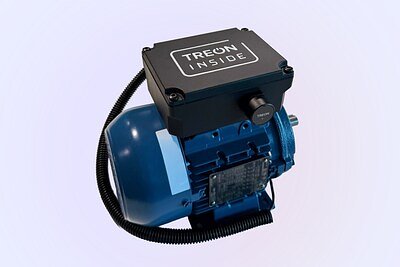
The first component, dubbed Treon Inside, involves embedding physical intelligence directly into industrial assets. This allows equipment to not only sense its own condition but also to understand and interact with its environment. This is a significant step beyond simply attaching external sensors. The asset itself becomes an active participant in its own maintenance.
Secondly, the platform employs Contextual AI to enrich raw data. While many systems rely on historical performance data, Treon's solution integrates a wider operational context, including maintenance history, the asset's lifecycle stage, technical documentation, and even real-time spare-parts availability. This holistic view allows the AI to perform more accurate root-cause analysis and make smarter decisions. It's the difference between an alarm bell and a digital co-pilot that understands the unique history and environment of the plant floor.
Finally, Agent-Driven Execution automates the repetitive, manual tasks that consume maintenance teams' time. AI Agents can automatically create work tickets, check technician availability, schedule repairs, and dispatch personnel. This frees human managers to supervise operations at a higher level, while AI companions can guide technicians on-site, providing step-by-step instructions to ensure tasks are completed faster, more consistently, and with fewer errors.
Reshaping Industrial Economics and OEM Business Models
The economic implications of this technology are profound. Unplanned downtime is a massive drain on profitability for manufacturers. Industry studies show that advanced predictive maintenance solutions, a core component of Treon's system, can reduce machine downtime by 30-50% and cut maintenance costs by up to 40%. By automating the entire workflow, Treon's orchestration layer aims to push these efficiency gains even further, enabling companies to scale productivity and uptime even as skilled labor becomes scarcer.
Perhaps more transformative is the opportunity this presents to Original Equipment Manufacturers (OEMs). The Treon Inside embedded intelligence is designed to facilitate a fundamental shift in the OEM business model, a trend known as servitization. Instead of a one-time, CAPEX-driven sale of a machine, manufacturers can transition to more profitable and stable recurring revenue streams based on software and services. This "equipment-as-a-service" model, successfully pioneered by companies like Rolls-Royce in the aviation industry, allows customers to pay for outcomes—such as guaranteed uptime or production output—rather than owning and maintaining the physical asset themselves. Treon's platform provides the technological backbone necessary for OEMs to confidently offer and manage such service-level agreements, creating deeper customer relationships and a significant competitive advantage.
The Augmented Workforce: Redefining the Technician's Role
While the advance of automation often raises concerns about job displacement, Treon's platform is framed as a tool for augmentation, not replacement. In an era of persistent labor shortages, the technology is designed to make existing maintenance teams more effective and bridge critical skill gaps. By automating mundane administrative tasks, the system allows highly skilled technicians to focus on complex, high-value problem-solving.
The AI companion feature acts as a force multiplier, providing less experienced staff with expert-level guidance. This can dramatically reduce training time and improve the consistency and quality of repairs across the board. The system effectively democratizes expertise, ensuring that every technician is supported by the collective knowledge embedded within the platform. This shifts the role of the industrial worker from one of manual execution to one of strategic oversight and collaboration with an intelligent system, evolving skills to meet the demands of the modern smart factory.
Navigating a Competitive and Growing Market
Treon is launching its solution into a fiercely competitive and rapidly expanding market. The industrial AI sector is projected to grow at a compound annual growth rate (CAGR) of over 19%, with the AI in manufacturing segment alone expected to reach nearly $48 billion by 2030. Treon will be competing with industrial giants like Siemens, GE Digital, and Rockwell Automation, all of whom are heavily investing in their own AI and IIoT platforms. The Hannover Messe event itself is a testament to this, with major players like SAP and NVIDIA also showcasing their latest agentic AI and smart manufacturing innovations.
However, Treon is not a newcomer. The company supports over 200 customers worldwide and has a proven track record of developing robust solutions through partnerships with industry leaders like Sulzer, Schaeffler, and B&K Vibro. Its focus on a unified, end-to-end orchestration layer, combined with the strategic enabler for OEM servitization, offers a distinct value proposition.
"Despite major advances in industries, maintenance is the last major industrial workflow still largely run manually," said Joni Korppi, CEO of Treon, in the company's announcement. "With our AI-native Maintenance Orchestration Layer, companies can automate their end-to-end industrial operations to scale uptime, productivity, and safety." The unveiling at Hannover Messe marks a critical test for Treon as it seeks to convince the industrial world that its vision for automated, intelligent maintenance is the future.