
- Launch Date: January 20, 2026
- Market Growth: Australian fleet telematics market projected to grow from USD 885 million (2025) to over USD 2 billion by 2034
- Adoption Rate: 75% of Australian fleets already use GPS tracking, reporting significant cost savings
Experts view this expansion as a strategic necessity for Toyota Halo to remain competitive in the rapidly growing Australian telematics market, acknowledging the industry's shift toward multi-brand fleet management solutions.
Toyota Halo Breaks Brand Barrier with Rand McNally's Tech
MELBOURNE, Australia – February 16, 2026 – In a significant move for Australian fleet operators, Toyota's fleet management platform, Toyota Halo, can now manage vehicles from other manufacturers. The new capability, developed in a partnership between Toyota Motor Corporation Australia (TMCA) and telematics giant Rand McNally, breaks down the brand-exclusive walls that often complicate fleet management.
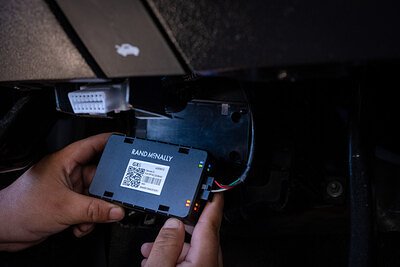
Launched on January 20, 2026, the enhancement allows businesses using Toyota Halo to integrate non-Toyota cars, SUVs, and light commercial vehicles into a single, unified dashboard. This integration is powered by Rand McNally's GX6 in-vehicle telematics device, which has been exclusively approved by TMCA to bridge the data gap between different vehicle brands and the Toyota-branded portal. The move signals a major strategic shift, acknowledging the reality of mixed-brand fleets and positioning the platform to compete more aggressively in Australia's burgeoning telematics market.
Streamlining the Modern Mixed Fleet
The core benefit of this expansion is a direct response to a fundamental truth of fleet operations: very few commercial fleets are composed of a single vehicle brand. This new capability promises to eliminate the need for juggling multiple, disparate telematics systems, a common headache for fleet managers that leads to data silos, administrative inefficiency, and incomplete operational oversight.
"This launch reflects how fleet customers actually operate," said Adam Ricketts, General Manager for APAC & MENA at Rand McNally, in a statement. "Most fleets operate a mix of vehicle brands, and this capability allows Toyota Halo customers to manage those vehicles together in one system, without the complexity of multiple platforms."
By centralizing data from both Toyota and non-Toyota vehicles, managers can gain a holistic view of their entire operation. This includes real-time location tracking, driver behavior monitoring, fuel consumption analysis, and maintenance scheduling across all assets, regardless of the badge on the grille. The expected result is a significant boost in operational efficiency. This streamlined approach can lead to more effective route optimization, reduced vehicle idling, proactive maintenance that lowers repair costs, and a simplified administrative workload, ultimately contributing to a healthier bottom line for Australian businesses.
Navigating a Competitive Telematics Landscape
While a significant step for Toyota Halo, the move into multi-brand management places it in a fiercely competitive arena. The Australian fleet telematics market is not just growing; it's exploding. Valued at over USD 885 million in 2025, market projections estimate it will soar to over USD 2 billion by 2034, driven by a relentless pursuit of cost savings, stringent safety regulations like the Chain of Responsibility, and the logistical demands of a booming e-commerce sector.
Established players in the region, including Teletrac Navman, MTData, and the newly expanded Geotab—which recently bolstered its Australian presence by acquiring Verizon Connect's local commercial operations—have long offered vehicle-agnostic platforms. These competitors have built their value proposition on the ability to integrate and manage any vehicle, making multi-brand functionality a standard expectation rather than a novel feature.
Therefore, this enhancement is less about pioneering a new concept and more about achieving competitive parity for the Toyota Halo platform. By embracing agnosticism, Rand McNally and Toyota are ensuring their solution remains relevant and attractive to a wider customer base. The partnership leverages Toyota's immense brand trust and market penetration while equipping its platform with the flexibility needed to compete feature-for-feature with specialized telematics providers.
The Power of Partnership and Platform Strategy
This development is a prime example of a key trend in the automotive industry: strategic partnerships between legacy automakers and agile technology firms. Rather than investing billions to develop a comprehensive telematics ecosystem from the ground up, OEMs like Toyota are increasingly opting to white-label sophisticated platforms from specialists like Rand McNally. Toyota Halo is, at its core, a Toyota-branded interface powered by Rand McNally's underlying technology.
This strategy allows Toyota to offer a cutting-edge, fully-featured fleet solution to its customers under its own trusted banner, while Rand McNally gains access to a massive and established sales channel. The expansion to multi-brand capability deepens this symbiotic relationship, making the platform more valuable to Toyota's customers and, in turn, expanding Rand McNally's footprint.
Rand McNally's commitment to the Australian market was previously demonstrated by its 2022 acquisition of Fleetsu, an Australian fleet management software company. That move provided the company with crucial local expertise and technology, which has likely been instrumental in tailoring its platform for partnerships like the one with TMCA. This latest announcement reinforces its strategy of using its core "Rand Platform" as a flexible foundation for OEM partners globally, allowing them to rapidly deploy advanced connected vehicle services.
Under the Hood: The GX6 Device and Market Adoption
The technological linchpin of this new functionality is the Rand McNally GX6 device. This compact telematics unit, which typically connects to a vehicle's OBD-II port or is hardwired, is responsible for capturing vital data and transmitting it to the Toyota Halo cloud platform. Its approval by TMCA as the only device for enabling this feature underscores the tight integration and quality control involved in the partnership.
Currently, the capability is focused on light vehicles and light commercial vehicles, such as sedans, SUVs, and utility vehicles, which constitute a significant portion of Australian commercial fleets. While the specifics of which non-Toyota models are compatible have not been publicly detailed, the use of a standardized device suggests broad applicability across modern vehicles.
The reception from the market is expected to be strong. With research indicating that 75% of Australian fleets already utilize GPS tracking and a vast majority report significant benefits and cost savings, the demand for effective and user-friendly telematics is well-established. For existing Toyota Halo customers with mixed fleets, this is a long-awaited upgrade that solves a major operational pain point. For prospective customers, it removes a significant barrier to adoption, making the Toyota-branded solution a viable option for their entire vehicle portfolio. The capability is now available to all eligible Toyota Halo customers in Australia, marking a new chapter of unified fleet management for the platform.