
- Tourism contributes 1 in every 10 dollars to global GDP
- Projected to reach $16.5 trillion by 2035 (WTTC)
- Saudi Arabia plans to invest $800 billion in tourism by 2030
Experts agree that tourism is evolving into a strategic economic system, driving global growth and resilience beyond traditional leisure sector boundaries.
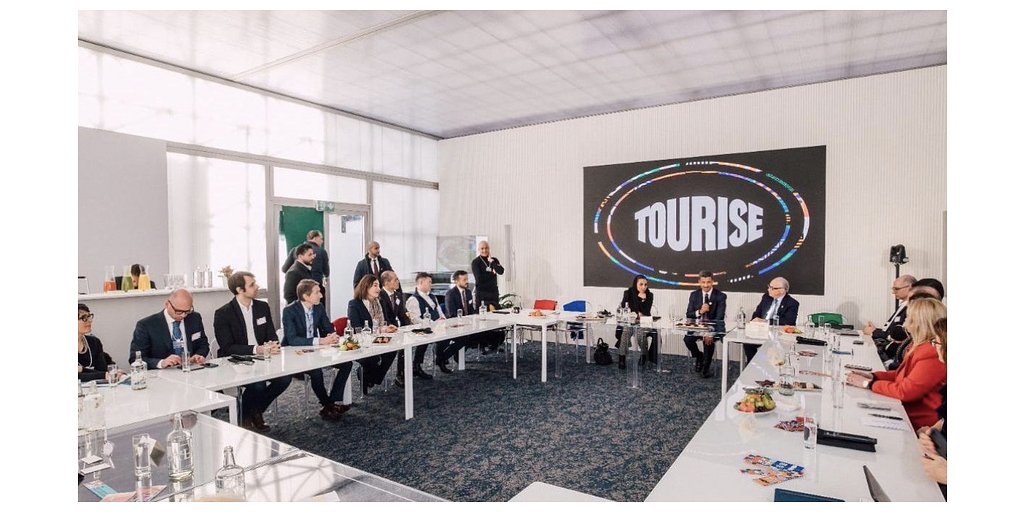
TOURISE at Davos: Tourism's Bid for a $16 Trillion Economic Role
DAVOS, Switzerland – January 23, 2026 – Amid the snowy peaks of Davos, where global leaders convened for the World Economic Forum Annual Meeting, a powerful new narrative for the tourism industry was advanced. TOURISE, a global platform backed by the Saudi Ministry of Tourism, mounted a significant campaign to reframe tourism not as a siloed leisure sector, but as a strategic economic powerhouse connecting industries and driving global growth.
The central message was clear and backed by staggering figures: tourism is no longer just about holidays; it's a critical component of the world economy, already contributing one in every ten dollars to global GDP. At Davos, TOURISE championed the sector's trajectory toward a projected $16 trillion valuation, pressing for its recognition as a vital system that uplifts every industry it touches.
His Excellency Ahmed Al Khateeb, Minister of Tourism of Saudi Arabia and Chairman of TOURISE, articulated this vision, emphasizing the need for new alliances. “Tourism is more than a lifestyle sector, it functions as a strategic economic system,” he stated. “TOURISE serves as a platform where leaders form alliances to build shared solutions, where technology aligns with community development, finance with sustainability, and education with mobility. These partnerships will shape the next decade of tourism, creating trust and shared purpose to move the world forward.”
The Economic Engine Beyond Postcards
The claims made by TOURISE are not just ambitious rhetoric; they are rooted in robust economic data. Projections from the World Travel & Tourism Council (WTTC) substantiate the sector's immense scale, forecasting its contribution to global GDP will reach $16.5 trillion by 2035, accounting for over 11.5% of the world's economy. This growth outpaces that of the wider global economy, positioning tourism as a key driver of future prosperity and resilience.
During its engagements at Davos, including a prominent session at Axios House titled "Reshaping Tourism: A World of Possibility," TOURISE detailed how the sector's influence extends far beyond hotels and airlines. The organization's core argument is that tourism acts as a catalyst, fueling innovation and growth in finance, technology, retail, and infrastructure. This interconnectedness was a key theme in a strategic workshop, ‘Can Tourism Save the World?’, which convened senior leaders to explore how the sector can be leveraged to foster economic resilience and advance sustainable development goals. The insights from this session are set to inform TOURISE's agenda leading up to its next global summit in 2027.
By positioning tourism as a solution to broader challenges, the initiative aims to shift its perception from a discretionary expense to an essential investment in global stability and economic diversification.
Saudi Arabia’s Vision for Global Tourism Leadership
The assertive push by TOURISE is inextricably linked to Saudi Arabia's own monumental ambitions. The initiative operates under the umbrella of the Saudi Ministry of Tourism, making it a key instrument in the Kingdom's Vision 2030—a sweeping strategic framework designed to diversify its economy away from oil dependency. Tourism is a central pillar of this vision, with the nation planning to inject an unprecedented $800 billion into the sector by 2030.
This investment is already materializing in the form of breathtaking mega-projects like NEOM, a futuristic city, and The Red Sea Project, a luxury regenerative tourism destination. These developments are not just about building resorts; they are about creating new economic ecosystems and positioning Saudi Arabia as a hub for innovation in travel and hospitality. The goal is to increase tourism's contribution to the national GDP to over 10% and attract 100 million annual visitors by the end of the decade.
By chairing and championing TOURISE on a global stage like Davos, Saudi Arabia is engaging in a sophisticated act of soft power. The Kingdom is moving beyond its traditional role as an energy giant to become a thought leader and agenda-setter in a globally significant industry. This strategy aims to build international partnerships, enhance the nation's global image, and demonstrate its commitment to a diversified, forward-looking economy.
Charting the Future with 'Agentic Tourism' and AI
A significant focus of TOURISE's Davos program was the technological frontier of travel. In a workshop titled ‘Agentic Tourism: From Insight to Action’, the organization gathered executives, technologists, and investors to advance a groundbreaking concept: a shared framework for artificial intelligence in tourism.
Building on an initiative launched at its inaugural summit in Riyadh, the session focused on developing an "Agentic Tourism Protocol." The goal is to create a common standard that enables "safe, connected, and interoperable AI systems" across the entire travel ecosystem. Such a protocol could revolutionize the industry, paving the way for hyper-personalized travel experiences, seamless booking and payment processes, and dramatically improved operational efficiency for businesses.
The caliber of participants in the workshop—including leaders from tech and finance giants like Trip.com, Visa, TikTok, PayPal, and Salesforce—underscores the seriousness of the endeavor. The involvement of these diverse players highlights a shared understanding that the future of travel will be built on collaborative technological standards. For a payments leader like Visa, it’s about embedding secure transactions into the next generation of travel tech. For a platform like TikTok, it’s about shaping how AI influences destination discovery. For a CRM powerhouse like Salesforce, it’s about providing the cloud infrastructure that makes personalized, data-driven travel a reality. This cross-sector collaboration is precisely the kind of alliance-building that H.E. Ahmed Al Khateeb highlighted as essential for the industry's future.
Fostering Inclusivity and Cross-Sector Alliances
Beyond technology and economics, TOURISE's agenda at Davos also emphasized the social dimensions of tourism. The organization co-sponsored the annual Women Leaders Reception alongside major corporations like Adecco Group and Pinterest, using the platform to advocate for a critical need within the industry.
During the reception, Hawazen Nassief, a TOURISE Advisory Board Member and Deputy Minister of International Affairs at the Saudi Ministry of Tourism, addressed attendees on the importance of advancing women into leadership roles. This is a particularly salient issue for a sector where women constitute nearly half of the global workforce but remain significantly underrepresented in executive positions. The event signaled a commitment to making inclusivity a core tenet of the industry's future growth.
The activities in Davos marked the formal launch of TOURISE's 2026 global calendar, which promises a series of workshops, industry insight reports, and new partnerships. These efforts are all designed to continue building momentum and propel tourism from the periphery to the center of global transformation, culminating in the second TOURISE Summit scheduled for March 2027. The journey to reshape the next 50 years of tourism is well underway.