
- 90% cost reduction: Using NCAMP data can reduce the cost of material qualification by as much as 90%.
- 2026 Milestone: Toray achieved NCAMP qualification for its 3960 prepreg system in February 2026.
- Highest tensile strength: TORAYCA™ T1100 carbon fiber is noted for having the highest tensile strength of any commercially available carbon fiber.
Experts view Toray's NCAMP qualification as a major step forward in aerospace manufacturing, significantly reducing certification costs and development timelines while accelerating the adoption of advanced composite materials and automated production techniques.
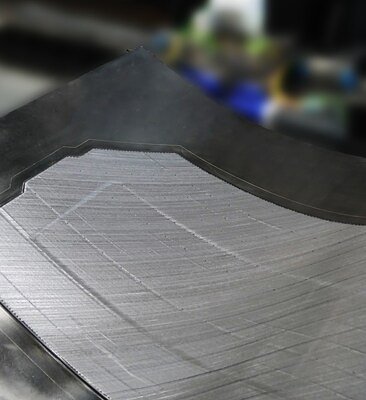
Toray's New Composite Qualification to Reshape Aerospace Manufacturing
TACOMA, WA – February 04, 2026 – Toray Composite Materials America, Inc. has announced a significant milestone that promises to accelerate the design and certification of next-generation aircraft, satellites, and launch vehicles. The company has achieved qualification from the National Center for Advanced Materials Performance (NCAMP) for its 3960 prepreg system, a high-performance composite material. This development makes a comprehensive set of design data publicly available, a move set to streamline the historically slow and costly process of certifying new materials for aerospace and defense applications.
The qualification covers Toray's 3960 prepreg system, which is reinforced with the company's elite TORAYCA™ T1100 carbon fiber. By making the performance and design allowable data accessible through the public NCAMP database, the materials giant is effectively handing aerospace engineers a pre-approved toolkit, reducing certification risk and potentially shaving years off development timelines.
"Achieving NCAMP qualification for our next-generation prepreg system is a significant milestone for Toray and reinforces our commitment to delivering high-performance composite materials," said Jeff Cross, principal director of defense programs at Toray, in a statement. "This qualification provides aerospace and defense manufacturers with a reliable, FAA-recognized material system that reduces certification risk and accelerates time to market."
The Certification Game-Changer
For decades, one of the biggest hurdles in aerospace innovation has been the rigorous and expensive process of material qualification. Before a new material can be used in a critical aircraft structure, manufacturers must conduct extensive testing to prove its safety and reliability to regulators like the Federal Aviation Administration (FAA) and the European Union Aviation Safety Agency (EASA). This process can cost millions of dollars and take several years for a single material system.
NCAMP, based at Wichita State University’s National Institute for Aviation Research (NIAR), was created to solve this very problem. Building on a model pioneered by a NASA program in the 1990s, NCAMP collaborates with industry leaders to perform the exhaustive testing required for qualification. The resulting data is then published in a shared database. This allows any company to use the material by demonstrating that its own manufacturing processes are equivalent, bypassing the need to start the qualification process from scratch. Industry analysis suggests that using NCAMP data can reduce the cost of material qualification by as much as 90%.
Toray’s collaboration with NCAMP resulted in the creation of NMS 397, a comprehensive material and process specification that is now accepted by both the FAA and EASA. This dual acceptance is a crucial advantage for global aerospace manufacturers like Boeing and Airbus, who can now incorporate the 3960 system into designs for a worldwide market without redundant certification efforts. The initial qualification covers the material in a unidirectional (UD) tape format, with data for a plain weave (PW) fabric format expected to be released soon.
Engineering the Future: Inside the 3960/T1100 System
The performance of the 3960 system is anchored by its core components: a highly toughened epoxy resin and TORAYCA™ T1100 intermediate modulus plus (IM+) carbon fiber. The T1100 fiber is widely regarded for possessing the highest tensile strength of any commercially available carbon fiber, making it exceptionally resistant to being pulled apart under tension. This is combined with an intermediate modulus, or stiffness, creating a balanced material that is not only incredibly strong but also resilient and damage-tolerant.
This combination yields a composite with what the company describes as "exceptional toughness, hot/wet, and tensile performance." The term hot/wet refers to a material's ability to retain its structural integrity in the high-temperature, high-humidity environments that aircraft frequently encounter during operation. This robust performance makes the 3960/T1100 system ideal for primary structural applications—the critical, load-bearing components of an airframe, such as wings, fuselages, and control surfaces.
The push for lighter, more fuel-efficient aircraft continues to drive the replacement of traditional metals like aluminum and titanium with advanced composites. The superior strength-to-weight ratio of materials like the 3960 system allows for significant weight reduction, which in turn leads to greater fuel efficiency, lower emissions, and increased payload or range capabilities for both commercial and military platforms.
Automating the Skies: A New Era for Manufacturing
Perhaps the most forward-looking aspect of Toray's announcement is the release of an industry-first public allowable dataset specifically for Automated Fiber Placement (AFP) processing. AFP is a robotic manufacturing process where narrow composite tapes, or tows, are precisely laid onto a mold to build a structure layer by layer. This technology offers dramatic improvements in speed, precision, and repeatability over traditional manual lay-up methods, reducing labor costs and minimizing material waste.
While AFP technology is key to the future of high-volume composite manufacturing, its adoption has been hampered by a lack of pre-certified material data. Without it, manufacturers using AFP have had to undertake their own costly qualification programs to prove that the automated process yields parts with the required performance. By providing a public, FAA-accepted dataset for its 3960/T1100 system processed with AFP, Toray has removed a major barrier to the technology's wider implementation.
This dataset was developed in support of the U.S. Air Force Research Laboratory's (AFRL) Modeling for Affordable Sustainable Composite (MASC) program, highlighting its strategic importance for the defense sector. The initiative aims to accelerate the adoption of advanced manufacturing techniques to build defense systems more quickly and affordably. With this certified data now available, defense contractors and commercial aerospace companies alike can more confidently integrate AFP into their production lines, enabling the creation of larger and more complex composite structures with greater efficiency.
This move positions Toray favorably in a competitive market where rivals like Hexcel and Solvay also leverage the NCAMP framework. While qualification itself has become a standard for top-tier suppliers, the public release of data for automated manufacturing processes provides a distinct advantage. It directly addresses the industry's shift towards digital manufacturing and smart factories, setting a new precedent for how material suppliers can facilitate innovation not just in materials science, but in production technology as well. This convergence of advanced materials and certified automated manufacturing processes is poised to significantly influence the design and production of the next generation of aerospace vehicles.