
- 1.25 million visitors in the 2025 edition of TOKYO CREATIVE SALON
- 9 iconic districts of Tokyo hosting the festival
- 100 vintage clothing shops participating in Tokyo Vintage Fashion Week
Experts view TOKYO CREATIVE SALON 2026 as a groundbreaking fusion of historical heritage and contemporary innovation, positioning Tokyo as a global leader in creative urban transformation.
Tokyo's 'Future Vintage' Salon to Weave Past and Present in 2026
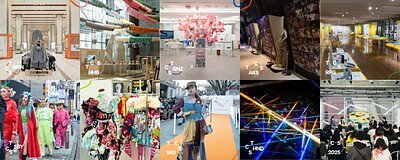
TOKYO, Japan – February 04, 2026 – The bustling metropolis of Tokyo is set to transform once again into the world’s largest creative stage with the official announcement of TOKYO CREATIVE SALON 2026 (TCS2026). Scheduled from Friday, March 13, to Sunday, March 22, 2026, the seventh iteration of Japan's largest creative festival will be a free, public-facing celebration of fashion, art, design, and technology. Spanning nine of the city's most iconic districts, the event is poised to build on the success of its previous edition, which drew an estimated 1.25 million visitors.
This year’s festival operates under the ambitious theme of "FUTURE VINTAGE." The concept aims to explore how the city's vast repository of memories, cultural artifacts, and creative expressions can be reinterpreted through a contemporary lens and projected into the future. It’s a dialogue between what was and what could be, staged across the urban expanse of Marunouchi, Nihonbashi, Ginza, Akasaka, Roppongi, Shibuya, Harajuku, Shinjuku, and the Haneda airport area.
Weaving the Past into the Future
The "FUTURE VINTAGE" theme is more than a catchy slogan; it is the core philosophy guiding the festival's curation. It represents a deliberate effort to unearth and celebrate the layers of creativity that have defined Tokyo over generations. As TCS2026 Chairman Hiroshi Ohnishi stated, "Under the theme 'FUTURE VINTAGE,' we seek to connect the city's accumulated culture and memories to expressions that resonate into the future."
This philosophy will manifest in a series of highly anticipated programs. A significant new addition for 2026 is the Tokyo Vintage Fashion Week, scheduled for March 13-15 at the Shinjuku Sumitomo Building's Triangle Plaza. This event will bring together approximately 100 vintage clothing shops for a market and a series of fashion shows, presenting styles that reflect the rich historical context of the garments. It directly engages the theme by treating pre-owned fashion not as old, but as a valuable archive of design and culture.
Another key exhibition, "Tokyo Trace," will delve into the profound connection between the city and creative output. Its inaugural edition will spotlight the internationally recognized brand NOMARHYTHM TEXTILE, examining how experiences and memories forged within Tokyo's unique environment influence the creative process. Furthering this blend of heritage and modernity, a special popup event, "Like Vine," will showcase a collaboration between traditional Yamagata vine craft artisan KOGUMA and the contemporary designer unit pinkpepper, demonstrating how ancient techniques can be reimagined for a modern audience. These programs underscore a commitment to presenting tangible examples of how the past can be a vibrant source of inspiration for future innovation.
The City as a Living Runway
What truly distinguishes TOKYO CREATIVE SALON on the global stage is its radical, egalitarian approach to exhibition. Unlike more traditional, industry-focused events like Milan Design Week or the London Design Festival, which are often centered around specific venues or trade halls, TCS embraces the entire city as its canvas. The festival's guiding principle, "The Street is the Runway," transforms public spaces into dynamic galleries, making cutting-edge design and art accessible to everyone.
This approach democratizes creativity, inviting passersby—be they residents, commuters, or tourists—to become active participants rather than passive spectators. Each of the nine participating districts will develop its own unique content, reflecting its local history and character. From the luxury corridors of Ginza to the youth-centric energy of Shibuya and the business hubs of Marunouchi, visitors will be encouraged to explore the city and discover creative expressions embedded within the urban fabric. Observers within Tokyo's creative scene note that this city-wide integration has a profoundly positive impact, serving as a powerful public showcase for established and emerging talent alike and fostering invaluable networking opportunities.
Satoshi Sugiyama, Executive Director of TCS2026, articulated this vision, stating, "With TOKYO CREATIVE SALON, we reinterpret these layers through contemporary perspectives and transform the city itself into a space for creative expression." This transformation is often facilitated by interactive elements, such as the "Tokyo Quest Gacha" from past festivals, which encourages attendees to actively explore different areas to make artistic discoveries, gamifying the experience of cultural engagement.
A Powerhouse for Japan's Creative Economy
Beyond its cultural significance, TOKYO CREATIVE SALON is a formidable engine for Japan's creative economy and a key pillar of its global soft power. The staggering attendance figure of 1.25 million visitors from the 2025 edition points to a significant economic impact, driving tourism and benefiting local businesses across the nine participating districts.
Chairman Hiroshi Ohnishi draws parallels between TCS and established international initiatives like Milan Salone and France's Comité Colbert, where companies, creators, and cities collaborate to revitalize economies through craftsmanship and creative enterprise. This positions TCS not merely as a festival, but as a strategic platform designed to showcase Japan's world-class talent and foster interdisciplinary innovation.
The festival's continued collaboration with the Mainichi Fashion Grand Prix, one of Japan's most prestigious fashion awards founded in 1983, further solidifies its standing within the industry. By providing a high-profile stage for creators in fashion, art, craft, and technology, TCS helps attract international attention, investment, and collaboration, reinforcing Tokyo's status as a global hub for creativity.
As the event approaches, anticipation builds for a festival that promises to be both a retrospective and a forward-looking manifesto. It is an invitation to the world to witness how a city can honor its history not by preserving it in stasis, but by weaving it into the very fabric of its future. Through the lens of "FUTURE VINTAGE," Tokyo is preparing to demonstrate that the most compelling innovations are often born from a deep and thoughtful engagement with the past. The streets of Tokyo are set to tell a new story, one where every corner holds a piece of history and a glimpse of tomorrow.