
- 31% of strokes in India occur in individuals under 20 (Global Burden of Diseases report).
- 2.5-year-old toddler successfully treated with rare intracranial catheter-directed thrombolysis.
- Nearly three weeks in intensive care before full recovery.
Experts emphasize that stroke in young children is underdiagnosed and requires rapid intervention, with this case demonstrating the life-saving potential of advanced neurointerventional techniques when applied promptly.
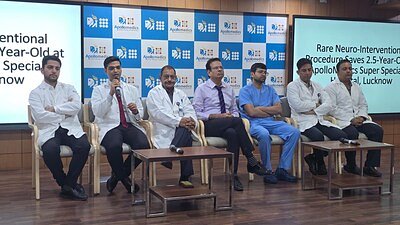
Toddler Defies Devastating Stroke With Rare, Life-Saving Brain Surgery
LUCKNOW, India – March 03, 2026 – What began as common childhood ailments—mild fever and an upset stomach—spiraled into a parent's worst nightmare for the family of a two-and-a-half-year-old girl. Within hours, she was gripped by repeated seizures, her awareness faded, and a terrifying paralysis set in, silencing her movements and speech. This rapid descent into a life-threatening crisis culminated in a groundbreaking medical intervention at ApolloMedics Super Speciality Hospital, Lucknow, where a team of specialists performed a procedure so rare on a patient so young it has pushed the boundaries of pediatric neuro-interventional medicine.
After weeks of uncertainty and intensive care, the child has made a remarkable recovery, a testament to a high-stakes medical gamble that paid off. The case, a powerful story of medical innovation and human resilience, is set to be presented at the prestigious Indian National Stroke Conference in 2026, signaling its significance to the global medical community.
A Crisis in Minutes
Upon arrival at ApolloMedics, the toddler presented with a rapidly deteriorating neurological state. The medical team was in a race against time, as stroke in children is notoriously difficult to diagnose. Its symptoms often mimic more common conditions, leading to critical delays. Globally, studies indicate that stroke incidence in children under five is on the rise, yet public and even professional awareness remains dangerously low. In India, where a Global Burden of Diseases report noted that a staggering 31% of strokes occur in individuals under 20, the need for rapid recognition is paramount.
The diagnostic imaging confirmed the doctors' fears: deep Cerebral Venous Sinus Thrombosis (CVST), a severe condition where blood clots form in the brain's venous sinuses, preventing blood from draining out. This blockage led to multiple brain infarcts—areas of dead tissue caused by a loss of blood supply. For the young patient, this carried a high risk of mortality and the near certainty of devastating, permanent neurological damage.
Compounding the crisis was a later diagnosis of Antiphospholipid Antibody (APLA) syndrome, a rare autoimmune disorder that makes blood prone to clotting. This underlying condition, exacerbated by infection and dehydration, had created a perfect storm in the child's tiny body.
Navigating a Medical Frontier
With the child's condition worsening by the minute, the multidisciplinary team made a courageous, high-risk decision to escalate treatment beyond conventional methods. They opted for a complex and seldom-performed procedure on a toddler: intracranial catheter-directed thrombolysis.
Led by Dr. Dewansh Mishra, an Interventional Neuro-Radiologist, the team undertook the delicate operation under general anaesthesia. The procedure involved threading a microcatheter—a tube finer than a strand of spaghetti—from the femoral vein in the thigh, navigating it through the body's complex vascular network, and guiding it deep into the child's brain. Once at the site of the thrombosis, a powerful clot-dissolving medication was delivered directly, a precision strike aimed at restoring blood flow and saving brain tissue.
"Deep cerebral venous thrombosis in toddlers is exceptionally rare, and neurointervention in paediatric stroke is particularly challenging because of the small size of vessels and increased risk of bleeding," explained Dr. Dewansh Mishra. He noted the scarcity of medical literature on this procedure for such young patients. "In this case, the child was deteriorating quickly, and timely escalation to precision neurointervention was crucial to prevent irreversible brain injury and give her the best possible chance of recovery."
The Symphony of Care
The success of the intervention was not the work of a single surgeon but the result of a seamless collaboration across multiple specialties. The paediatric critical care team, including Dr. Sciddhartha Kunwar, Dr. Nishant Gopal, Dr. Siddharth, and Dr. Anubhav Patel, played a crucial role. They stabilized the child before the procedure and managed her intricate post-operative needs, providing continuous monitoring during a period of extreme vulnerability.
This coordinated effort underscores a vital truth in modern medicine: complex cases require a symphony of expertise. From the initial diagnosis to the intricate surgery and the meticulous post-operative care and rehabilitation, every step was a coordinated dance against time. After nearly three weeks in intensive care, followed by dedicated rehabilitation, the little girl who had arrived paralyzed and unresponsive was discharged.
Today, she is walking, speaking, and engaging in the playful activities typical of any child her age—a recovery that her doctors describe as deeply heartening.
A Wake-Up Call for Pediatric Health
This single, extraordinary case serves as a powerful public health reminder. As Dr. Mayank Somani, MD and CEO of ApolloMedics Super Speciality Hospital, commented, "This case is a reminder that stroke can occur even in very young children, and when it does, every minute matters. Early recognition, urgent neuroimaging, and timely escalation to advanced intervention can be life-saving."
The successful outcome in Lucknow highlights a growing capability within India to tackle the most challenging medical cases, offering hope where there was once little. It demonstrates that with the right infrastructure, specialized expertise, and the courage to innovate, outcomes for catastrophic pediatric conditions can be dramatically improved. The child's astonishing recovery is more than just a medical success; it is a beacon of hope for families and a call to action for healthcare systems to prioritize awareness and access to advanced care for their youngest patients.
Topics & Related
Medical Devices
Sustainability & Climate
Related Company Pulse