
- 30-50% loss of viability: Current cryopreservation methods result in a staggering 30-50% loss of cell viability, jeopardizing research and clinical treatments. - 50% improvement in post-thaw survival: FreezOpt™ has shown to improve post-thaw survival by over 50%, nearly doubling the recovery of viable cells compared to conventional methods. - $146 billion market by 2032: The cell therapy manufacturing market, where cryopreservation is critical, is projected to grow to over $146 billion by 2032.
Experts in cryopreservation and biomedical research agree that FreezOpt™ represents a significant advancement in controlling the freezing process, potentially improving cell viability and consistency in both research and clinical applications.
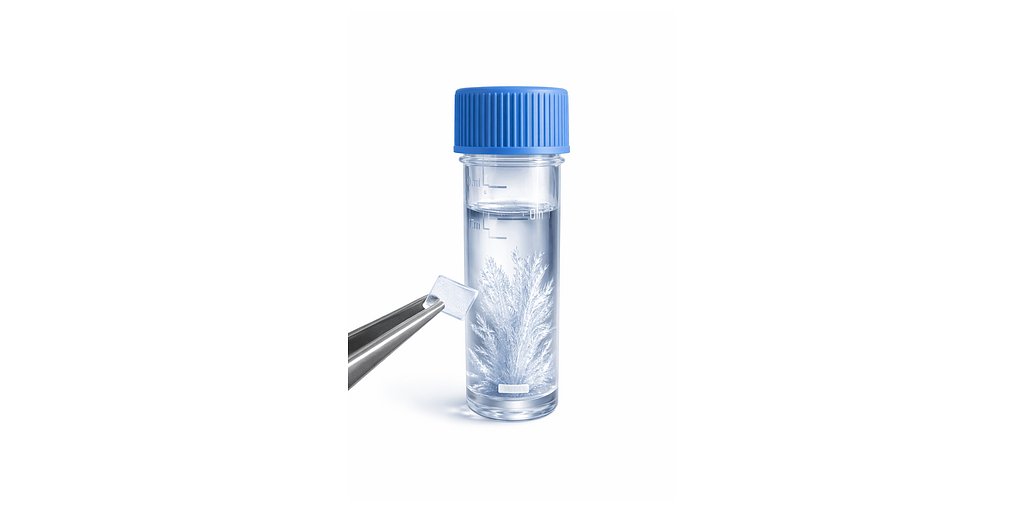
Tiny Device Aims to Solve Cell Freezing's Icy Billion-Dollar Problem
COLLEGE PARK, MD – March 17, 2026 – A Maryland-based biotechnology company today introduced a novel technology designed to solve one of the most persistent and costly challenges in modern biology: the unpredictability of freezing living cells. HOHCells, LLC announced the launch of FreezOpt™, a patented cryovial insert that gives scientists precise control over the moment ice begins to form during cryopreservation, a critical step for preserving fragile cells used in everything from cancer research to the development of life-saving cell therapies.
The innovation addresses a fundamental flaw in a process used to store billions of biological samples each year. Despite decades of refinement, the process of freezing and thawing sensitive cells like stem cells, immune cells, and complex organoids can result in a staggering 30-50% loss of viability, jeopardizing irreplaceable research and slowing the progress of clinical treatments.
The Uncontrolled Variable in Cryopreservation
For researchers and clinicians, the freezer is an indispensable tool, acting as a biological library for valuable samples. However, the process of cryopreservation has long been plagued by a seemingly random element: the spontaneous and uncontrolled formation of ice crystals. As water inside and around cells cools below its freezing point, it enters a supercooled state. The sudden, chaotic formation of ice that follows can puncture cell membranes and cause lethal osmotic shock as water is rapidly pulled from the cells. This phenomenon is a primary reason for low post-thaw cell recovery and inconsistent experimental results.
This inconsistency is more than a minor inconvenience. In a research setting, a single cryovial can contain cells representing weeks of meticulous work or a one-of-a-kind patient sample. In the context of cell therapy manufacturing—a market projected to grow to over $146 billion by 2032—poor cell recovery directly translates to higher production costs and potential batch failures. The challenge is particularly acute for complex 3D cell structures like organoids, which are increasingly used to model diseases and test drugs but are notoriously difficult to preserve without significant damage.
While scientists have developed various cryoprotectant agents and controlled-rate freezers to mitigate damage, they have never been able to reliably dictate when and how the freezing process begins. This lack of control has remained one of the least-managed variables in an otherwise highly precise scientific world.
A Simple Insert for a Complex Challenge
FreezOpt™ is designed to bring order to this chaos. The device is a small, biocompatible insert, just 3mm by 5mm, that is placed directly into a standard cryovial before freezing. It contains a proprietary composite material—a polymer matrix embedded with silicon dioxide particles—that acts as a reliable trigger for ice nucleation at a consistently high subzero temperature.
By initiating a controlled freeze, the device prevents deep supercooling and the subsequent violent ice formation. This allows cells to dehydrate gradually, minimizing the formation of damaging intracellular ice and reducing mechanical stress. The scientific principles behind the technology were developed in the Multiscale Biomaterials Engineering Laboratory of Dr. Xiaoming (Shawn) He at the University of Maryland and have been validated in peer-reviewed journals, including Bioactive Materials and the Journal of Medical Devices.
“Cryopreservation has long been constrained by the fact that scientists cannot reliably control when ice begins to form,” said Dr. He, who is the Founder of HOHCells and President-Elect of the Society for Cryobiology. “Our research shows that introducing a controlled nucleation event can significantly improve freezing consistency. FreezOpt translates that scientific insight into a simple cryovial insert that seamlessly integrates into existing laboratory workflows.”
Crucially, the device requires no new equipment or changes to established laboratory protocols. This ease of adoption is a key selling point in labs where workflows are highly standardized and validated. According to HOHCells, benchmark tests have shown the device can improve post-thaw survival by over 50%, nearly doubling the recovery of viable cells compared to conventional methods.
Accelerating the Future of Medicine
The launch of FreezOpt™ arrives at a critical moment for biomedical science. The global cell cryopreservation market, valued at over $3 billion, is expanding rapidly, driven by the explosive growth of regenerative medicine, biobanking, and personalized therapies. Improving the reliability of a foundational process like cryopreservation could have a significant ripple effect across these fields.
In the burgeoning cell therapy industry, where living cells are the active pharmaceutical ingredient, consistency is paramount. A more reliable freezing process can streamline manufacturing, reduce the cost of goods, and ensure that patients receive a consistent and effective therapeutic dose. For researchers working with precious stem cells or patient-derived organoids, higher cell viability means more robust data and a better chance of making groundbreaking discoveries.
“Cryopreservation remains one of the least controlled steps in many biological workflows,” noted Greg Merril, CEO of HOHCells. “FreezOpt gives researchers a simple way to introduce control into that process without requiring new equipment or changes to established protocols.” By addressing this critical bottleneck, the technology is positioned as an enabling tool that could help accelerate the translation of complex biological research from the lab bench to clinical reality.
A Maryland Biotechnology Success Story
The story of FreezOpt™ is also a story of regional innovation. HOHCells is a product of Maryland's thriving biotechnology ecosystem, which aims to be a leading global hub known as the BioHealth Capital Region. The company's core technology was licensed from the University of Maryland, College Park, showcasing a successful model of academic-to-industry technology transfer.
Furthermore, the development of the technology was supported in part by the Maryland Stem Cell Research Fund (MSCRF), a state initiative created to advance stem cell research and cures. The product itself is being manufactured in Maryland at Mtech Ventures, a technology incubator on the University of Maryland campus, directly contributing to the local innovation economy.
This pathway—from university lab to state-funded development to local manufacturing—highlights the strategic infrastructure Maryland has built to nurture its life sciences industry, which already contributes an estimated $20 billion to the state's economy annually.
FreezOpt™ is now available as a research-use-only product, sold in 96-unit packages. It is designed to be compatible with commonly used cryovials and both controlled-rate and passive freezing methods, making it accessible to a wide range of life science laboratories.