
- $60 billion: Global wellness technology market value in 2024, projected to triple by 2033.
- 170 countries: Availability of FoodTrack, supporting 8 languages.
- Red Dot Design Award: Prestigious recognition for FoodTrack's innovative interface and user experience.
Experts view FoodTrack as a significant innovation in digital wellness, bridging AI-driven nutrition science with Traditional Chinese Medicine (TCM) principles to offer holistic, personalized health insights beyond traditional calorie tracking.
This App Uses AI and Ancient Wisdom to Analyze Your Tongue
HONG KONG – March 30, 2026 – In a crowded marketplace of wellness apps fixated on counting calories and macronutrients, a Hong Kong-based startup is proposing a radically different path to understanding our health. Bay Technologies has launched FoodTrack, an AI-powered platform that moves beyond simple food logging by integrating modern nutrition science with the ancient principles of Traditional Chinese Medicine (TCM).
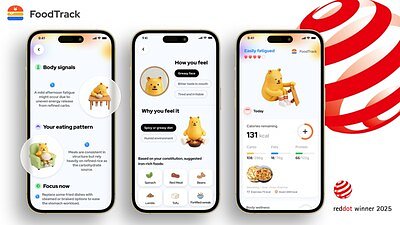
The app, which recently earned a prestigious Red Dot Design Award, invites users to snap photos not just of their meals, but also of their face and tongue. Its AI engine then synthesizes this information to provide personalized wellness insights and lifestyle suggestions, aiming to help users spot meaningful patterns in their daily habits rather than just accumulating data.
This novel approach signifies a potential shift in the digital health landscape, moving from a purely quantitative model to one that embraces qualitative, holistic, and culturally nuanced interpretation.
A New Philosophy for Digital Wellness
For years, the dominant paradigm in nutrition apps has been tracking. Users meticulously log every meal, with apps providing a breakdown of calories, protein, carbs, and fats. While this has helped many become more aware of their intake, it has also been criticized for fostering obsessive behaviors and failing to provide context beyond the numbers.
FoodTrack is built to address this gap. The platform operates on the premise that more data isn't always better; what users need is more accessible interpretation. By analyzing a meal photo, the app can provide standard nutritional estimates, but its true innovation lies in what comes next. The optional, and unusual, request for images of the user's face and tongue provides the AI with additional data points rooted in TCM diagnostic practices, where physical appearance offers clues about the body's internal balance.
"Many users do not lack wellness data. What they lack is an easier way to understand their everyday patterns," said Daniel Hu, Founder of FoodTrack, in a recent announcement. "FoodTrack is designed not just to help users log what they eat, but to help them spot meaningful signals in their daily diet and habits - and make small, sustainable adjustments."
This human-centric focus on actionable guidance over raw data collection is what earned the platform its Red Dot Award, a globally recognized symbol of excellence in design and innovation. The award validates the app's intuitive interface and its success in translating a complex, hybrid wellness philosophy into a practical and user-friendly experience.
Bridging Ancient Wisdom and Modern AI
The integration of TCM is FoodTrack's most significant differentiator. In TCM, the tongue is considered a microcosm of the entire body, with its color, shape, and coating reflecting the health of internal organs and the body's overall state of balance or imbalance. Similarly, facial complexion can indicate underlying conditions. FoodTrack's AI has been trained on datasets to recognize these visual cues alongside nutritional information from meals.
This isn't science fiction; it's part of a growing field where AI is used to digitize and scale traditional medical knowledge. Researchers are increasingly applying machine learning models to analyze tongue images for syndrome differentiation with remarkable accuracy, providing a modern, data-driven lens on age-old diagnostic techniques. By combining these TCM-based insights with Western nutritional science, FoodTrack aims to generate more holistic recommendations. For instance, instead of just noting a meal is high in fat, the app might suggest balancing it with 'cooling' foods based on TCM principles, guided by the user's unique physical signals.
This fusion allows the platform to offer suggestions that encompass meal balance, specific food choices, and daily habits that go far beyond a simple calorie deficit. It represents a sophisticated attempt to personalize wellness in a way that accounts for both quantitative metrics and the qualitative wisdom of traditional health systems.
Navigating a Crowded Market
FoodTrack enters a global wellness technology market that was valued at nearly $60 billion in 2024 and is projected to triple in size by 2033. The competition is fierce, with established players like MyFitnessPal dominating the tracking space and other AI-driven platforms like ZOE and Simple gaining traction with their own personalized nutrition models.
However, few competitors have ventured into the explicit integration of Eastern and Western health philosophies. While some apps focus on mindful eating and others, like Singapore's Welling AI, are training models on Asian food data for better cultural relevance, FoodTrack's use of face and tongue analysis as primary data inputs carves out a unique niche. This positions the app not as another calorie counter, but as a comprehensive wellness advisor.
Bay Technologies' strategy appears well-timed, as the Asia-Pacific region is currently the fastest-growing market for wellness technology. There is a built-in cultural familiarity with and trust in TCM principles, providing a fertile ground for adoption. The app's availability in over 170 countries and support for 8 languages, however, signals a clear ambition to capture a global audience intrigued by alternative and holistic health paradigms.
From Hong Kong to the Global Stage
Bay Technologies itself is a product of Hong Kong's burgeoning innovation ecosystem. The company is incubated by the Hong Kong Science and Technology Parks (HKSTP) and The Hong Kong Polytechnic University's PolyVentures, benefiting from the resources and network of two of the region's key institutional supporters of tech startups.
The company recently announced the closing of a new funding round, a vote of confidence from investors in its vision and technology, though the specific amount and backers remain undisclosed. This capital will fuel the next phase of product development and market expansion.
While pursuing global reach, Bay Technologies is also deepening its local roots. The company is initiating offline collaborations with community centers and partners in the Greater Bay Area (GBA), a massive economic and innovation hub integrating Hong Kong, Macao, and nine mainland cities. This dual strategy allows it to test and refine its model within a key strategic region while simultaneously building a worldwide user base.
Ultimately, FoodTrack represents more than just a clever app; it points toward the future of consumer wellness. As users grow weary of data fatigue, the next generation of successful platforms may be those that can transform complex information—from any source, be it a lab test or ancient wisdom—into simple, practical, and deeply personal guidance for daily life.