
- 2 million young learners reached by NFTE since 1987
- $50 Cent's G-Unity Foundation among corporate sponsors investing in youth entrepreneurship
- National finals for student startups like 'Social Charge' and 'Perfectly Padded'
Experts would likely conclude that NFTE’s entrepreneurial programs are cultivating adaptable, problem-solving skills critical for future workforce resilience.
The Youth Pipeline: How Student Startups Signal Our Economic Future
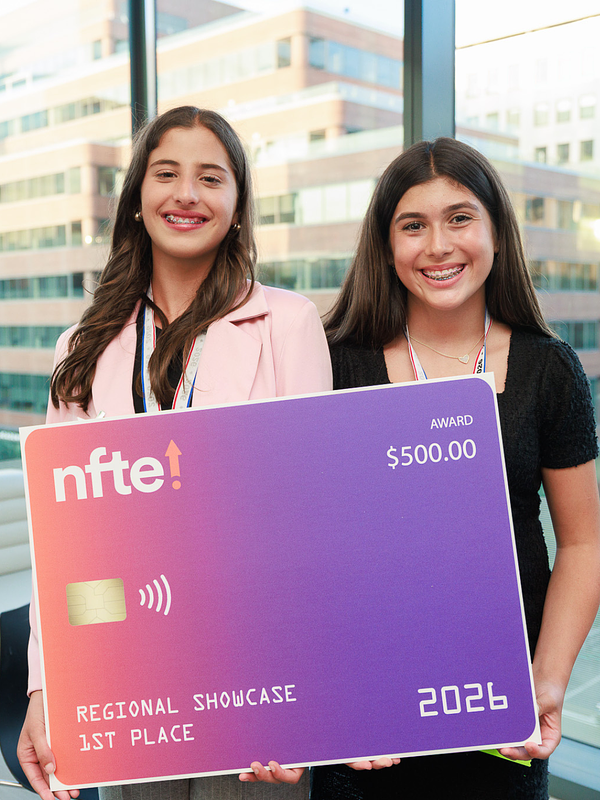
NEW YORK, NY – June 29, 2026 – On the surface, the news from the Network for Teaching Entrepreneurship (NFTE) is a heartwarming story of youthful ingenuity. Bria White, a high schooler from Maryland, has developed 'Social Charge,' a wearable pin that displays one's “social battery” level to help navigate social burnout. Meanwhile, middle schoolers Celia Salsbury and Giabella Catello from Baltimore created 'Perfectly Padded,' a line of stylish custom cushions to make carrying heavy bags more comfortable. Both ventures just won NFTE's Capital Region showcase and are now heading to the national finals in New York City.
It’s tempting to file this under “talented kids do impressive things.” But to do so would be to miss the larger strategic shift at play. These aren't just school projects. They are signals from the front lines of the 21st-century marketplace, and the organization fostering them, NFTE, is running one of the most important, and perhaps misunderstood, talent development playbooks in the global economy.
A New Core Curriculum: The Entrepreneurial Mindset
Since its founding in 1987, NFTE has reached nearly two million young learners, but its mission is often simplified to teaching kids how to start a business. The reality is far more profound. The organization's core product isn't a business plan; it's the cultivation of an “entrepreneurial mindset.”
This mindset is a suite of what the research calls “power skills”: opportunity recognition, critical thinking, resilience in the face of failure, and proactive problem-solving. In an era of rapid technological disruption and workforce volatility, these are no longer soft skills but essential survival tools. NFTE’s project-based learning cycle—where students must conceive, build, and pitch a real business—is a high-intensity training ground for these exact competencies. The business itself is merely the vehicle for learning.
As Meg Stewart, Executive Director of the NFTE Capital Region, noted, “These students demonstrated the kind of vision and determination that will serve them for a lifetime.” That statement is more than just praise; it's a precise diagnosis of the program's strategic output. The goal isn't necessarily to churn out millions of founders, but to create millions of adaptable, resourceful individuals ready for a future of work that we can barely predict.
From Backpacks to Burnout: Youth Innovation as Market Signal
The ventures themselves provide a fascinating glimpse into emerging market needs. 'Perfectly Padded' addresses a timeless problem—physical discomfort—with a modern emphasis on customization and style. It’s a classic product-market fit identified by those who experience the problem daily.
'Social Charge,' however, is a distinctly 21st-century innovation. Bria White’s wearable LED pin is a simple, analog solution to a complex digital-age problem: the exhaustion that comes from constant connectivity and social pressure. It’s a piece of non-verbal communication technology designed to foster empathy and set personal boundaries. That a high school student conceived of a hardware solution for mental and social well-being speaks volumes about the priorities and pressures of her generation. Investors and legacy companies should take note: the next wave of disruptive products may not be complex AI, but simple tools that help us manage our relationship with technology and each other.
These products are not anomalies. A look at recent NFTE national and world champions reveals a pattern of sophisticated, problem-focused innovation. Past winners include an AI-powered platform to gamify scholarship applications, a cooling device for livestock vaccines to reduce waste on rural farms, and a food truck rental service for BIPOC entrepreneurs. These are not just clever ideas; they are scalable solutions to real economic and social challenges.
The Ecosystem of Innovation: A Strategic Corporate Play
The success of this pipeline is not accidental. It is fueled by a robust ecosystem of corporate partners and dedicated alumni, and their involvement is a calculated strategic move. The list of sponsors for the Capital Region showcase—EY US, the G-Unity Foundation, PayPal, Santander, and Zuora—reads like a who's who of finance and tech.
Their investment is not mere philanthropy. For a firm like EY US, named Corporate Volunteer of the Year, engaging with NFTE is a direct line to the next generation of business leaders. It’s a form of long-term talent scouting and market research. For a company like PayPal, whose business model depends on a thriving small business ecosystem, supporting youth entrepreneurship is a way to seed their future market. For Curtis “50 Cent” Jackson’s G-Unity Foundation, the partnership is about fostering conscious capitalism in underserved communities, creating economic mobility from the ground up.
This ecosystem creates a powerful virtuous cycle, exemplified by figures like Darius Davie. An NFTE alumnus and founder of the luxury wellness venture Groom Guy, Davie was honored as Individual Volunteer of the Year. His journey from student participant to successful entrepreneur and now mentor provides current students with a tangible roadmap to success. He is living proof that the model works, and his involvement reinforces the system, ensuring its continued impact.
As these young entrepreneurs from the Capital Region prepare for the national stage in November, they carry more than just their business plans. They represent a fundamental shift in how we should think about education, innovation, and economic development. The work being done by NFTE and its partners is not an extracurricular activity; it is the essential work of building the human capital required to navigate and lead the future marketplace.