
- 51% of B2B software buyers now start research with AI chatbots over Google (G2 report).
- 80% of generative AI users act on AI recommendations for product research (Amperity).
- 60% of US Google queries now include AI Overviews, reducing the need to visit source websites.
Experts agree that the shift from search to an 'Answer Economy' driven by AI is fundamentally altering digital visibility, requiring brands to adapt with new optimization strategies and tools like Answer Engine Optimization (AEO).
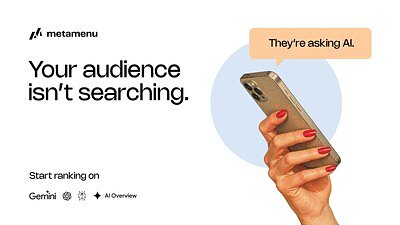
The Visibility Crisis: How Brands Are Navigating AI's New Answer Economy
NEW YORK, NY – June 24, 2026 – For two decades, the rules of digital commerce were written by Google. Success was a game of keywords, rankings, and clicks. That entire paradigm is now being systematically dismantled, not by a competitor, but by a fundamental shift in how we access information. The era of search is giving way to the era of answers, and for businesses built on being discovered, it represents a crisis of visibility.
This week, at the CommerceNext Growth Show in New York, a company called Metamenu launched a product named Signal, designed to address this very crisis. But the product itself is less important than the systemic transformation it represents. We are entering an “Answer Economy,” where customers—both consumers and B2B buyers—increasingly bypass lists of blue links and instead ask AI chatbots for direct recommendations. Recent data is stark: a G2 report from April found that 51% of B2B software buyers now start their research with an AI chatbot more often than with Google. More broadly, an Amperity report reveals that 80% of generative AI users leverage tools like ChatGPT and Gemini for product research, and a staggering 80% of that group frequently act on the AI's recommendations.
This creates a terrifying black box for marketers. While they have sophisticated dashboards to track every click and impression from traditional paid and organic search, the world of AI answers has been largely unmeasurable. How often is your brand mentioned? Are the mentions positive? Is the AI recommending your competitor? Is it sending customers to your website or to a third-party marketplace? Until now, most brands have had no idea. This isn't just a new marketing channel; it's a new reality where the fundamental mechanics of customer discovery are being rewritten by algorithms that operate behind a curtain.
The Great Unknowing: Marketing in the Age of AI
The engine of the internet is being re-architected. Gartner predicts that traditional search engine volume will plummet by 25% by 2026, a direct consequence of users getting their queries resolved by AI without ever needing to click a link. This isn’t a future-state prediction; it’s happening now. Publications like Search Engine Journal have reported significant drops in their own Google organic traffic as AI Overviews—now appearing in an estimated 60% of US Google queries—provide synthesized answers that obviate the need to visit the source website.
For Direct-to-Consumer (DTC) brands that have built empires on the back of clever SEO and content marketing, this is a seismic event. The strategies that guaranteed visibility for a decade are losing their potency. The new goal is no longer to rank number one, but to be the basis for the AI's answer—a much more complex and opaque challenge.
This has given rise to a new discipline: Answer Engine Optimization (AEO), sometimes called Generative Engine Optimization (GEO). The focus is shifting from optimizing for keywords to optimizing for citation. The question is no longer “What do people search for?” but “What sources does an AI trust when formulating an answer?” This requires a deep understanding of how AI models ingest and weigh information from across the web, including product reviews, technical documents, and, crucially, discussions on community platforms.
Charting the New Territory with Signal
This is the visibility gap Metamenu's Signal aims to close. The platform operates as a tracker for the AI frontier, providing brands with weekly reports on their performance across major AI engines like ChatGPT, Perplexity, Gemini, and Google AI Overviews. It moves beyond vanity metrics to deliver actionable intelligence: how often the brand is mentioned, its share of voice against competitors, its position within AI-generated answers, and whether it is being cited as an authoritative source.
Crucially, the tool organizes these insights by the stage of the customer's buying journey, helping marketing teams differentiate between a user doing early research versus one with clear purchase intent. Perhaps its most powerful feature is its ability to identify the sources AI engines rely on. If an AI recommends a product, Signal can trace that recommendation back to its origins, whether it's a glowing review on a niche blog or a heated debate on Reddit.
This gives brands an unprecedented look into how their reputation is being algorithmically synthesized and presented to potential customers. It illuminates the new centers of influence in the digital age, showing that a handful of thoughtful comments on Quora or YouTube may now carry more weight in shaping an AI's “opinion” than a company's own meticulously crafted landing page.
Beyond the Dashboard: An Engine for Growth
Recognizing that most DTC brands lack the resources to build a dedicated AEO team, Metamenu has positioned Signal not just as a dashboard but as part of a managed service. Insights are paired with a content engine that acts on them, identifying overlooked opportunities, producing authoritative content designed to be cited by AI, and refreshing existing pages as the AI landscape evolves.
This full-service model—combining analytics with execution—is a pragmatic response to the market's needs. The results from early clients suggest the approach is effective. One case study, a farm management startup, used Metamenu to build its content program from a near-zero baseline. Over nine months, its monthly organic clicks exploded from around 1,100 to over 42,500, with search impressions climbing from 100,000 to nearly 6.5 million. Organic search became its primary growth channel, responsible for 81% of its traffic.
“Most marketing leaders already recognize that AI search is changing how customers find them. The harder question is what to do about it, with limited time and competing priorities,” said Ganesh Chandrashekar, co-founder of Metamenu, in a statement. “We didn't set out to build another dashboard. We built a service that shows brands where they stand in AI answers and then does the work to improve it.”
This approach signals a larger shift in the marketing technology industry, moving away from selling complex software tools and toward providing integrated solutions that deliver tangible outcomes. As the digital landscape becomes more complex, the value of expert-led services that can navigate this complexity on a brand's behalf is becoming increasingly clear. By integrating directly with e-commerce platforms like Shopify and Adobe Commerce and producing content in multiple languages, the service is built to scale alongside its clients' global ambitions in this new, uncertain terrain.