
- $49.7 million: Amount Venu Holding Corporation earned from selling the land under its flagship Ford Amphitheater.
- $120 million: Venu's current debt load.
- $200 million: Planned capital from future sale-leaseback deals.
Experts would likely conclude that while Venu's sale-leaseback model provides immediate liquidity for aggressive expansion, it introduces long-term financial risks and governance concerns that could impact its sustainability.
The VENU Gambit: Building an Empire on Leased Land
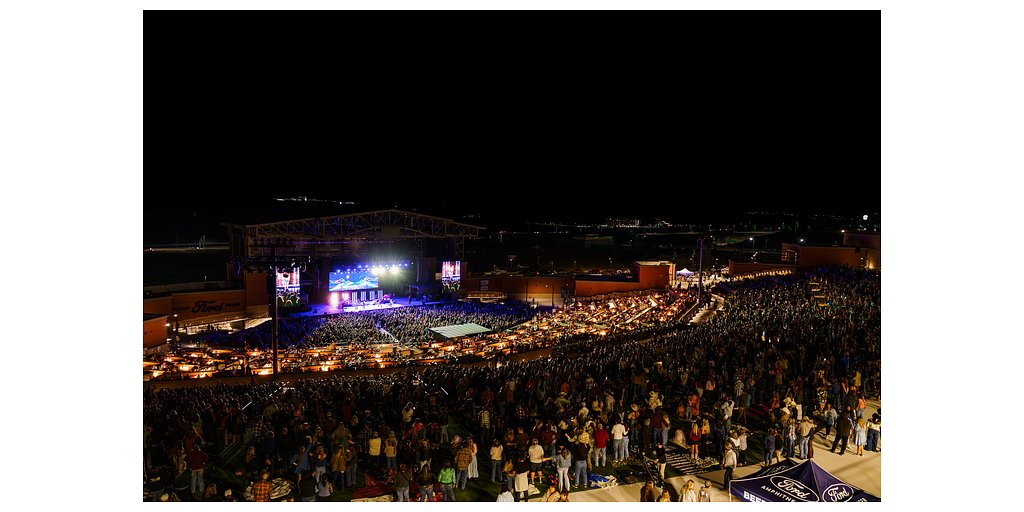
COLORADO SPRINGS, CO – June 08, 2026 – At first glance, it was a standard, if sizable, real estate transaction. Venu Holding Corporation (VENU), a burgeoning force in live entertainment, announced the sale of the land beneath its flagship Ford Amphitheater for a cool $49.7 million. In the same breath, it announced it wasn't going anywhere, having signed a long-term lease to continue operating the venue. This is the sale-leaseback: a common tool in corporate finance, but here, it is something more. It is the cornerstone of a breathtakingly ambitious, and potentially precarious, national expansion.
In the words of its founder and CEO, JW Roth, “We built a model that works and this validates it.” The validation comes in the form of nearly fifty million dollars in unlocked capital, cash that is already earmarked for new projects across the country. But as we dissect this model, the question that emerges is not just whether it works, but for how long, and at what cost. VENU is engaged in a high-stakes campaign to redefine the landscape of American entertainment, financing its crusade by selling the very ground on which its empire is built. This is a forensic look at the financial architecture of that ambition.
Deconstructing the Model
The sale-leaseback is an elegant piece of financial engineering. A company converts a fixed asset—its real estate—into liquid cash without disrupting its operations. For VENU, which carries over $120 million in debt and a negative free cash flow of $177 million over the last twelve months, liquidity is not a luxury; it is oxygen. This $49.7 million infusion, and the planned $200 million in similar deals to follow, provides the fuel for its rapid development pipeline.
However, the structure of these deals warrants scrutiny. The buyer in the Colorado Springs transaction was O'Neil Roth Real Estate LLC. The name is notable. While details about the firm are scarce, the presence of “Roth” in the name of the entity purchasing a key asset from a company helmed by CEO JW Roth raises immediate questions about governance and valuation. In such related-party transactions, ensuring the deal was conducted at a fair market value, free from conflicts of interest, is paramount for shareholder confidence. It shifts the deal from a simple transaction with a third party to a complex internal shuffling of assets and capital.
This maneuver allows VENU to claim it still “controls” the land, but that control is now contractual, not proprietary. The company has traded the long-term, and often passive, benefits of property appreciation for immediate cash. It has also transformed a balance sheet asset into a recurring operational expense in the form of lease payments. This is the fundamental trade-off at the heart of VENU’s strategy: sacrificing future equity for present-day velocity.
A Capital-Light Crusade into Underserved Markets
VENU’s strategy is predicated on speed. With the capital from its sale-leasebacks, combined with public-private partnerships and a fractional ownership program, the company is aggressively pushing into what it terms “underserved markets.” Venues are nearing completion in Broken Arrow, Oklahoma, and McKinney, Texas, with developments underway in Houston and El Paso, and new locations announced for Chattanooga, Tennessee, and Northern Colorado.
These are not modest projects. The McKinney venue, a planned 20,000-seat amphitheater, is VENU’s largest to date, backed by a reported $110 million in local tax incentives. The planned Chattanooga site is a $300 million vision. This is where VENU’s model intersects with public policy. The company is positioning itself as a key partner for mid-sized cities eager for the economic and cultural prestige that a major entertainment destination can bring.
For these municipalities, the partnership is a tantalizing prospect: a world-class venue designed to attract major touring artists who might otherwise bypass them, promising an economic windfall projected to be worth billions over a decade in McKinney's case. Yet, by tying their cultural infrastructure to a company reliant on a high-wire financial act, these cities are also taking on a degree of risk. The long-term stability of their new community centerpieces is now intrinsically linked to VENU's ability to manage its growing lease obligations and generate sufficient revenue from its “fan-first, experience-driven” venues.
A New Playbook or a Familiar Financial Tale?
VENU’s leadership declares they are building “something this country has never seen in live entertainment.” The disruption is not just in targeting mid-sized cities, but in the very financial DNA of the company. While industry titans like AEG Presents—who, in a complex twist, is a partner in operating the Ford Amphitheater—and Live Nation expand through more traditional means, VENU is a case study in financialized growth. It is less a real estate company and more a capital allocation machine that happens to operate concert venues.
The risk is that this isn't a new playbook, but a familiar story of leveraged expansion. By offloading its real estate, VENU gives up a crucial buffer against market downturns. If the live entertainment business hits a cyclical slump, or if its “omni-content” model fails to generate the expected premium revenues, the fixed, long-term costs of its many lease agreements could become an anchor. The company has effectively placed a massive bet that its operational prowess and revenue growth will outpace its contractual obligations, year after year.
For now, the music is playing and the expansion continues at a blistering pace. The VENU model is indeed working, rapidly transforming cash from sold land into steel, glass, and stages across the American heartland. The question for the cities, investors, and concert-goers drawn into its orbit is what happens when the long-term costs of building an empire on leased land come due.