
- 5,200+ dog attacks on U.S. Postal Service employees in 2025
- Top states: California (673), Texas (358), Ohio (287)
- Los Angeles led cities with 70 attacks
Experts agree that dog attacks on mail carriers are a preventable public safety issue requiring shared vigilance between pet owners and postal workers.
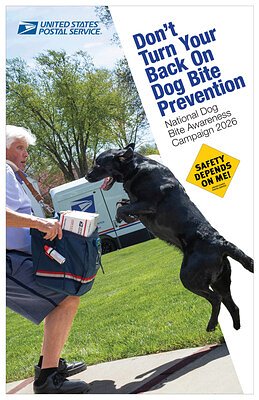
The Unseen Toll: Why Your Dog Is a Risk to the U.S. Mail System
WASHINGTON, D.C. – June 03, 2026 – The familiar sight of a mail carrier on their daily route masks a persistent and dangerous occupational hazard. Last year, more than 5,200 U.S. Postal Service employees were attacked by dogs, a startling figure that has prompted the federal establishment to launch its annual Dog Bite Awareness campaign. Under the theme "Don't turn your back on dog bite prevention," the nationwide initiative underscores a critical intersection of public service, community safety, and personal responsibility that extends far beyond the front gate.
While the total number of incidents saw a slight decrease from the previous year, the problem remains acute in many urban centers. Los Angeles led the nation with 70 attacks, followed by Dallas with 50 and Denver with 45. At the state level, California (673), Texas (358), and Ohio (287) recorded the highest numbers of incidents, painting a geographic picture of where this risk is most concentrated. These are not mere statistics; they represent thousands of traumatic events that carry significant physical, emotional, and financial consequences for all involved.
"Every single day, our postal employees serve their communities across dynamic, fast-changing environments," said Leeann Theriault, the agency's employee safety and health awareness manager. "Preventing dog-related incidents requires constant, shared vigilance. This campaign reinforces a vital truth: Animal behaviors can change in an instant, but proactive awareness from both our carriers and the customers we serve can stop painful injuries before they ever happen."
Your Dog, Your Liability: The Hidden Costs of an Attack
The ripple effects of a single dog bite extend deep into a pet owner's life, often in ways they never anticipated. The immediate concern is the mail carrier's well-being, but the financial and logistical fallout for the owner can be staggering. Liability in these cases can easily run into thousands of dollars, covering the victim's medical bills, lost wages from missed shifts, the cost of replacing a damaged uniform, and compensation for emotional distress. As these are workplace injuries, the costs are meticulously tracked and can become the basis for significant legal claims against the homeowner.
Beyond direct financial penalties, an unsecured dog can disrupt a fundamental community service. When a carrier feels unsafe due to a loose or aggressive dog, mail delivery to that address—and sometimes the entire neighborhood—can be immediately suspended. Residents are then required to retrieve their mail from the local Post Office, an inconvenience that underscores the communal nature of the problem. If the dangerous situation is not resolved, the postal service can mandate that the homeowner rent a Post Office Box to receive any future mail, effectively severing the convenience of at-your-door service.
To mitigate these risks, the Postal Service is urging customers to adopt simple, proactive habits. Securing a dog in a separate, closed room before answering the door is the most effective step. For those with yards, ensuring gates are latched is crucial. The agency also strongly advises against ever accepting mail directly from a carrier in a dog's presence, as the animal can misinterpret the hand-off as a threat to its owner. Furthermore, the organization is promoting its free Informed Delivery service. With over 70 million users, the platform allows residents to digitally preview their mail, providing a valuable heads-up that helps them anticipate the carrier's arrival and secure their pets in advance.
On the Front Lines of a Preventable Crisis
For letter carriers, the threat of a dog attack is a daily stressor that transforms familiar neighborhoods into potential hazard zones. The Postal Service invests heavily in training and technology to protect its workforce, but these measures are a last line of defense, not a guarantee of safety. Carriers are trained to read an animal's body language, to announce their presence by rattling a gate, and to never startle a dog. They are taught to use their mail satchel as a shield and are equipped with dog repellent for emergencies. Their handheld scanners even feature alerts that flag addresses with known canine risks.
Yet, the harrowing reality is that attacks still occur with brutal efficiency. The story of San Antonio Letter Carrier Fiona Hudson serves as a stark reminder of the stakes. "I was walking my route when a dog jumped the fence and lunged at me," she recounted. "I used my dog repellent and mail bag to defend myself, but it was too late. I was rushed to the hospital bleeding, with a broken bone, a severe arm sprain and was barely able to move." Hudson's experience highlights the profound and lasting impact of these encounters. "While my physical wounds have healed, the trauma of that vicious attack stays with me. Customers must take responsibility and secure their dogs during delivery hours."
This sentiment is echoed by postal workers across the country. "You learn to be constantly aware, scanning yards, listening for the jingle of a collar or a bark from inside," explained one retired carrier from Pennsylvania with over 30 years of experience. "But the ones that get you are often the ones the owner swears 'would never hurt a fly.' That friendly golden retriever can be just as territorial about a person in uniform approaching its home as any other dog. The training helps, but it can't stop a determined animal that gets the jump on you."
Mapping the Danger: An Analysis of a National Problem
The geographic data released by the Postal Service offers a fascinating, if troubling, look at where these human-animal conflicts are most common. The concentration of incidents in states like California, Texas, and Ohio points to a complex mix of factors, including high population density, elevated rates of dog ownership, and potentially even climate, which allows for more dogs to be kept outdoors year-round. The city-level data, with metropolises like Los Angeles, Dallas, Houston, and Chicago topping the list, reinforces the idea that urban and dense suburban environments are the primary flashpoints.
However, the data also contains glimmers of hope and lessons in successful mitigation. Houston, for instance, dropped from its long-held position as one of the top two most dangerous cities after its incident count fell from 65 in 2024 to 44 in 2025. This significant reduction suggests that focused public awareness campaigns and increased owner diligence at the local level can yield tangible results. It proves that while the problem is widespread, it is not intractable.
The core message from the Postal Service is one of shared fate. The reliability of mail delivery, a service that connects more than 170 million addresses, depends on a compact of safety between the carrier and the customer. When that compact is broken by an unsecured pet, the consequences are severe, painful, and entirely preventable.