
- 300 workers participated in global wear trials of Tyvek® APX™ fabric.
- The fabric significantly slows core body and skin temperature increase, reducing heat strain.
- Certified as Category III, Type 5-B and 6-B under European standards for chemical protective clothing.
Experts would likely conclude that DuPont's Tyvek® APX™ fabric represents a significant advancement in PPE technology by addressing the critical balance between protection and worker comfort, particularly in hot climates.
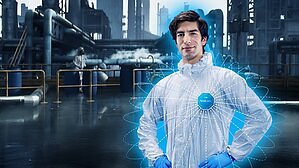
The Unseen Threat: DuPont's New Fabric Tackles Worker Safety's Silent Crisis
BANGKOK, THAILAND – June 24, 2026 – In the sprawling industrial zones of Southeast Asia, workers routinely don protective coveralls to shield themselves from chemical splashes and hazardous particles. But the very barrier that keeps dangers out often creates one within: a stifling, personal heatwave that can lead to exhaustion, impaired judgment, and serious health risks. It’s a silent crisis in occupational safety, and one that global science company DuPont is now tackling head-on with the ASEAN launch of its new Tyvek® APX™ fabric.
Announced today at the Thailand Safe@Work 2026 conference, the new material represents a significant evolution in personal protective equipment (PPE). It’s not just another layer of defense, but a rethink of the relationship between the worker and their gear, addressing the critical, often-neglected variable of breathability.
The Microclimate of Risk
For decades, the primary metric for protective garments has been impermeability. The goal was simple: create an unbreachable wall between the worker and the hazard. But this approach ignores a fundamental biological reality. A worker performing even moderate tasks generates significant body heat and sweat. In a traditional, non-breathable suit, that heat and moisture become trapped, creating a personal microclimate where temperatures can soar. The result is heat stress, a condition that ranges from debilitating discomfort to life-threatening heatstroke.
Occupational health experts have long warned that this discomfort is not merely an inconvenience. It’s a safety liability. A worker struggling with heat is more likely to become fatigued, lose focus, and make critical errors. Worse, they may be tempted to improperly wear or even modify their PPE to get relief, nullifying its protective qualities entirely. In the hot and humid climates that characterize much of the ASEAN region's manufacturing hubs, this problem is not just persistent; it's acute.
The challenge, then, has been to engineer a material that can tell the difference between a water vapor molecule trying to escape and a hazardous liquid droplet trying to get in. It is a complex problem in materials science, one that requires balancing protection with physiological comfort.
A Breath of Fresh Air in a Sealed Suit
DuPont claims its Tyvek® APX™ fabric is the solution. The company, which has defined the protective clothing category for over 50 years with its iconic Tyvek® brand, is positioning this new material as a breakthrough.
"With the launch of Tyvek® APX™, we've created a new and revolutionary form of Tyvek® material that addresses one of the most significant health and safety challenges – making garments more breathable without sacrificing performance or durability," said Dave Kee, Global Business Director for DuPont Personal Protection, in a statement. "Tyvek® APX™ fabric offers an outstanding combination of protection and comfort, helping workers to perform at their best."
These are not just marketing claims. The company enlisted Empa, the Swiss Federal Laboratories for Materials Science and Technology, to conduct an independent physiological study. Using advanced human thermoregulation models and biometric monitoring of human subjects, the research demonstrated that the new fabric significantly slows the increase in core body and skin temperature. In practical terms, this means less heat strain and faster recovery times for workers in physically demanding roles.
Further validation came from global wear trials involving nearly 300 workers across various industries and climates. The feedback was overwhelmingly positive, with participants noting a distinct improvement in comfort. The first product in the new line, the Tyvek® APX™ 400 coverall, still meets stringent European standards for chemical protective clothing, certified as Category III, Type 5-B and 6-B. It proves that the suit can protect against airborne particles and light liquid splashes while allowing the body's heat and moisture to escape.
A Strategic Move in a Growing Market
The decision to launch Tyvek® APX™ in the ASEAN market is a calculated one. The region is a powerhouse of industrial growth, from pharmaceutical production to chemical processing. As these industries expand, so does the demand for a skilled workforce, and with it, a heightened awareness of occupational safety standards. Regional governments are increasingly strengthening workplace safety and health regulations, moving beyond mere compliance to a more holistic focus on worker well-being.
By introducing a product that directly addresses the climatic challenges of working in Southeast Asia, DuPont is not only catering to a clear market need but also positioning itself as a partner in advancing regional safety standards. The move taps into a broader industry trend where the 'human factor'—ergonomics, comfort, and usability—is becoming as important as the technical specifications of safety equipment.
While the market for protective clothing is competitive, with established players like 3M and Lakeland Industries also offering a range of solutions, DuPont is leveraging its formidable brand legacy and a clear technological differentiator. The launch at a major regional safety conference is a direct appeal to the safety managers and procurement professionals who are on the front lines of protecting this growing industrial workforce.
This innovation is part of a larger shift within DuPont, which is increasingly looking at integrated technology solutions for worker safety. Other initiatives, such as collaborations to integrate real-time hydration monitoring into protective garments, signal a future where PPE is not just a passive shield but an active component of a worker's health and safety ecosystem. By focusing on the invisible threat of heat stress, DuPont is making a powerful statement: the best way to protect a worker from the outside world is to ensure they are safe and functional on the inside.