
- 70-90% failure rate: Generative AI agents fail 70-90% of the time on real-world tasks (Forrester report).
- 30% security incidents: Nearly a third of organizations experienced data security incidents involving generative AI in 2026 (Microsoft study).
Experts agree that securing AI systems requires specialized, native protections to address novel threats like prompt injection and model manipulation.
The Unseen Guards: Securing AI Before It Runs the Enterprise
AUSTIN, TX – June 29, 2026 – The corporate world is in the midst of a frantic gold rush, but the prize isn’t a precious metal. It’s artificial intelligence. Enterprises are racing to weave AI into the fabric of their operations, moving beyond simple chatbots to deploy autonomous agents that can execute tasks, access sensitive data, and interact with critical systems. Yet, in this rush to innovate, many are building on a foundation riddled with unseen vulnerabilities—a gap between promise and peril that is growing wider by the day.
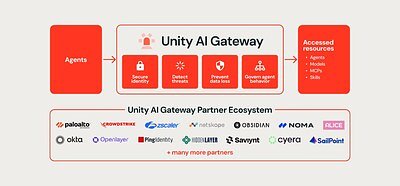
Addressing this critical gap, AI security provider HiddenLayer today announced a significant partnership with data and AI giant Databricks. By integrating its specialized security platform into the Databricks Unity AI Gateway, HiddenLayer aims to provide the essential, AI-native protection that enterprises need to prevent their powerful new tools from being turned against them. The collaboration signals a pivotal moment in the evolution of AI: the recognition that securing these complex systems requires a discipline as unique as the technology itself.
A New Breed of Threat
The security challenges of modern AI extend far beyond the firewalls and access controls of traditional IT. Today’s AI systems are not isolated models performing discrete tasks; they are sprawling, interconnected workloads. Generative AI agents retrieve proprietary data, invoke software tools, interact with external APIs, and execute actions across business-critical environments. This new reality has created a vast and novel attack surface.
Industry experts have been sounding the alarm. One recent Forrester report bluntly described generative AI as a potential "chaos agent," noting that AI agents can fail 70-90% of the time on real-world tasks and are susceptible to fundamental weaknesses. The threats are not hypothetical. A 2026 Microsoft study revealed that nearly a third of organizations had already experienced a data security incident involving generative AI, prompting almost half of them to scramble to implement specific controls.
These incidents are driven by a new class of vulnerabilities. “Prompt injection,” for instance, allows an attacker to embed malicious instructions within an input, tricking an AI agent into leaking sensitive data or performing unauthorized actions. Other risks include “model manipulation,” where the AI’s training data is poisoned to produce skewed results, and “unsafe tool use,” where an agent is manipulated into abusing its access to connected software. For security teams trained to spot malware and network intrusions, these attacks are nearly invisible.
“Organizations are rapidly adopting AI agents and autonomous systems, but many are doing so without the security controls needed to manage emerging risks,” said Chris Sestito, CEO and Co-founder of HiddenLayer, in a statement. The problem, as many security leaders privately admit, is that you can’t simply apply old rules to a new game. You need a dedicated security playbook for AI.
Building the Digital Guardrails
The partnership between HiddenLayer and Databricks is an attempt to write that playbook directly into one of the industry's most popular AI platforms. Databricks has established itself as a central hub for enterprise data, and its Lakehouse Platform is where many organizations build and train their AI models. The company’s strategy has evolved to create what it calls a governed “agentic enterprise control plane”—a central system for managing autonomous AI.
This strategy rests on two key pillars. The first, Unity Catalog, provides a foundation for governing data and AI assets before they are deployed, allowing companies to manage access and track lineage. HiddenLayer already integrated with Unity Catalog to help customers scan AI models for malicious code, vulnerabilities, and signs of tampering before they go live.
Today’s announcement extends that protection into the far more dynamic and dangerous phase: runtime. The new integration is with the Databricks Unity AI Gateway, a centralized layer that governs the real-time interactions between models, agents, and tools. By embedding its technology here, HiddenLayer can monitor the actual behavior of AI systems in production. This includes scrutinizing prompts and responses for malicious intent, detecting unusual model behavior, and identifying when an agent is being coerced into unsafe actions.
“As organizations move AI into production, governance must extend beyond access controls to include visibility and protection across AI interactions,” noted Stephen Orban, SVP of Product Partnerships and Ecosystem at Databricks. The collaboration allows customers to apply security policies and guardrails that can prevent data leakage, block unsafe behavior, and turn suspicious AI activity into actionable alerts for security teams. It moves security from a pre-flight checklist to an in-flight monitoring system.
From Risk Mitigation to Innovation Enablement
While the technical details focus on threat detection, the strategic implication of the partnership is about building trust. For many business leaders, the fear of AI-related security breaches or compliance violations has become a significant barrier to full-scale adoption. The lack of robust security creates a drag on innovation, forcing companies to limit the scope of their AI initiatives or risk catastrophic failure. By providing a more secure environment, the integrated solution aims to give organizations the confidence to accelerate their AI strategies.
This deep, platform-native integration is a key differentiator in an increasingly crowded AI security market. While numerous startups and established cybersecurity vendors are racing to offer solutions, many exist as external add-ons. By embedding its capabilities directly within the Databricks workflow, HiddenLayer offers a more seamless and comprehensive approach, covering the entire AI lifecycle from development to deployment and operation.
This shift reflects a broader maturation of the industry. The initial, wide-eyed fascination with AI’s potential is giving way to a more sober understanding of its operational realities. Responsible AI governance and compliance programs remain essential, but they are not a substitute for defending the AI systems themselves. As AI becomes more autonomous and deeply integrated into the core functions of our economy, ensuring it operates safely and as intended is no longer just a technical requirement—it is a fundamental condition for progress.